
SwitchWize Editorial
Adeesh Setya
Adeesh Setya is Head of Financial Research & Principal at SwitchWize, with 25+ years of experience in deposits, treasury management, banking products, and financial services. He previously served as Treasurer at Merrill Lynch Bank USA and Morgan Stanley Bank USA, where he managed bank funding, deposits, and interest-rate risk. He writes on Federal Reserve policy, the general marketplace for banking products, and what they mean for savers and consumers.
Latest from Adeesh Setya
All guides Latest
The Week After Jackson Hole: A Fed Divided, and What It Means for Your Rate
A week after Chairman Warsh's hawkish Jackson Hole keynote, Governors Waller and Barr are publicly arguing over the September meeting while a strong jobs report and firm ISM data raise the stakes on next week's CPI print. Here is how to read the back-and-forth.
How Much Is Closing the Bank Gap Worth in Your State?
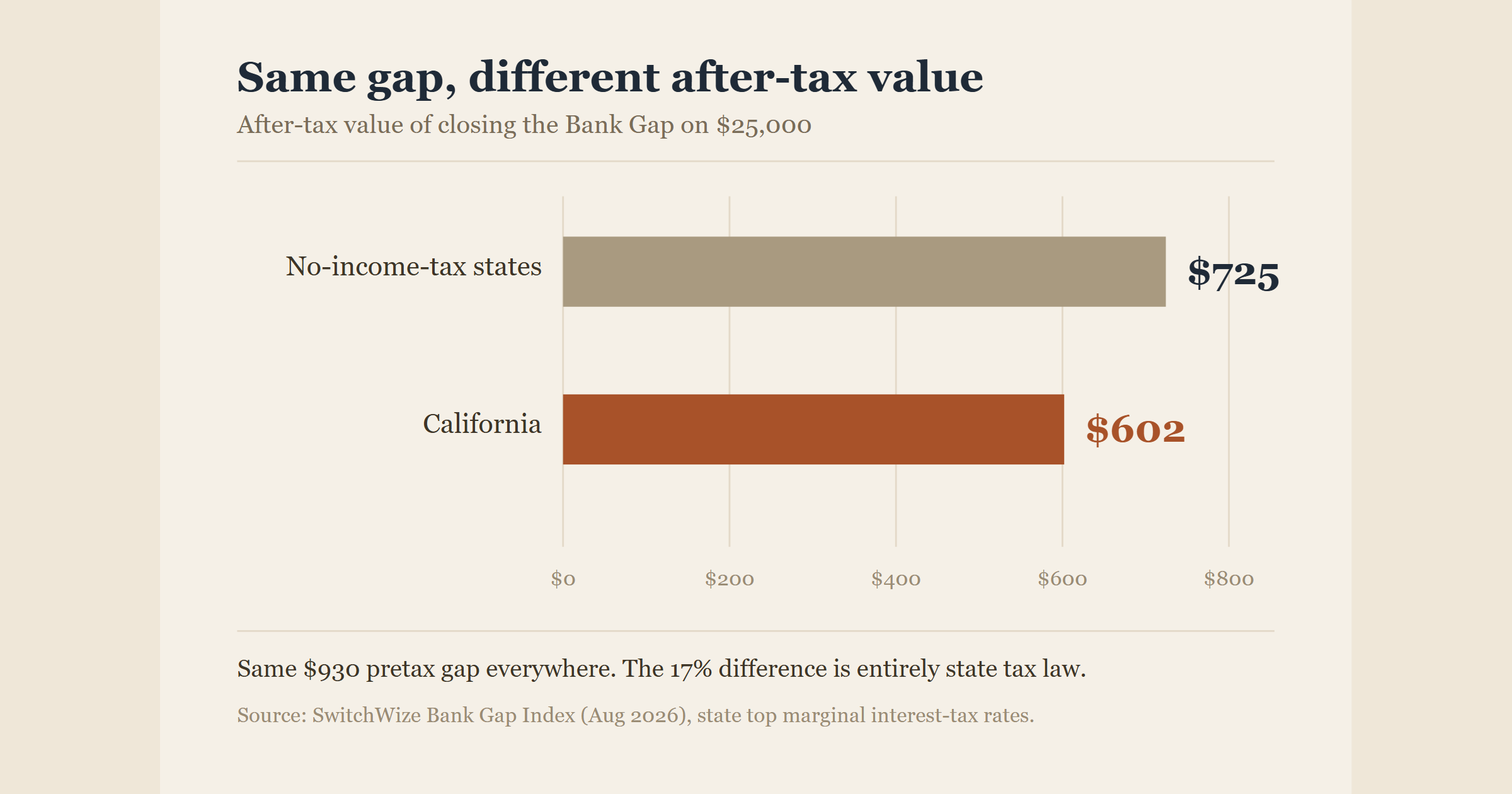
The gap between the average savings rate and the best available one is a national number, 3.72 percentage points. What it's actually worth after tax isn't: it ranges from about $725 a year in the nine no-income-tax states down to $602 in California, purely because of how states tax interest. Every state ranked.
Credit Card Debt by State: Every State Ranked (2026)
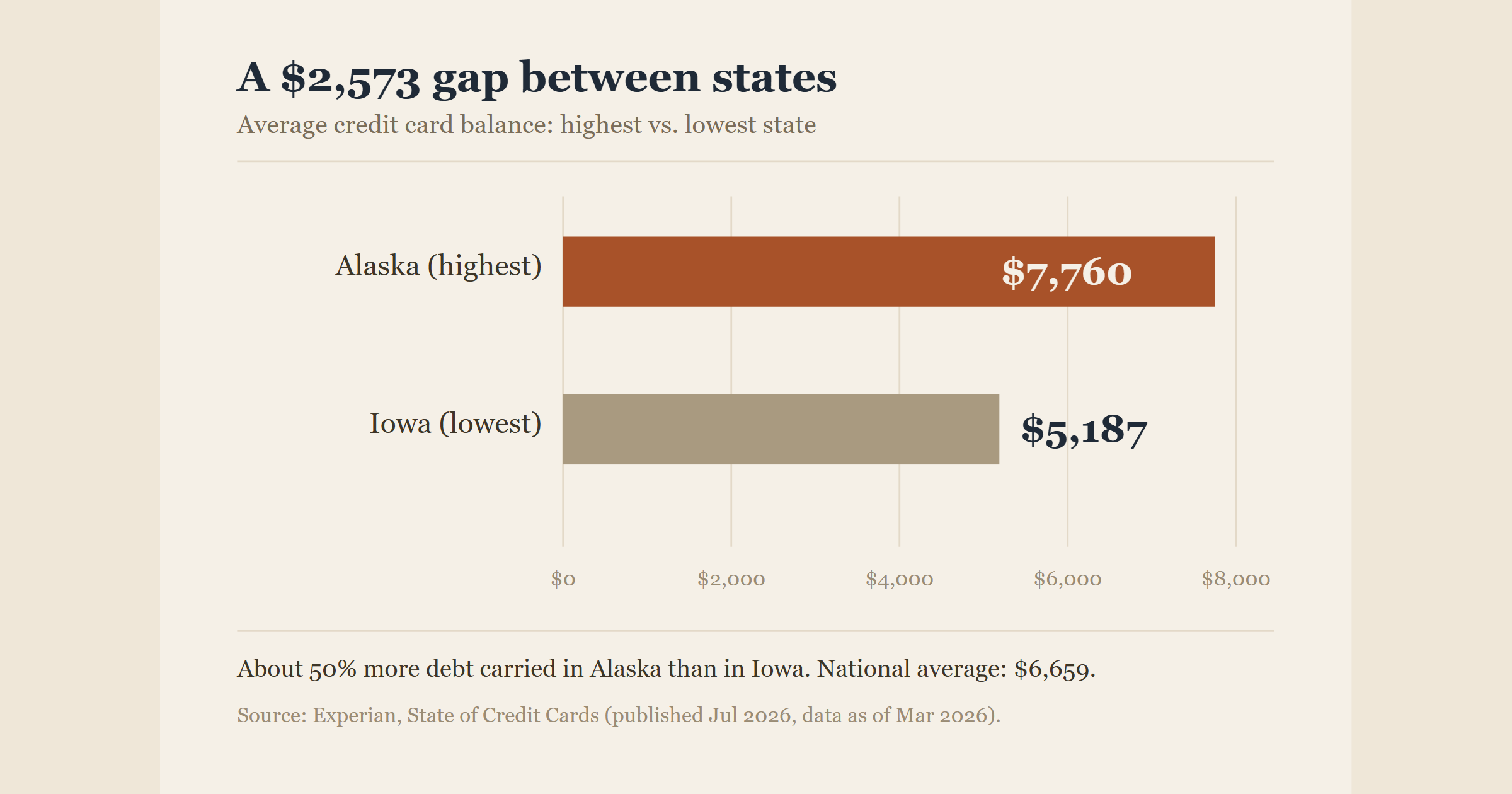
Alaska carries the highest average credit card balance in the country at $7,760, roughly 50% more than Iowa's $5,187, the lowest. Every state's average balance, ranked, from Experian's own credit bureau data, plus what actually drives the gap between them.

Discipline, Not a Decision: What I Took Away From Chairman Warsh's Jackson Hole Speech
Chairman Warsh used his first full Jackson Hole keynote to defend two unpopular stances at once: no forward guidance and no fixed reaction function, while placing responsibility for 65 months of inflation squarely on the Fed. Here is what that discipline means for your savings and mortgage decisions right now.
What Is an Earnings Credit Rate? A Business Owner's Guide to ECR (2026)
An Earnings Credit Rate offsets business checking fees instead of paying interest, and it is not taxed the way interest is. Here is how ECR is calculated, where it came from, and how to tell when you are keeping too much cash in the account to get it.
M2 Money Supply Just Hit a Record High, Erasing Three Years of Contraction
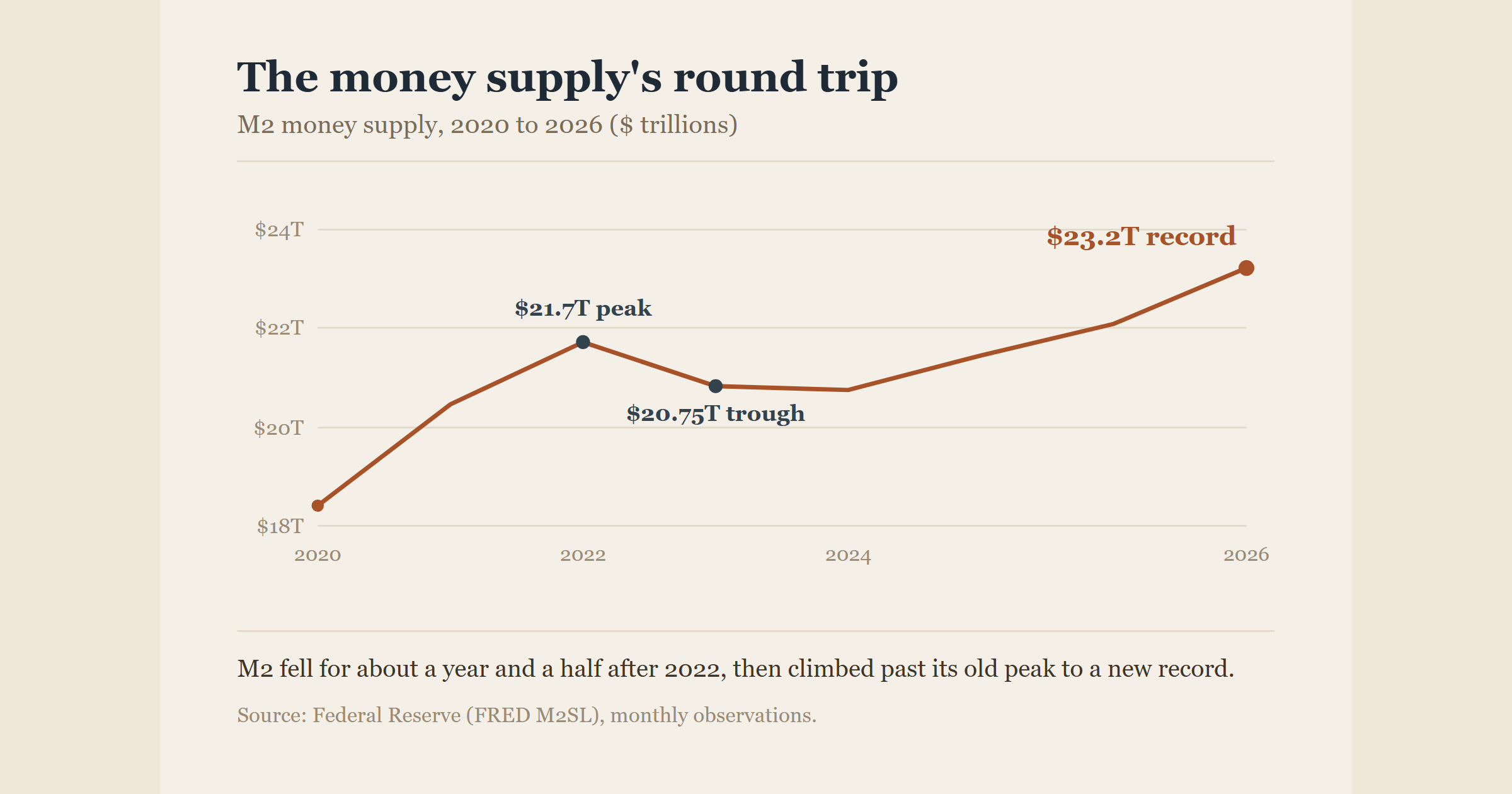
M2 money supply reached $23.2 trillion in July 2026, a new record that surpasses its 2022 pandemic-stimulus peak. In between, M2 did something it hadn't done since the 1930s: it fell outright for roughly a year and a half. Here's what actually happened and why it matters for savers.
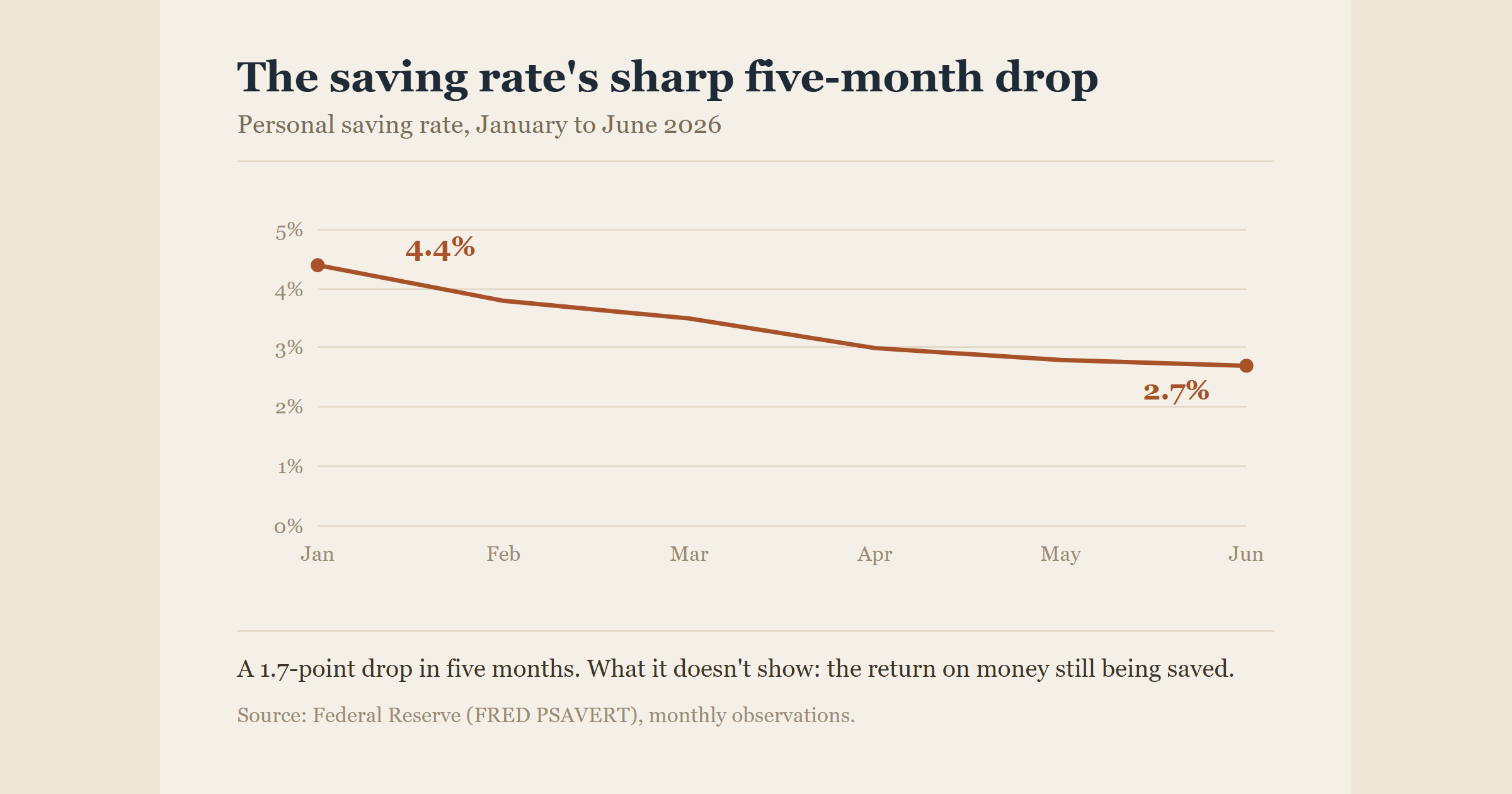
The Saving Rate Just Fell to 2.7%. That's Not the Whole Problem.
The personal saving rate dropped to 2.7% in June 2026, down from 4.4% in January, among the lowest readings in years. The part getting less attention: even the money households do manage to save mostly sits in accounts paying a fraction of what's available.
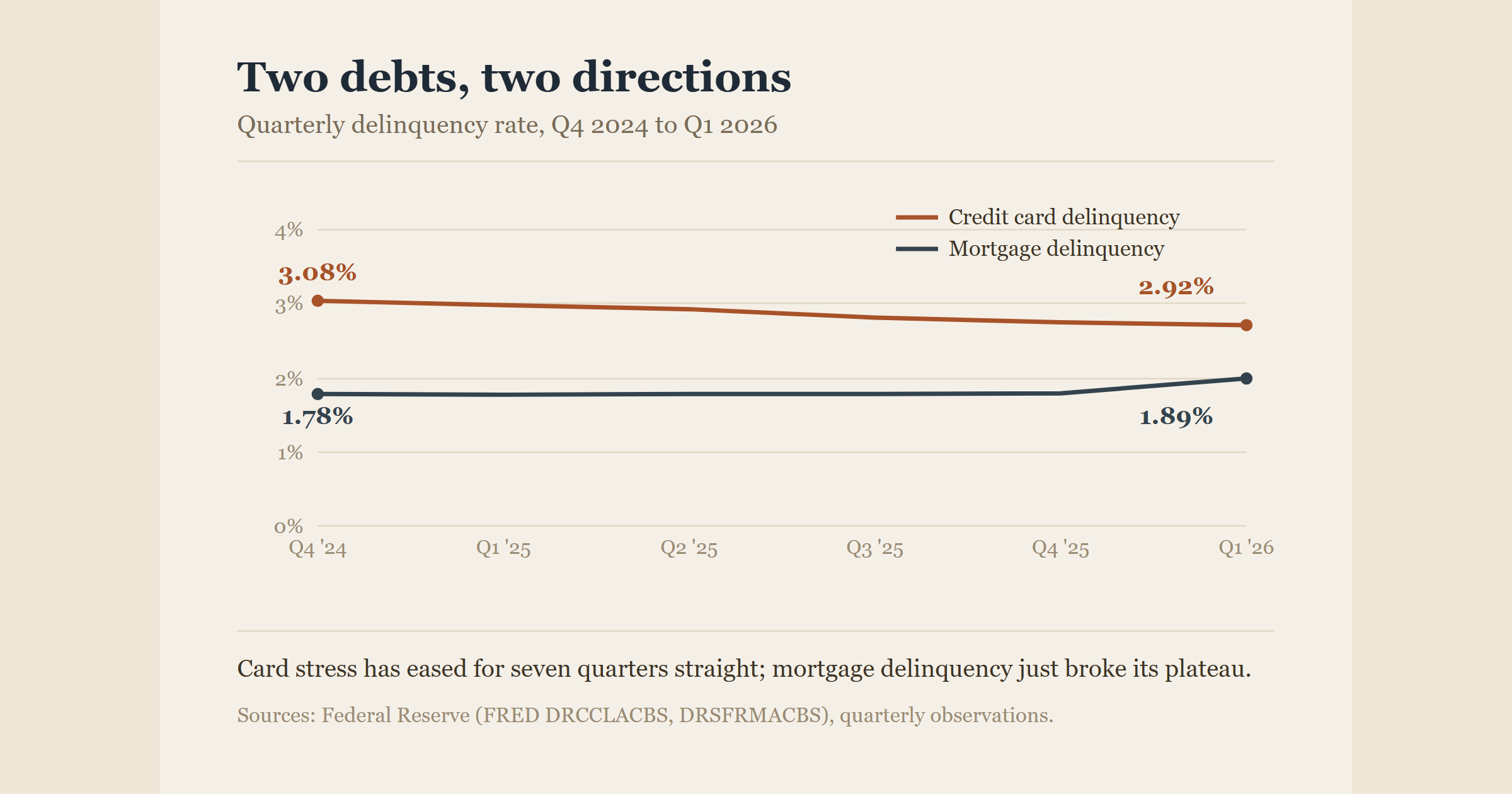
The State of the American Household Balance Sheet: 2026 Debt Report
A data report on the $18.8 trillion American households owe and how stretched they are carrying it. The average household devotes about 11.2% of after-tax income to debt payments, and two debt categories are moving in opposite directions: credit card stress is easing while mortgage delinquency is quietly climbing.
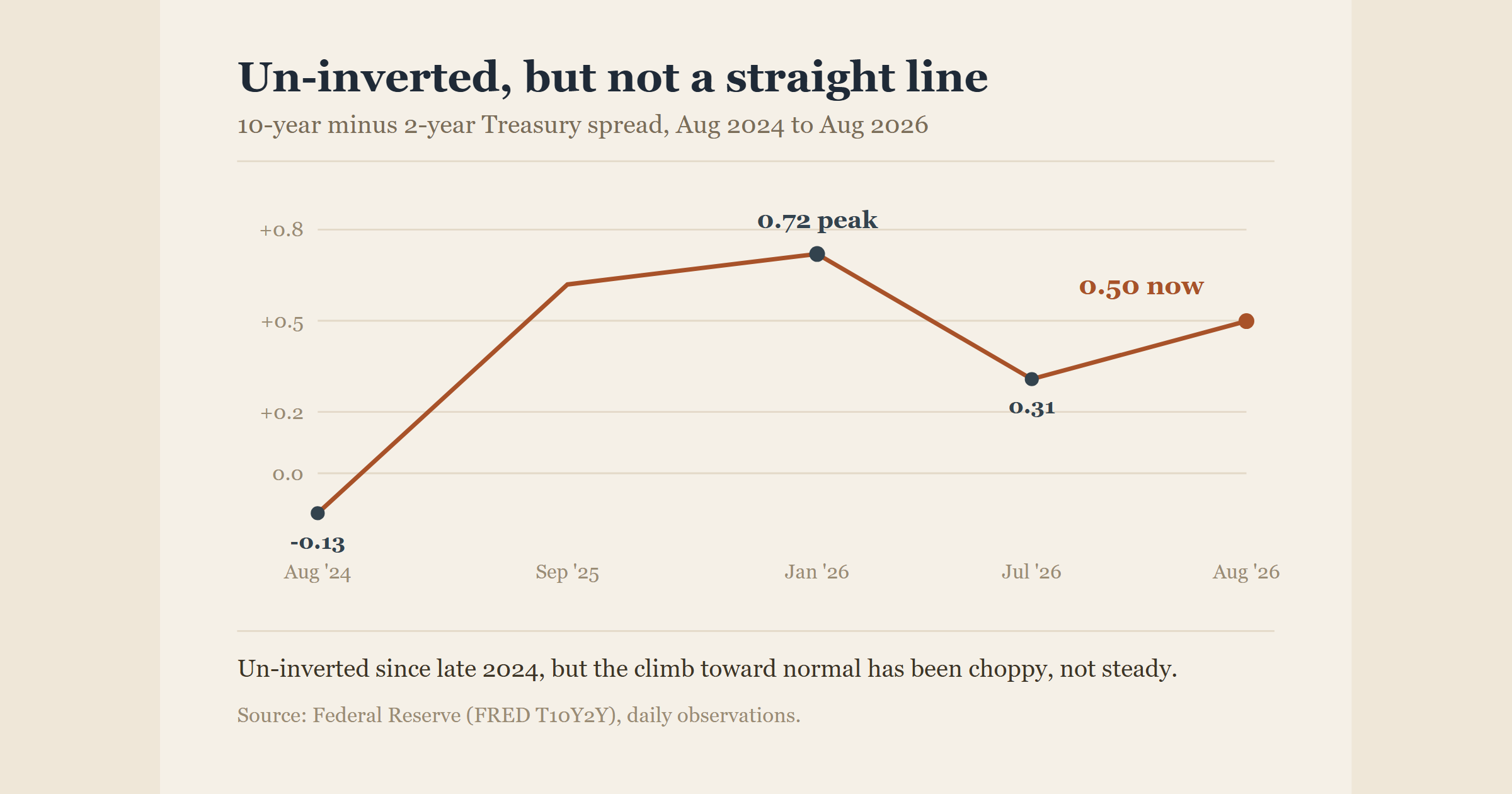
The Yield Curve Un-Inverted. Here's What's Actually Happening Now.
The 10-year minus 2-year Treasury spread flipped positive in late 2024 after the longest sustained inversion in modern US history, but the climb back to normal hasn't been smooth: it peaked near 0.72 points in early 2026, fell to 0.31 by July, and sits at 0.50 now. Here's what that shape actually signals.
Even With Free, Instant Transfers, Most People Still Don't Move Their Money
An Icelandic dataset with zero switching cost, zero wait, and identical risk found the same non-response as a UK study built entirely around disclosure. That overlap changes what a rate comparison site has to solve.
A Bank Told Its Own Customers It Had a Better Account. Almost Nobody Switched.
A 124,000-person UK field experiment handed savers direct proof their own bank had a better account, 15 minutes and $190 a year away. Switching stayed rare anyway, and the reason changes what a rate comparison actually has to do.

One Speech, Every Wallet: What Kevin Warsh's First Jackson Hole Address Means for You
Fed Chair Kevin Warsh delivers his first Jackson Hole keynote this week. Here's what a speech in Wyoming actually does to your mortgage, savings, and card rates, and what to check before Friday.

The Compounding Power of Financial Habits
Wealth is rarely built or lost in one dramatic decision. It compounds from hundreds of small, ordinary ones, the same logic behind James Clear's Atomic Habits, applied to money.
The 30-Year Treasury's Hidden Catch
A friend's pitch to lock in a 30-year Treasury yielding north of 5% sounds clean. It only holds up once you price the term premium, the deficit-driven supply, and the cost of exiting early.
What the Bank Gap Index Measures, and What It Costs
A definitional report on the SwitchWize Bank Gap Index: what it measures, how it is calculated, why the gap between the national-average and top-available savings rate persists, and what it costs a real household.
Why Checking Your Net Worth Feels So Good
Checking your net worth is not vanity. It is how a vague financial feeling becomes an actual, trackable number, and that is exactly what makes the habit worth keeping.
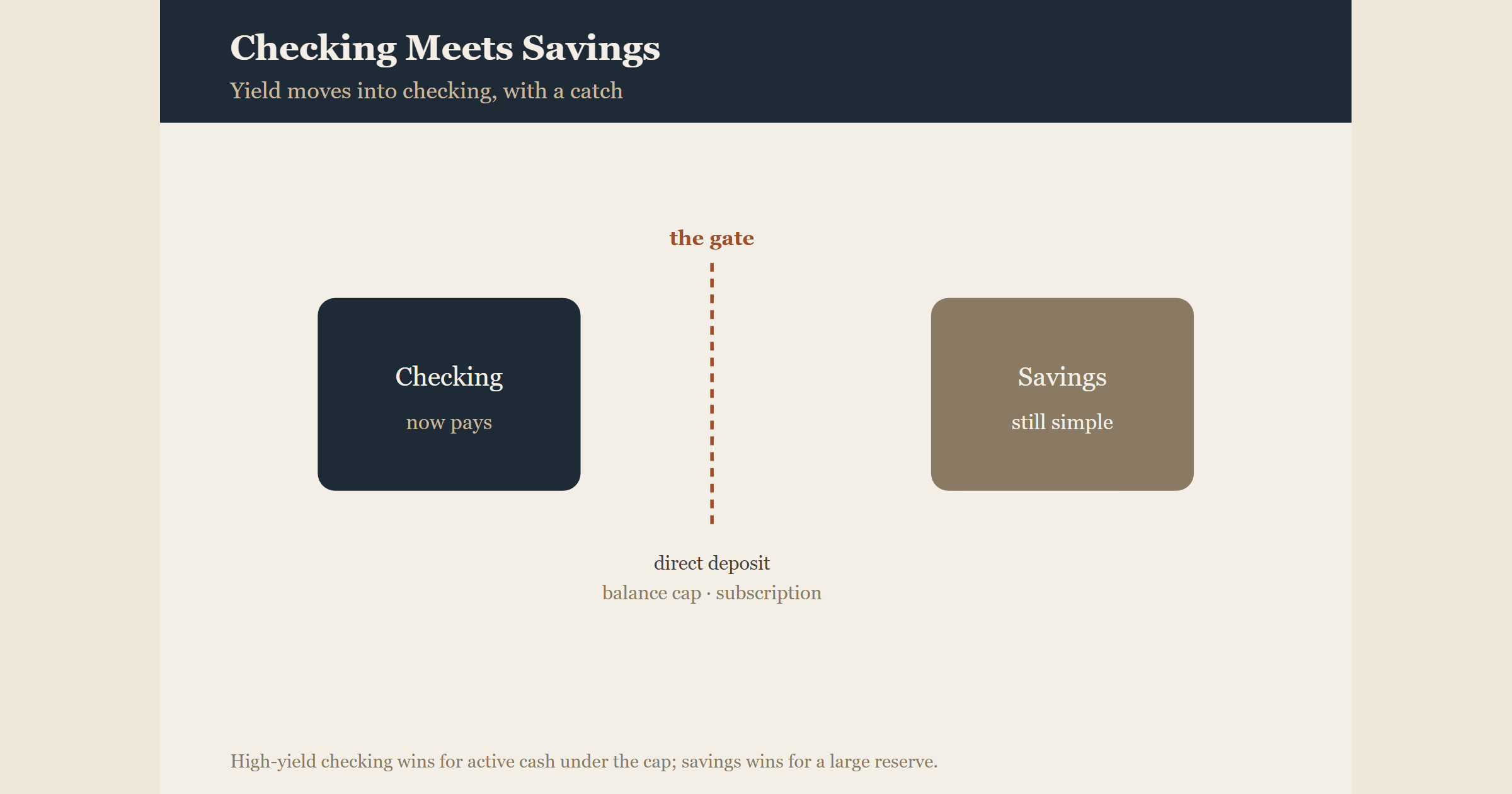
Is High-Yield Checking the New Savings Account? What Changed in 2026
Neobanks are putting savings-level interest on checking accounts, sometimes higher. It blurs a line that used to be simple: checking for spending, savings for earning. Here is what high-yield checking really pays, its catches, and when it should replace your savings account.
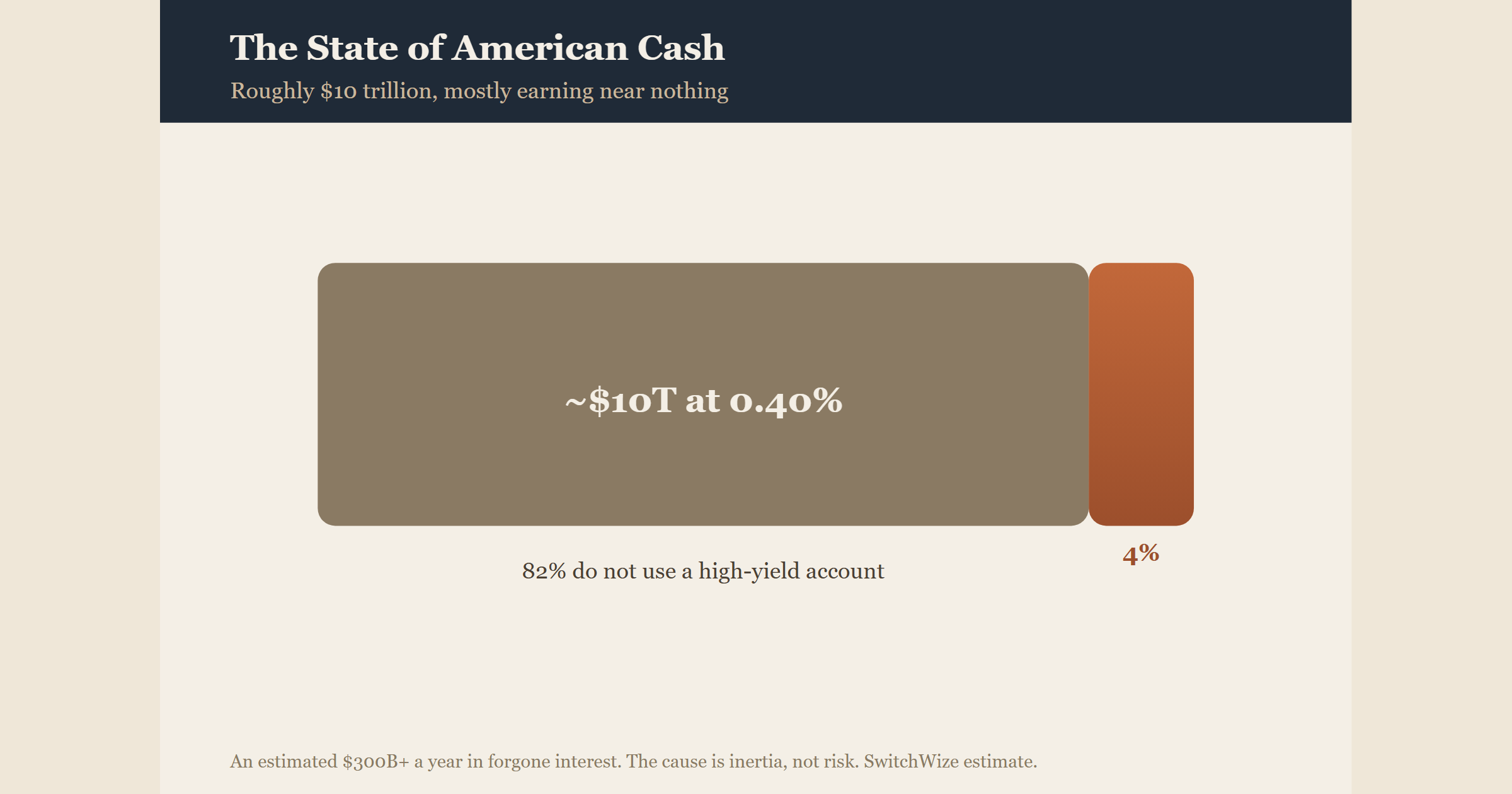
The State of American Cash: 2026 Report
A data report on where America keeps its cash and what it earns. Roughly $9.157 trillion sits in time and savings deposits at a 0.38% national average while high-yield accounts pay near 4%, most people do not use one, and the gap is one of the largest avoidable costs in household finance.
The State of American Retirement Savings: 2026 Report
A data report on what's actually saved in workplace 401(k) plans. Among Vanguard-administered accounts, the average balance hit a record $167,970 in 2026, but the median is just $44,115, and the gap between those two numbers is the whole story: a small group of large balances hides how little the typical plan participant has.
The True Cost of Credit Card Debt in America: 2026 Report
A data report on what Americans owe on credit cards and what it costs them. Roughly $1.3 trillion in revolving debt carries rates from 20.94% (all accounts) to 22.15% (accounts assessed interest), generating an estimated $250 billion a year in interest and fees, borne by the fewer than half of cardholders who carry a balance.

What a Fed Rate Hike Would Do to Your Money in 2026
For two years the debate was about cuts. Now the Fed's own projections have turned hawkish, with several officials penciling in a hike. Here is exactly what a rate increase would do to your savings, credit cards, and mortgage, and what to do before it lands.
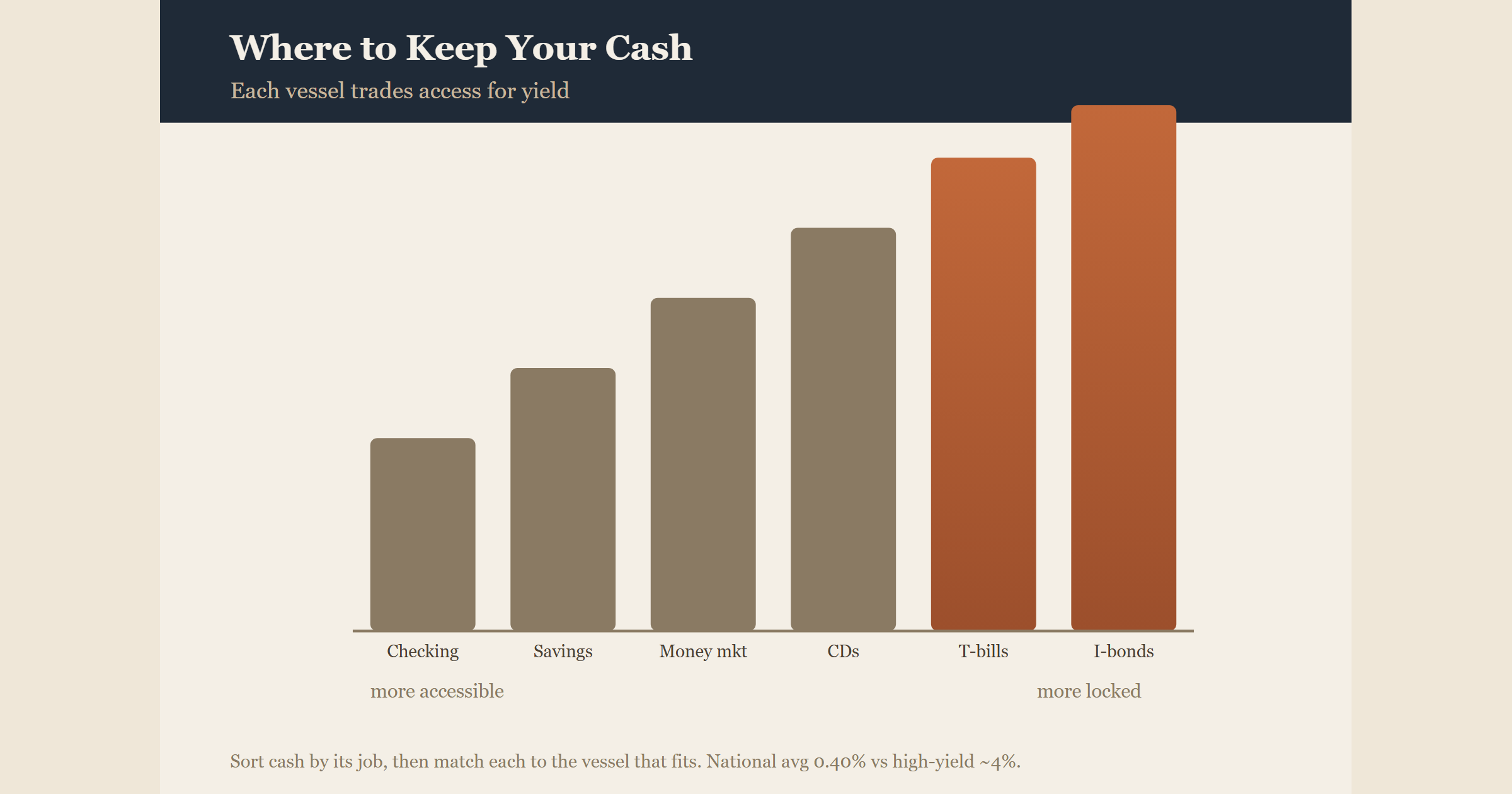
Where to Keep Your Cash: The Complete 2026 Playbook
Checking, high-yield savings, money market accounts and funds, CDs, Treasury bills, I-bonds, and brokerage sweep accounts all hold cash, but they are not interchangeable. A complete guide to matching every dollar to the right account by goal, liquidity, yield, and tax.
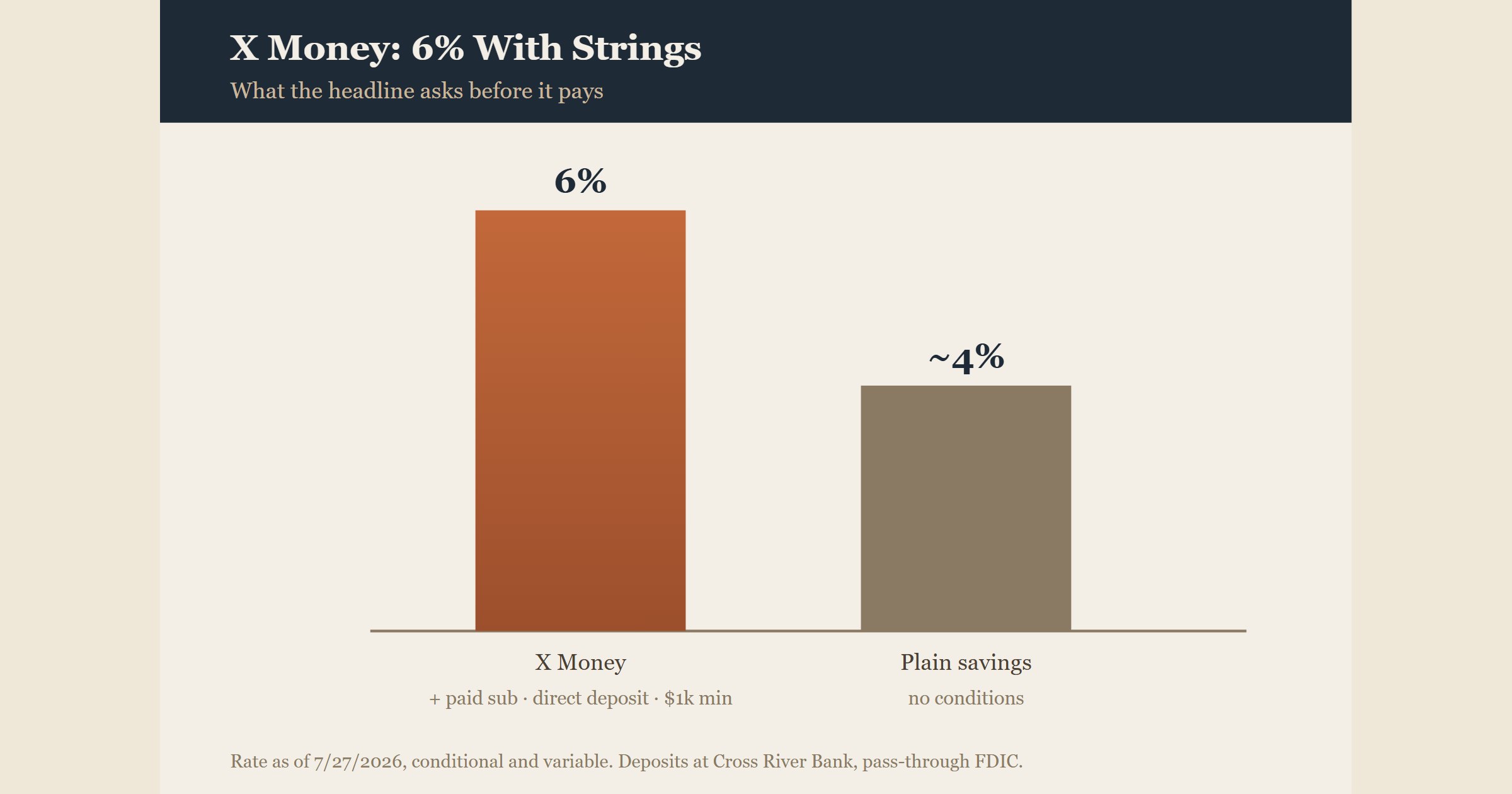
X Money's 6% APY: Real, But Read the Conditions First
X Money launched with a headline 6% APY and up to $10 million in FDIC coverage. The rate is real, but it is gated behind a paid subscription, a direct deposit, and a minimum balance, and the insurance is pass-through. Here is how to evaluate it.
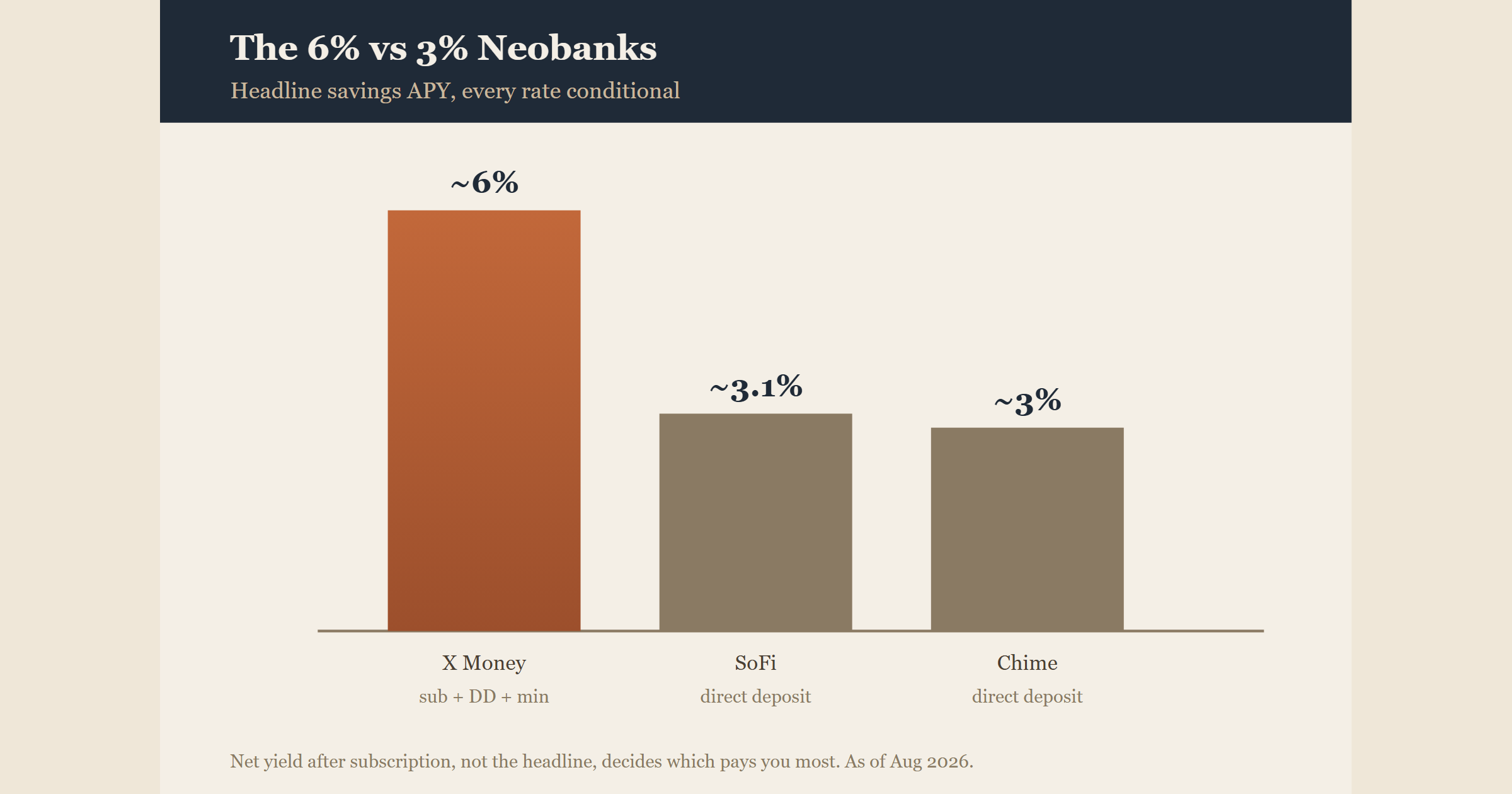
X Money vs SoFi vs Chime: The High-Yield Neobanks Compared (2026)
Three app-first accounts, three very different headline rates. X Money leads with 6%, SoFi and Chime sit closer to 3%. But every rate here is conditional. Here is how they actually compare on yield, requirements, and safety.
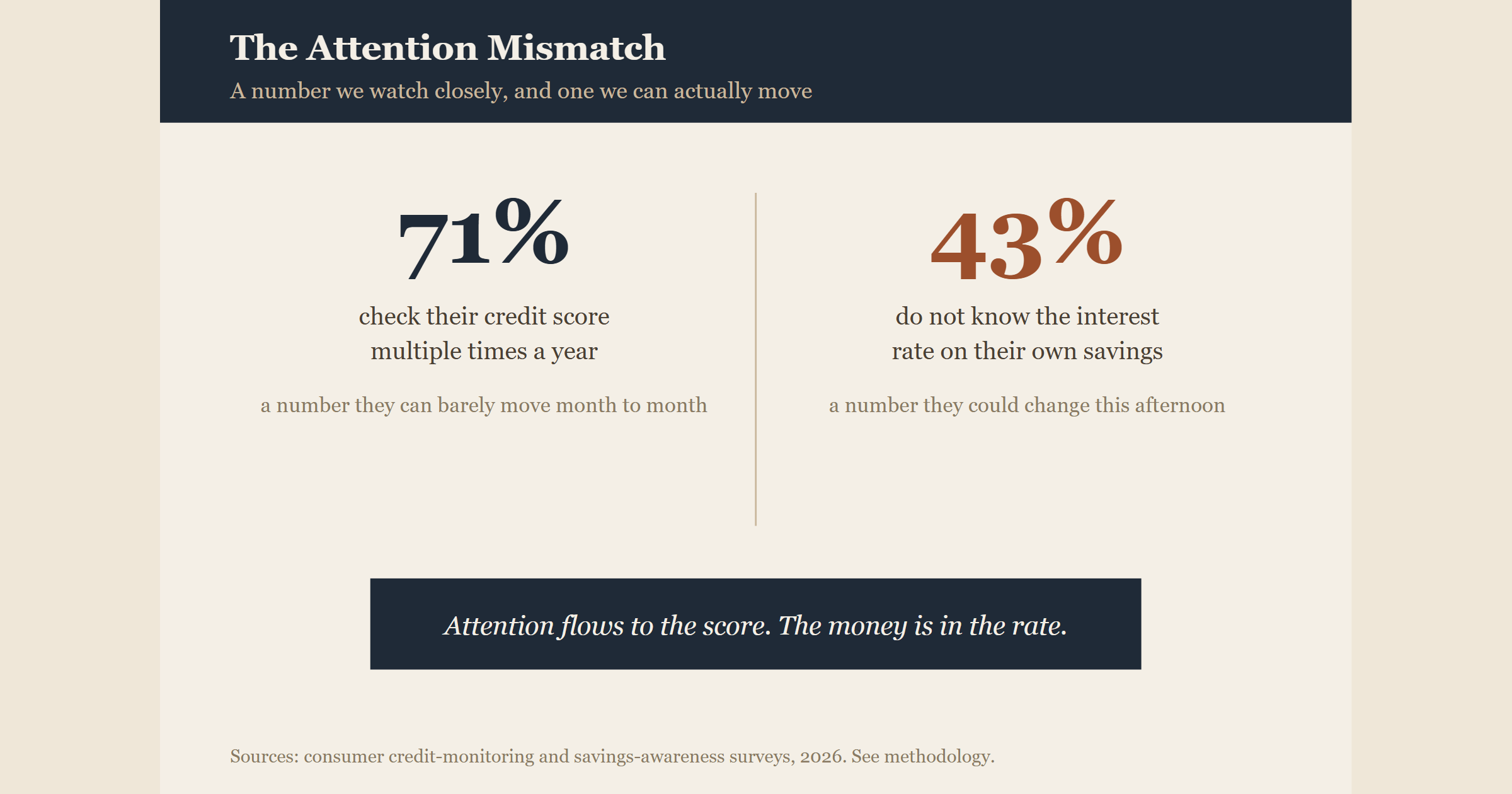
The Attention Mismatch: Americans Watch the Number They Cannot Move
71% of Americans check their credit score multiple times a year, per FICO/Harris Poll. Yet 43% cannot name the interest rate on their own savings. We obsess over the number we can barely move and ignore the one we could change this afternoon.
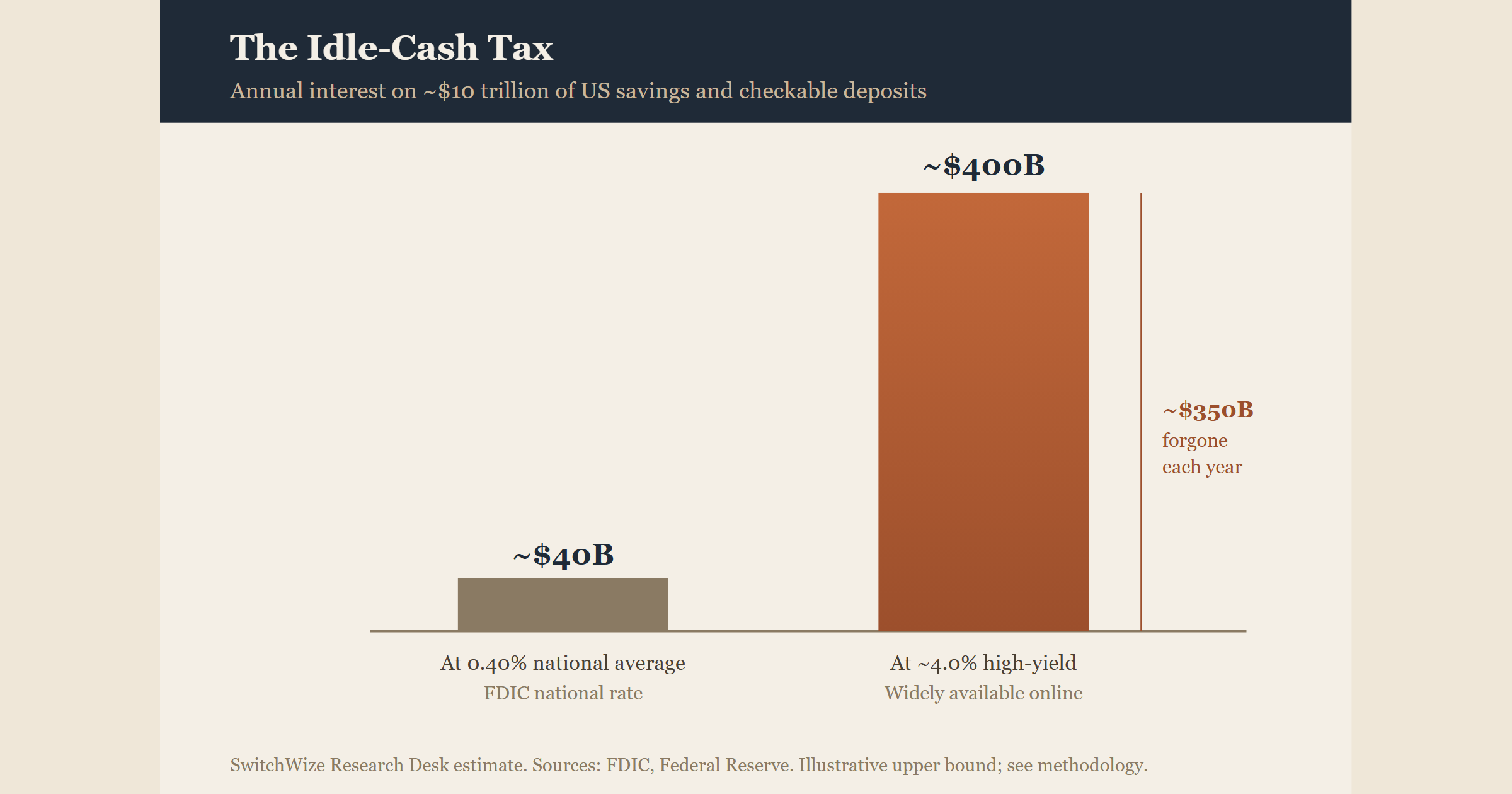
The Idle-Cash Tax: Americans Are Forgoing Hundreds of Billions in Interest
US households hold roughly $9.157 trillion in time and savings deposits earning a national-average 0.38%, while widely available accounts pay near 4%. SwitchWize estimates the gap at more than $300 billion in forgone interest a year.

The Loyalty Tax: How Staying Put Quietly Costs You Thousands
Millions of savers still earn a fraction of a percent at a bank that could pay ten times more. Why an old, unquestioned habit is worth billions to the banks, and why it no longer has a good excuse.
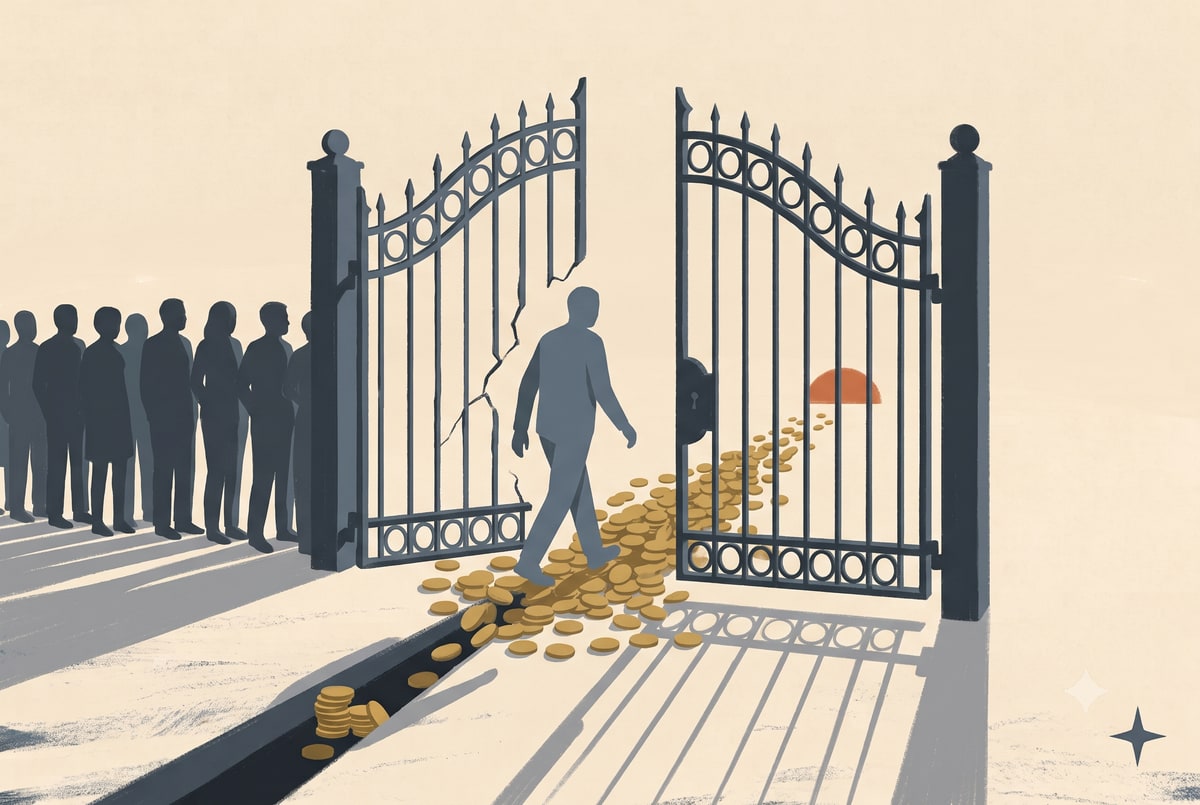
The Hidden Cost of Inertia: How Structural Friction Fuels Mega-Bank Returns
America's largest banks post consumer-banking returns on capital in the high-20s to low-30s percent range. The gap between what they earn and what they pay depositors is not a pricing mystery. It is a friction problem, and friction problems get solved.

The Death of Forward Guidance: Why the Fed's Silence Turns Savers Into De Facto Market Participants
The Fed is stepping back from forward guidance, the signals households used to plan around. With less warning before rate moves, the advantage now goes to the attentive saver.

The Quiet Theft: Why We Rage at the Wrong Transgressions
We rage at a reckless driver who costs us nothing and shrug at a low-yield account quietly draining real money. Why slow financial losses go unfelt, and how to fix it.

Financial Hygiene Is a Moral Obligation, Not a Chore
Idle money is a quiet decision with a direction. Why tending your own finances is less a chore than a form of self-respect, and a duty to whoever inherits what you build.

Will High-Yield Savings Rates Drop in 2026? Why the New Fed Era Rewards Nimble Savers
With the Fed on hold under Kevin Warsh, the new era looks less like a clear directional bet and more like a reason for savers to stay willing to move.