- We rage at a reckless driver who may cost us nothing, and shrug at a low-yield account that quietly drains real money every year. The threat we can see gets the response; the one we cannot goes unfelt.
- On $50,000 left untouched for ten years, the gap between a 0.4% account and a 4.5% one is nearly $25,000, with no added risk. It depends only on where the money sat.
- A slow loss has to be found before it can be felt. The fix is not manufactured outrage but clarity: compare what your money earns against what it could, then act on the difference.
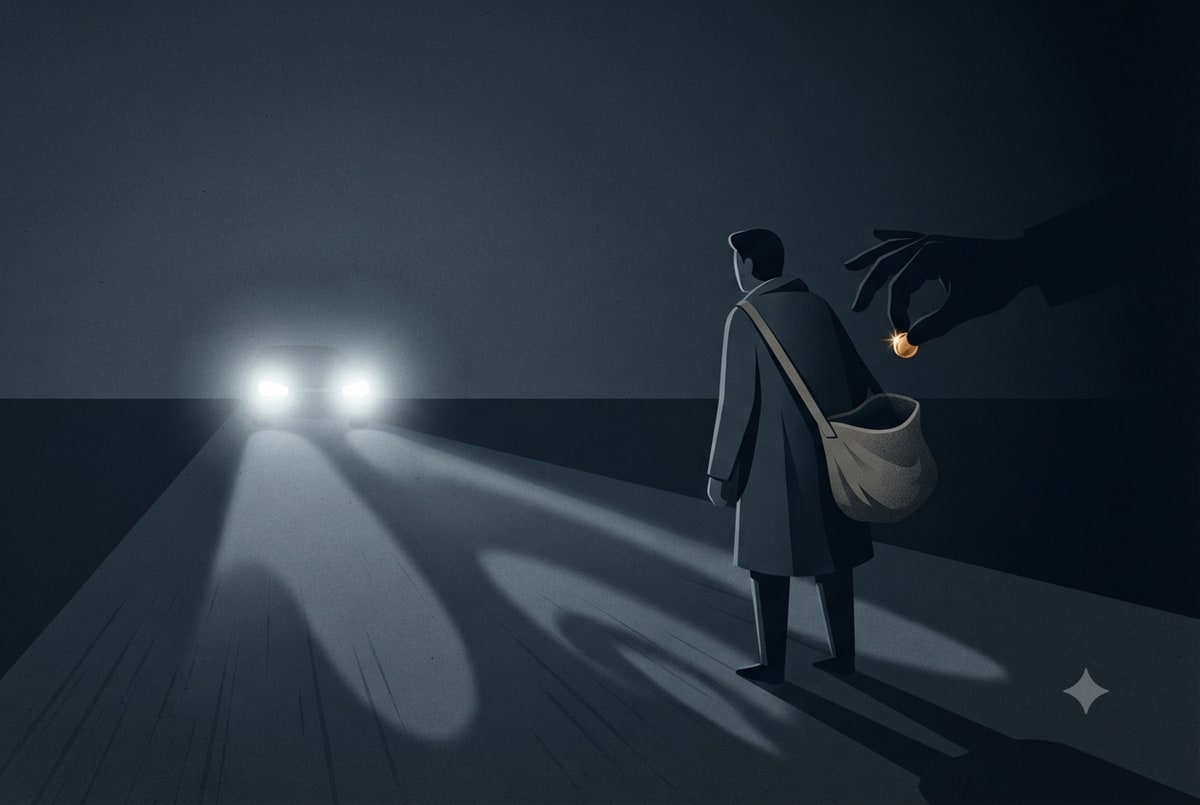
Picture the scenario: you are driving, and someone cuts you off recklessly, putting your safety at risk. The response is instant: fiery anger, a visceral sense that your boundaries have been violated. Your hands tighten on the wheel. Your heart rate spikes. Yet that same visceral fury rarely surfaces when low savings yield loss aversion quietly erodes your financial security over months and years.
Now consider a quieter scene. You check your savings account and see a yield of 0.4%, while the best widely available high-yield savings rate sits at 4.20% APY and the national average savings account pays only 0.38% APY. No adrenaline. No tightened grip. Just acceptance.
That is strange, when you think about it. The driver who cut you off may have cost you nothing at all. The low-yield account is costing you real, compounding money, year after year. One provokes outrage. The other provokes a shrug.
Why we are wired to miss the slow theft
Human beings are exceptionally good at detecting sudden, visible threats and remarkably bad at detecting slow, invisible ones. A reckless driver is a threat your nervous system recognizes instantly: sudden, personal, demanding a response right now. A bank's interest rate is none of those things. It changes slowly, it arrives as a number on a screen rather than a near-miss, and there is no single moment that feels like a violation.
Behavioral economists call part of this loss aversion, the idea that the pain of a loss is felt more sharply than the pleasure of an equivalent gain. But loss aversion was built around losses we actually perceive. The drag of a low-yield account is not one of those. It is a loss you have to go looking for, by comparing what you have against what you could have had. Most people never run that comparison. The balance still ticks up a little each month, and "a little" feels like nothing went wrong.
A threat you can see, you respond to. A threat you cannot see has to be found before it can be felt, and most of us never go looking.
What the quiet theft actually costs
Picture two savers, both starting with $50,000, both adding nothing further, over ten years.
At a typical low-yield rate of 0.4%, that balance grows to roughly $52,000. At a competitive high-yield rate of 4.5%, close to what the best accounts pay today, it grows to roughly $77,700. That is a difference of nearly $25,000, not from taking on more risk, but simply from where the money happened to sit. No reckless driver has ever cost anyone $25,000 in a moment of fright. The quiet account did, and nobody felt a thing. The gap is easy to verify: a savings calculator shows it on your own balance in seconds.
The outrage gap is the opportunity
The deeper problem is not that low yields exist. It is that people never experience them as a violation, so they never act the way they would against any other affront to their interests. If a stranger took $25,000 from your account in one transaction, you would call the bank within the hour. When a bank quietly withholds that same $25,000 a fraction of a point at a time, most people call no one at all.
This is the gap worth closing, not by manufacturing outrage, but by giving people the same clarity about slow harm that they already have about sudden harm. Money deserves the same vigilance whether it is threatened all at once or a little at a time.
That is the premise behind SwitchWize: making the quiet theft visible, and easy to stop. By comparing where your money sits against where it could be working harder, SwitchWize turns an invisible, slow-motion loss into something as clear as a near-miss on the highway. The right response here is not a jolt of adrenaline. It is a five-minute decision your money has earned. And because the theft only stays quiet when no one is watching, the work does not stop there: ongoing reporting keeps you close to the numbers, so you always know your money is working as hard as it possibly can.
Source: S&P Capital IQ Pro; SNL Financial Data. Calculations: FDIC. Reflects the $2,500 product tier for savings and interest checking accounts.
Frequently Asked Questions
Why don't low savings rates feel like a loss?
How much can a low-yield account actually cost?
What is the fix for the quiet theft of low yields?
What should I do after reading The Quiet Theft: Why We Rage at the Wrong Transgressions?
The 5-minute money briefing
One email per week. New rates, fed moves, and what to actually do about them.
No spam. Unsubscribe anytime.
Answer a few questions about your situation and goals. Money Map points you to the highest-value next step across savings, mortgage, cards, and debt.
Editorial review
What changed since the last update
Was this guide helpful?
Found an inaccurate, outdated, or missing claim? Report a correction. We verify reports against the relevant source before changing a guide or ranking.
Adeesh Setya is Head of Financial Research & Principal at SwitchWize, with 25+ years of experience in deposits, treasury management, banking products, and financial services. He previously served as Treasurer at Merrill Lynch Bank USA and Morgan Stanley Bank USA, where he managed bank funding, deposits, and interest-rate risk. He writes on Federal Reserve policy, the general marketplace for banking products, and what they mean for savers and consumers.
Available for on-record interviews, background briefings, and custom data cuts.
research@switchwize.com