- Chairman Warsh's hawkish Jackson Hole tone pushed September rate hike odds to roughly 60%, but Governor Waller's CPI-conditioned comments this week and Governor Barr's opposing warning have pulled the committee back toward roughly even odds between a hold and a hike.
- August payrolls rose 162,000 against an expected 53,000, with prior months revised up 55,000 combined, giving the Fed a stable labor market and near-exclusive room to decide September on inflation data alone.
- The August CPI report, due September 11, arrives five days before the Fed's September 15-16 meeting and is likely to be the single number that settles which way the committee leans.
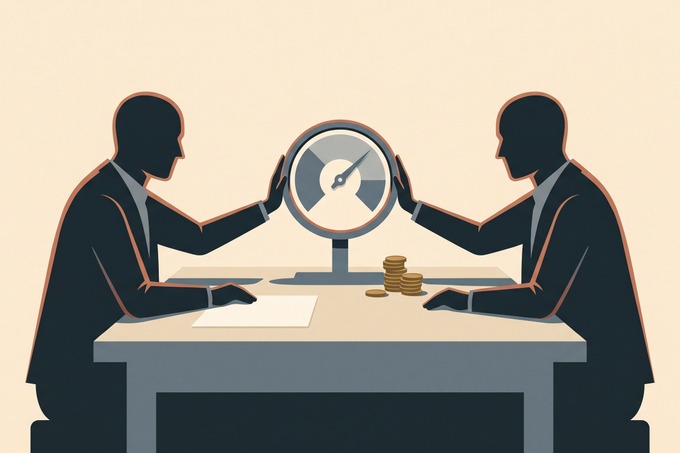
Nothing affects short-term bank deposit rates more directly than the Fed's own policy rate, and this past week gave us more to work with than most. Here is how I am reading the back-and-forth ahead of the mid-September meeting. Understanding the September Fed meeting rate hike odds 2026 requires parsing through these competing signals from policymakers.
The odds swing, then swing back
At the Jackson Hole symposium in late August, Chairman Warsh struck a hawkish tone, saying the Fed has "work to do" if it is not confident inflation is moving toward its 2% target. That speech alone pushed market-implied odds of a September hike to roughly 60%, up from about 35% beforehand.
Those odds have since receded. Governor Christopher Waller told Reuters this week that his vote will hinge on how August's CPI report comes in: continued disinflation would lead him to support holding rates, while a hotter reading could push him toward a hike. His remarks, echoing a "give disinflation a chance" framing, brought the market back to roughly even odds between a hold and a 25-basis-point hike. Governor Michael Barr has taken the opposite side this week, warning that inflation risks becoming entrenched and that the Fed should be ready to act if price pressures do not ease.
That back-and-forth may be precisely what Warsh wants going forward. A committee that debates in public, conditions its decisions on incoming data, and avoids locking itself into a path in advance is exactly the discipline he described at Jackson Hole itself, applied in real time.
A labor market that gives the Fed room to focus on inflation
The other major data point this week was the August jobs report. Payrolls rose by 162,000, well above the roughly 53,000 economists had expected, and June and July's totals were revised up by a combined 55,000. Unemployment held steady at 4.1%.
For a Fed operating under a dual mandate, maximum employment and price stability, a labor market that looks stable takes much of the employment side off the table for now. That gives the FOMC almost exclusive room to weigh its decision on inflation, rather than balancing it against job-market concerns. It also removes the easiest argument for a dovish hold: a committee cannot lean on labor-market weakness to justify patience when the labor market is not, in fact, weak.
Manufacturing and services survey data from the Institute for Supply Management this week pointed to continued cost pressures in supply chains. Input-price readings in ISM surveys tend to correlate with the direction of the Consumer Price Index, so some economists see this as an early signal that August's CPI, due September 11, could come in firmer than hoped. That report, arriving a week before the Fed's meeting, is likely to be the single data point that determines which way the committee leans.
What this means for your accounts
For anyone watching rates on savings accounts, CDs, or mortgages, this back-and-forth is worth tracking even if it does not change anything yet. A hold keeps things roughly where they are. A quarter-point hike would nudge deposit yields modestly higher while adding a bit more cost to variable-rate borrowing. Neither outcome is dramatic on its own, but the uncertainty itself is a reminder that rates are not on a fixed downward or upward path right now. They are genuinely being decided meeting by meeting, with the fed funds rate still sitting at 3.75% to 4.00% as of today.
I would not wait on the outcome to check where you stand. If your CD is coming up for renewal or your bank has been slow to move its savings rate either direction, that gap between what you are earning and what the market is actually paying is worth closing now, not after the meeting. Our Money Map is a fast way to see that gap in real dollars before you decide.
The bottom line
We are in a different kind of policy environment than the one markets got used to over the past decade. Decisions are not being telegraphed months in advance. They are being shaped week to week by whichever data point lands most recently, and by governors who are clearly willing to argue their case in public rather than hide behind a unified front. Between now and the meeting, the CPI report, along with any further comments from Fed officials, will carry outsized weight in setting expectations.
I spent 25 years on the bank side of exactly this kind of stretch, where funding and deposit pricing get repriced the moment the committee's mood shifts. My honest advice to SwitchWize's users is the same one I would give a colleague: stay engaged with your own accounts through this, and plan on a real check-in on where your money sits shortly after the Fed's decision, rather than assuming today's rate will simply hold until then.
Frequently Asked Questions
Did the Fed's rate hike odds go up or down after Jackson Hole?
Why does the August jobs report matter for the Fed's inflation decision?
What should savers and borrowers actually do before the September Fed meeting?
What should I do after reading The Week After Jackson Hole: A Fed Divided, and What It Means for Your Rate?
The 5-minute money briefing
One email per week. New rates, fed moves, and what to actually do about them.
No spam. Unsubscribe anytime.
Act on this: today's top savings

Ranked by SwitchWize's composite score. SwitchWize currently has no compensated product links.
Editorial review
What changed since the last update
Was this guide helpful?
Found an inaccurate, outdated, or missing claim? Report a correction. We verify reports against the relevant source before changing a guide or ranking.

Adeesh Setya is Head of Financial Research & Principal at SwitchWize, with 25+ years of experience in deposits, treasury management, banking products, and financial services. He previously served as Treasurer at Merrill Lynch Bank USA and Morgan Stanley Bank USA, where he managed bank funding, deposits, and interest-rate risk. He writes on Federal Reserve policy, the general marketplace for banking products, and what they mean for savers and consumers.
Available for on-record interviews, background briefings, and custom data cuts.
research@switchwize.com