- Chairman Warsh used his first full Jackson Hole keynote to defend two unpopular positions at once: refusing forward guidance and refusing to commit to a fixed reaction function, arguing both trade short-term certainty for longer-run credibility.
- He went further than markets expected, saying responsibility for 65 months of elevated inflation "sits squarely with the central bank, and that is where it belongs." September rate-hike odds jumped from roughly 35% to near 60% that same day.
- For savers, this argues for being deliberate about deposit yields now rather than on autopilot. For mortgage shoppers, a hawkish Fed paired with Treasury Secretary Bessent's active long-bond buybacks could be a more constructive combination for long rates than either acting alone.

Of the many Jackson Hole speeches I have listened to over the course of my career, this one felt like one of the more consequential, both for the clarity Chairman Warsh brought to a handful of core principles and for how directly it bears on decisions our users are making right now. My Kevin Warsh Jackson Hole speech reaction centers on how his discipline-focused framework should reshape the way you think about long-term financial planning.
Before I get to substance, a word on the intangibles, because they matter more than people give them credit for. Warsh came across as sincere. He did not read like a Fed chair worried about pleasing the executive branch, and he did not read like someone winging it. He had a firm command of where things stand on inflation, employment, and the plumbing of monetary policy, and he was willing to say so plainly. Markets and consumers alike take their cues as much from tone as from text.
Refusing to guide, on purpose
On forward guidance, I found his argument genuinely persuasive. Warsh has taken real criticism for declining to tell markets where rates are headed, and he used part of this speech to explain why, going so far as to say the practice "has overstayed its welcome." His reasoning tracks with basic human nature. Once a central bank commits to a guidance path in public, ego and institutional inertia make it harder to abandon that path when new data arrives. A committee ends up holding a position a beat or two longer than the facts justify, simply because it said the position out loud. That is a fair read of monetary-policy history, not just Warsh's opinion of it.
The same logic extends to his refusal to define a formal reaction function, the rulebook markets want for predicting how policy will respond to new data. His point, as I heard it, is that the economy is too complex and too fluid for the Fed to lock itself into a formula: if X happens, do Y. Pinning that down in advance invites the same trap as forward guidance, defending a rule instead of reading the data. Both positions struck me as coherent and, frankly, intellectually honest, even though they leave markets with less to hold onto.
Taking ownership of the last 65 months
Where Warsh was clearest was on responsibility and mandate. He disabused anyone in the room of the idea that the Fed will be a passive bystander to inflation. In his own words, the responsibility for 65 months of sustained, elevated inflation "sits squarely with the central bank, and that is where it belongs." He reaffirmed that the Fed's preferred inflation gauge is PCE, currently running at 3.7% on a 12-month basis, against a firm 2% target. Worth noting in fairness: core PCE, which strips out food and energy and is the closer read on the underlying trend, ran cooler at 3.3% over the same period, so the picture is elevated but not as stark as the headline number alone suggests. He reasserted that short-term interest rates remain the Fed's predominant tool for managing policy, unconventional measures aside. And he pushed back directly on the idea that the dual mandate, price stability and full employment, works at cross purposes, arguing that high inflation itself undermines the labor market it is supposedly protecting.
Taken together, this was a more hawkish, more accountable posture than markets had been pricing in, and the reaction reflected it. September rate-hike odds jumped from roughly 35% the day before to near 60% by the close, a meaningful same-day repricing for a speech that offered no formal guidance at all.
What this means for your accounts
We do not forecast rates at SwitchWize, and I will not start now. But directionally, a Fed chair who has just placed the weight of five-plus years of inflation squarely on his own institution's shoulders, in front of the world's central bankers, is signaling he is more inclined to act than to wait. On the short end, that argues for being deliberate about the yield you are accepting on savings and CD products right now rather than leaving them on autopilot. A tightening move next month looks more likely than not, and you want to be positioned for it, not caught by it.
The long end is a bit more layered. Warsh's demonstrated commitment to fighting inflation, if it holds, should help keep a lid on the term premium that has been pushing long-term yields, and mortgage rates, higher. Separately, Treasury Secretary Bessent has been actively intervening at the long end, doubling the size of long-bond buybacks and arguing the market is not pricing longer maturities appropriately. Whether or not that is properly the Fed's job or the Treasury's, the combination, a hawkish Fed chair and an active Treasury, could turn out to be more constructive for mortgage rates than either acting alone. That is an observation, not a prediction, and it is worth checking your own numbers against the market rather than assuming either institution has it handled for you. Our Money Map is a fast way to see the real dollar gap before you decide.
The bottom line
The bigger takeaway I would leave you with is that this is not a moment for complacency. Warsh himself framed this as close to a hinge point in economic history, pointing to the scale of change already underway in AI and its effects on productivity and labor. Add ongoing questions about growth and employment, plus the unusual tension between the Fed and Treasury over long-term rates, and there is more turbulence in play than any single Fed decision can capture.
I spent 25 years on the bank side of exactly this question, managing funding and deposits that get repriced the moment a Fed chair chooses his words. Discipline, not a single decision, is what carries an institution, or a household, through a stretch like this one. Staying engaged with your own accounts, where your money sits, what it is earning, what you are paying, has rarely mattered more than it does right now. That is the discipline we built SwitchWize to make easy.
Frequently Asked Questions
Why did Chairman Warsh say forward guidance has 'overstayed its welcome'?
What did Warsh actually say about who is responsible for high inflation?
What should I actually do differently after this speech?
What should I do after reading Discipline, Not a Decision: What I Took Away From Chairman Warsh's Jackson Hole Speech?
The 5-minute money briefing
One email per week. New rates, fed moves, and what to actually do about them.
No spam. Unsubscribe anytime.
Act on this: today's top savings


Ranked by SwitchWize's composite score. SwitchWize currently has no compensated product links.
Editorial review
What changed since the last update
Was this guide helpful?
Found an inaccurate, outdated, or missing claim? Report a correction. We verify reports against the relevant source before changing a guide or ranking.
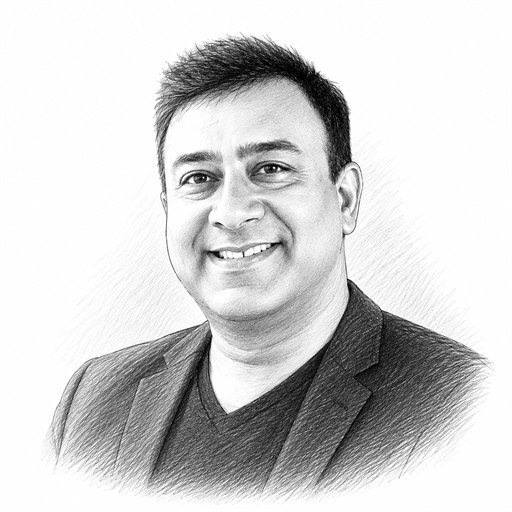
Adeesh Setya is Head of Financial Research & Principal at SwitchWize, with 25+ years of experience in deposits, treasury management, banking products, and financial services. He previously served as Treasurer at Merrill Lynch Bank USA and Morgan Stanley Bank USA, where he managed bank funding, deposits, and interest-rate risk. He writes on Federal Reserve policy, the general marketplace for banking products, and what they mean for savers and consumers.
Available for on-record interviews, background briefings, and custom data cuts.
research@switchwize.com