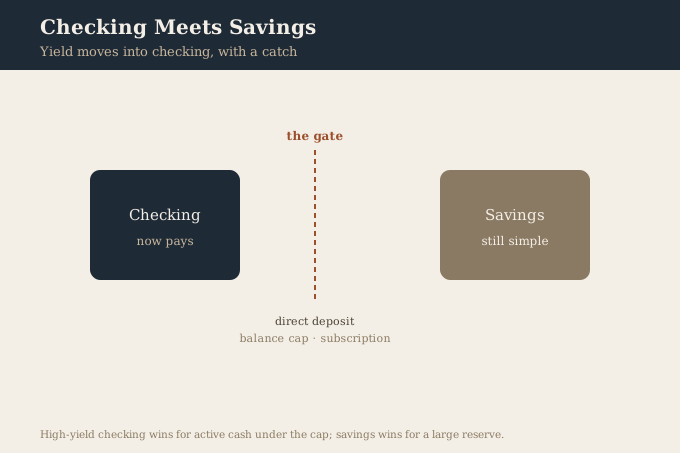
- Neobanks now put savings-level, sometimes higher, interest on checking, blurring the old divide between spending and earning accounts.
- The high rate almost always carries conditions: a direct deposit, a balance cap, or a paid subscription.
- High-yield checking wins for an active balance under the cap that meets the conditions; a plain savings account still wins for a large, untouched reserve.
For as long as most people can remember, the division of labor was simple: checking was for spending, savings was for earning. Checking paid nothing because the money was always moving; savings paid interest because it sat still. In 2026 that line is dissolving. Neobanks, pushed by high-profile launches offering headline rates, are attaching savings-level interest, sometimes higher, to checking accounts. Savings rates on this page were last verified recently. The comparison of high yield checking vs savings 2026 now requires careful evaluation of features beyond interest rates alone.
That is a real improvement, because it earns money on cash you were going to keep liquid anyway. But it is not the blanket upgrade the headlines suggest, because the high rate almost always comes with strings.
What changed, and why
Traditionally, banks paid nothing on checking because they did not have to; the money was transactional and customers did not shop it. Neobanks compete differently. To win a primary account, they now dangle a rate on checking that rivals or beats savings, turning the everyday balance into an earning asset.
For a saver, the appeal is direct. The cash you hold for rent, bills, and spending has always earned zero. A high-yield checking account puts a real rate on exactly that money, without asking you to move it somewhere less accessible.
The three catches
The advertised rate is real, but it is rarely unconditional. Three strings show up again and again:
- A qualifying direct deposit. Miss it, and the rate often collapses to a token figure.
- A balance cap. Many accounts pay the top rate only up to a limit, often in the low tens of thousands, and far less above it. This is designed for everyday balances, not large reserves.
- A paid subscription or activity requirement. Some top rates require a monthly fee or a set number of debit transactions, which can quietly erode the benefit.
Read together, these mean the headline applies to a specific kind of balance: active, direct-deposited, and below the cap.
Which account for which money
- Better home
- High-yield checking
- Why
- Earns on liquid money, meets the conditions
- Better home
- High-yield savings
- Why
- Pays on the whole balance, fewer strings
- Better home
- High-yield savings
- Why
- Avoids the sharp rate drop past the cap
When it should replace your savings account
High-yield checking earns its place for the portion of your money that is active, meets the conditions, and sits under the cap. For that balance, it beats a savings account by paying real interest on cash you keep liquid regardless.
It should not swallow a large reserve. Above the balance cap, or for money you would rather not tie to direct-deposit and debit rules, a plain high-yield savings account usually pays more overall, because it applies one rate to the entire balance with fewer conditions. The common resolution is not either-or: high-yield checking for the working balance, savings for the reserve.
The line between the two accounts is blurring, but the underlying question has not changed. Match each dollar to the account that pays it the most for the job it is doing, and let the labels sort themselves out.
Sources
- Reporting on neobank yield competition moving into checking, eMarketer on 2026 card and account trends; see also our X Money review.
- SwitchWize Research Desk analysis of reward-checking conditions and balance caps.
Rates, caps, and conditions vary widely by account and change frequently; confirm current terms on each provider's disclosures. This is general educational information, not a recommendation.
What to Do Now
Frequently Asked Questions
Is high-yield checking better than a savings account?
What is the catch with high-yield checking accounts?
Should I move my savings into a high-yield checking account?
Do high-yield checking rates have balance limits?
Act on this: today's top savings



Ranked by SwitchWize's composite score. We may earn a referral fee, and it never changes the ranking order.
Editorial review
What changed since the last update
Was this guide helpful?
Found an inaccurate, outdated, or missing claim? Report a correction. We verify reports against the relevant source before changing a guide or ranking.

Adeesh Setya is Head of Financial Research & Principal at SwitchWize, with 25+ years of experience in deposits, treasury management, banking products, and financial services. He previously served as Treasurer at Merrill Lynch Bank USA and Morgan Stanley Bank USA, where he managed bank funding, deposits, and interest-rate risk. He writes on Federal Reserve policy, the general marketplace for banking products, and what they mean for savers and consumers.
Available for on-record interviews, background briefings, and custom data cuts.
research@switchwize.com