- Most issuers forfeit unredeemed points the moment an account closes, with no guaranteed grace period.
- Downgrading to a no-fee product on the same account almost always preserves the balance that closing would erase.
- Redeem or transfer first. Reversing a forfeited balance after closure is rarely an option.
Quick answer
Closing a rewards card is usually the single fastest way to lose the points sitting in it. Chase and Amex both treat an unredeemed rewards balance as forfeited the moment the account closes, and while some issuers occasionally extend a short grace period as a courtesy, none guarantee it in writing. Downgrading is different: because the account number and relationship stay open, the balance typically carries over untouched. The catch is that a downgrade can still end your access to airline and hotel transfer partners if that access was tied to the premium card you are giving up. Before you do either, redeem the points for cash back, move them to a partner, or combine them into an account you plan to keep open. Understanding what happens to points when you close or downgrade a card helps you protect your rewards balance before making changes.
What actually happens, issuer by issuer
Policies differ enough that assuming "my points are safe" without checking is a real risk. Chase's cardmember terms treat Ultimate Rewards balances as forfeited on closure. Amex has historically applied the same forfeiture rule to Membership Rewards, though some cardholders report Amex granting a short window on request, particularly on request before the closure is finalized, not as a standing policy. Citi and Capital One generally follow the same pattern: closure zeros the balance, downgrade does not. None of this is guaranteed to stay the same, so confirm current terms with your specific issuer before assuming either outcome.
The downgrade wrinkle worth knowing: some transfer-enabled premium cards require you to keep that specific card, or an equivalent one in the same family, open at the time you transfer points to a travel partner. If you downgrade your only premium card to a no-fee product, your existing balance may still sit safely in the account, but you could lose the ability to move it to airline or hotel miles until you reopen an eligible card.
Decision table
- Best next move
- Redeem or transfer everything first
- Why
- Waiting until after closure is often too late to recover the points
- Best next move
- Ask about downgrading instead of closing
- Why
- The account and balance usually survive a downgrade where closure erases both
- Best next move
- Transfer to a partner before downgrading, not after
- Why
- Downgrading can end transfer-partner access even if the balance itself remains
- Best next move
- Weigh the bonus against the annual fee before deciding
- Why
- A strong retention offer can beat both closing and downgrading
- Best next move
- Call and get the answer in writing before acting
- Why
- Assuming a grace period exists, when it does not, is how balances get wiped
Worked example: a balance about to be forfeited
A cardholder has 40,000 Membership Rewards points and is closing the account to avoid a $95 annual fee. Left unredeemed, that balance is forfeited entirely, a $0 outcome regardless of what it could have been worth.
Redeemed or transferred first, the same 40,000 points are worth roughly $280 cashed out at a conservative 0.7 cents each, closer to $560 transferred to an airline partner for a realistic economy redemption at 1.4 cents each, and as much as $880 in an optimized premium-cabin transfer at 2.2 cents each if the right award space is open. Losing that range to save a $95 fee is a bad trade in every scenario.
Model your own balance with the travel-rewards setup calculator before requesting a closure. A Money Map scan is also worth running if the annual fee itself, not the points, is the part of your budget actually worth fixing.
Choose this if, skip it if
Downgrade instead of closing if:
-
You mainly want to stop paying the annual fee and are not chasing a retention bonus.
-
Your balance is not currently earmarked for a transfer that requires the premium card to stay open.
Close the account if:
-
You have already redeemed or transferred every point, or the balance is genuinely zero.
-
Keeping the account open carries a real cost, like a fee, with no benefit you actually use.
Wait before doing either if:
-
You are not sure whether your issuer offers a grace period, since assuming one exists is the most common way balances get wiped.
-
You are also planning to combine this balance with another account; sequence that step first.
Fees, exclusions, and approval context
Account closure does not require new credit, but downgrading to a different product, or reopening a premium card later to restore transfer access, does go through an approval decision like any other application. Confirm your issuer's specific forfeiture policy, any prorated annual fee refund on closure, and whether a downgrade preserves transfer-partner eligibility for your existing balance, not just for future earning.
For the mechanics of moving a balance before you touch account status, see how to combine points across cards and household. For the closure decision itself, cancel vs. downgrade vs. product change and ask for a retention offer before canceling cover the account-level tradeoffs this article does not.
Pay-in-full versus revolver verdict
For someone who pays in full, the sequence is simple: redeem or transfer first, then decide between downgrading and closing based on the annual fee and any retention offer. For a revolver, the annual fee is rarely the biggest cost in the picture. Compare it against the ongoing interest at the average card APR of 24.00% using the credit card interest calculator before spending time on the points question at all.
How we ranked
We compared closing, downgrading, and redeem-first based on documented issuer forfeiture policy, whether transfer-partner access survives the change, and the account-level cost of keeping the card open. We did not assume every issuer handles forfeiture identically, and we did not treat a discretionary grace period as a guaranteed outcome.
Compensation disclosure: SwitchWize may earn a referral fee when you apply through partner links. Organic rankings are based on fit and value.
Sources
- CFPB guidance on closing a credit card account covers the account-level tradeoffs of closing versus keeping a card open.
- Chase Ultimate Rewards program terms describe current forfeiture and transfer-eligibility rules.
- Federal Reserve consumer credit resources explain card agreements and account terms more broadly.
Terms referenced on this page were verified on July 10, 2026. Offers, fees, APRs, rewards, eligibility, and program rules can change. This article is educational information, not individualized financial advice.
Frequently Asked Questions
Do I lose my points if I close a credit card?
Does downgrading a card also forfeit points?
Should I redeem or transfer points before closing an account?
What if I am also combining points with another account?
Is closing or downgrading better for my credit score?
The 5-minute money briefing
One email per week. New rates, fed moves, and what to actually do about them.
No spam. Unsubscribe anytime.
Act on this: today's top cards


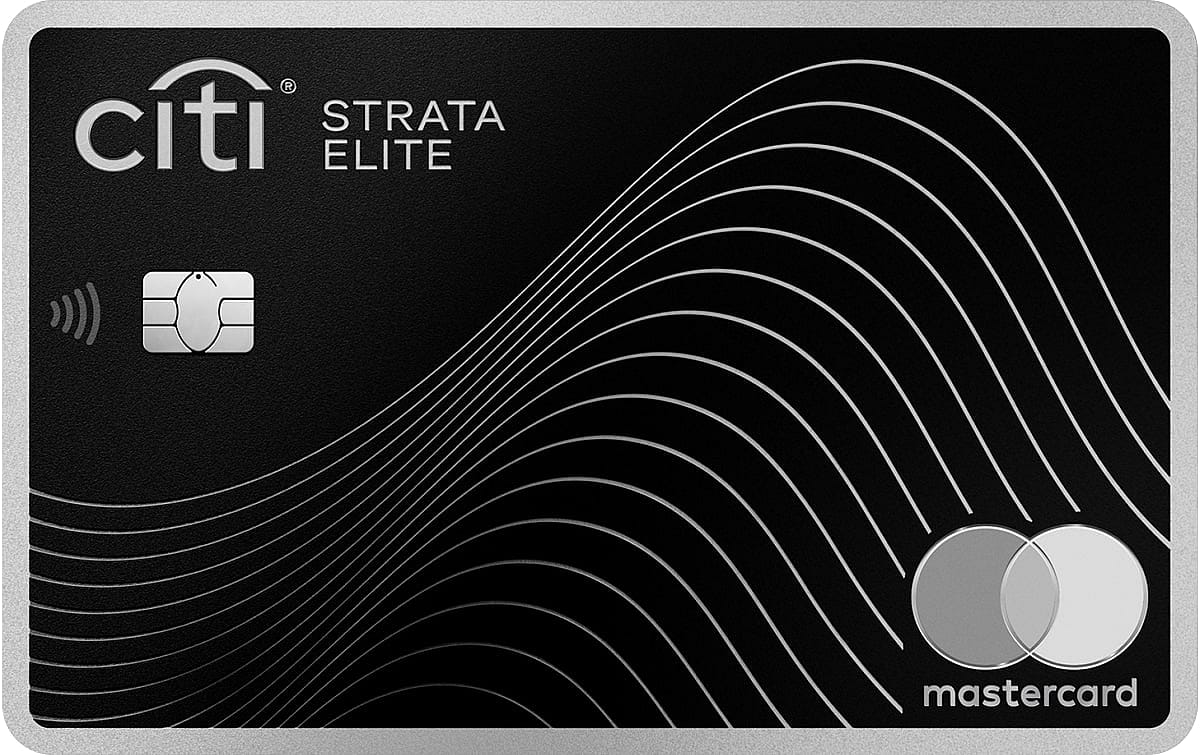
Ranked by SwitchWize's composite score. SwitchWize currently has no compensated product links.
Editorial review
What changed since the last update
Was this guide helpful?
Found an inaccurate, outdated, or missing claim? Report a correction. We verify reports against the relevant source before changing a guide or ranking.
