How to choose
What to weigh before you pick
It usually comes down to 3 things. Compare your options on each before deciding.
What you earn on the spending you actually do.
The fee weighed against the rewards and credits you will use.
The intro offer and the spend required to earn it.
- On $25,000 of annual spending, flat 2% cash back is a certain $500 with no redemption research needed.
- The same spend earning 50,000 travel points can be worth as little as $350 cashed out, or as much as $2,000 transferred for an aspirational award.
- Travel points only beat cash back if you're willing to research and confirm the higher-value redemption; otherwise cash back usually wins.
Quick answer
Choose cash back if you want certainty and don't plan to research redemptions. On $25,000 of annual spending, a 2% cash-back card pays a flat, certain $500. A travel card earning 2 points per dollar on the same spend produces 50,000 points, and what those are worth depends entirely on redemption. Cashed out or used for gift cards at roughly 0.6 cents each, they're worth about $350, less than the cash-back card. Redeemed through the issuer's portal or an easy domestic saver award near 1.3 cents each, they're worth about $650. Transferred for an aspirational international or premium-cabin award near 4.0 cents each, they can be worth $2,000. Only the achievable and optimized levels beat cash back. Understanding cash back vs travel points redemption value is essential to choosing the card that maximizes your rewards.
Decision table
- Best next move
- Choose cash back
- Why
- A certain $500 beats a travel points balance you'll likely cash out at a lower rate.
- Best next move
- Either can work, run the numbers
- Why
- An achievable 1.3-cent portal redemption on 50,000 points is close to cash back's $500.
- Best next move
- Choose travel points
- Why
- An optimized transfer redemption near 4.0 cents per point can double or triple cash back's value.
- Best next move
- Choose cash back
- Why
- Unused or expiring travel points can lose all their potential value.
- Best next move
- Subtract the fee before comparing
- Why
- A travel card's higher point-earning rate has to clear its annual fee before it beats a no-fee cash-back card.
Worked example
Cash back: 2% of $25,000 is a flat $500, paid as cash or statement credit, no redemption decision required.
Travel points, conservative: 50,000 points cashed out or redeemed for gift cards at roughly 0.6 cents each is about $300, below cash back.
Travel points, achievable: the same 50,000 points booked through the issuer's travel portal or an easy domestic saver award at roughly 1.3 cents each is about $650, above cash back.
Travel points, optimized: the same 50,000 points transferred for an aspirational international or premium-cabin award at roughly 4.0 cents each is about $2,000, four times cash back.
The spread between $300 and $2,000 on the identical spend is the entire argument for the three-number framework. A single advertised "cents per point" figure hides which end of that range you'll actually land on.
Choose this if, skip it if
Choose cash back if:
-
You don't want to spend time researching award charts, transfer ratios, or availability calendars.
-
Your travel plans are irregular, uncertain, or nonexistent this year.
-
You value being able to use the reward for anything, not just travel.
Choose travel points if:
-
You travel often enough to justify learning one or two transfer partner programs well.
-
You're comfortable confirming award availability before committing, as covered in finding award availability before transferring points.
-
The card's annual fee, if any, is comfortably covered by the achievable redemption level, not just the optimized one.
Skip travel points and take cash back if:
-
You've historically let points expire, devalue, or sit unused.
-
The travel card's annual fee is close to or larger than what the achievable redemption level would pay out.
If you carry a balance
If you pay your statement in full, the comparison above decides the winner on its own terms. If you carry a balance, skip this entire comparison and prioritize the lower-APR option first. The average card APR runs near 24.00%, and interest on even modest spending erases both the $500 cash-back figure and every travel-points scenario above it. A Money Map scan can show whether paying down that balance matters more this year than optimizing rewards at all.
Approval context and program rules
Cash-back cards generally target good credit and are among the more widely approved reward card types. Premium travel cards with strong transfer partner networks more often skew toward good to excellent credit, roughly high 600s FICO and up, along with income and existing exposure considerations from the issuer.
Cash-back rates sometimes apply only to specific categories or up to a quarterly spending cap, after which the rate drops. Travel points redeemed for gift cards or merchandise, the conservative end of the range above, are frequently the weakest redemption a program offers and are usually disclosed deep in the program's own terms, not on the card's marketing page. Transfer-partner redemptions depend on award availability and are typically final once processed.
For the mechanics of the transfer-partner path itself, see travel portal versus transfer partner. For a broader look at how programs like Chase, Amex, and Citi price out across this same conservative-to-optimized range, see how much are credit card points actually worth.
Sources
- CFPB rewards program research covers how rewards structures and redemption options affect real cardholder value.
- Chase Ultimate Rewards transfer partners shows the redemption paths available beyond a simple cash-out.
- Federal Reserve consumer credit resources explain how card terms and rewards disclosures work.
Terms referenced on this page were verified on July 10, 2026. Cash-back rates, point values, and transfer terms change by issuer and program. This article is educational information, not individualized financial advice.
How we ranked
We compared both reward types on identical spending rather than each program's best advertised example. SwitchWize may earn a referral fee if you apply for a card through this page. That relationship doesn't change the conservative, achievable, and optimized figures shown here; those come from typical redemption structures, not from whichever card pays us more.
Frequently Asked Questions
Is cash back always the safer choice?
Why would 50,000 travel points ever be worth less than $500 in cash back?
When do travel points clearly beat cash back?
Do I need excellent credit for either type of card?
Are the 0.6 and 4.0 cent figures fixed rates?
The 5-minute money briefing
One email per week. New rates, fed moves, and what to actually do about them.
No spam. Unsubscribe anytime.
Act on this: today's top cards


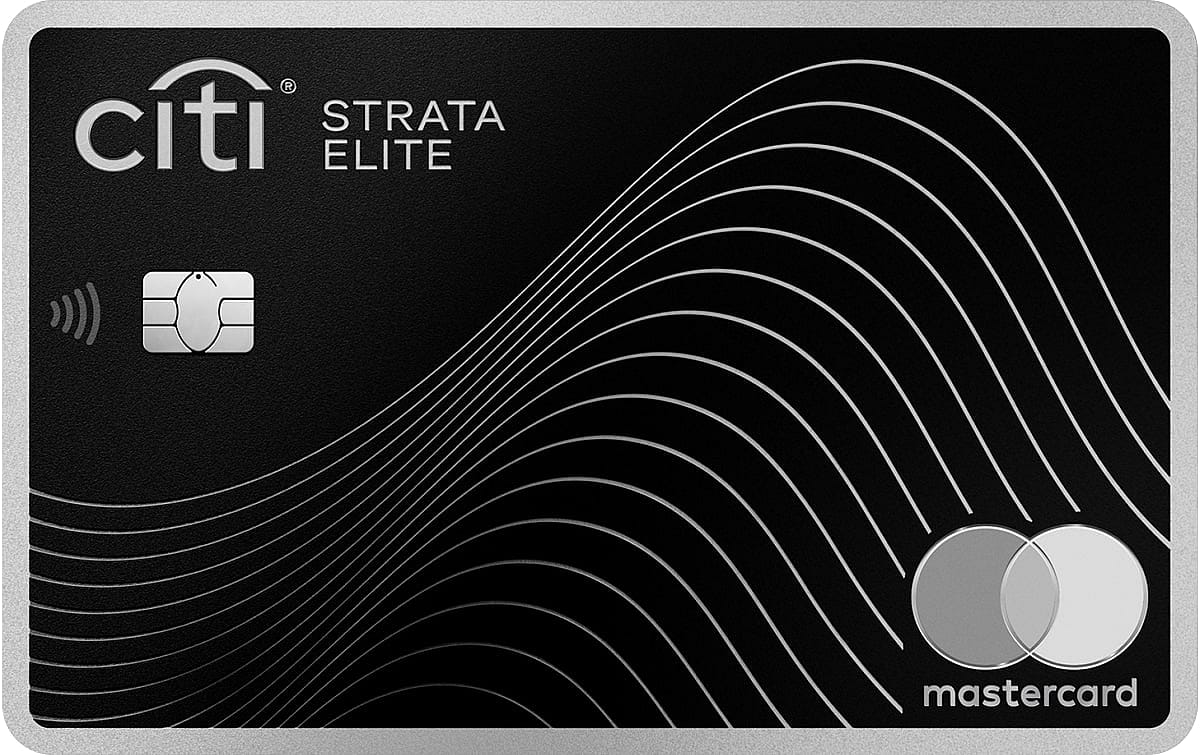
Ranked by SwitchWize's composite score. SwitchWize currently has no compensated product links.
Editorial review
What changed since the last update
Was this guide helpful?
Found an inaccurate, outdated, or missing claim? Report a correction. We verify reports against the relevant source before changing a guide or ranking.