- Closing a card removes its limit from your total available credit, which raises your utilization ratio, one of the biggest factors in your score.
- Over time, closing an old card can also shorten your average account age, a second scoring factor.
- An unused no-fee card helps most by staying open; keep it alive with a small recurring charge, and close only when a fee or real risk justifies it.
Cleaning out your wallet feels responsible. You have a card you never use, so you close it, one less thing to think about. The problem is that a credit score rewards exactly the opposite instinct: it likes old, open, barely-used credit lines sitting quietly in the background. Closing that card can nudge your score down for reasons that have nothing to do with how you actually handle money. Rates on this page were last verified recently. To understand does closing a credit card hurt your score 2026, you need to know how utilization and credit history length factor into your rating.
The card you think of as dead weight is often doing invisible work. Here is the mechanism, and the short list of times closing is actually the right move.
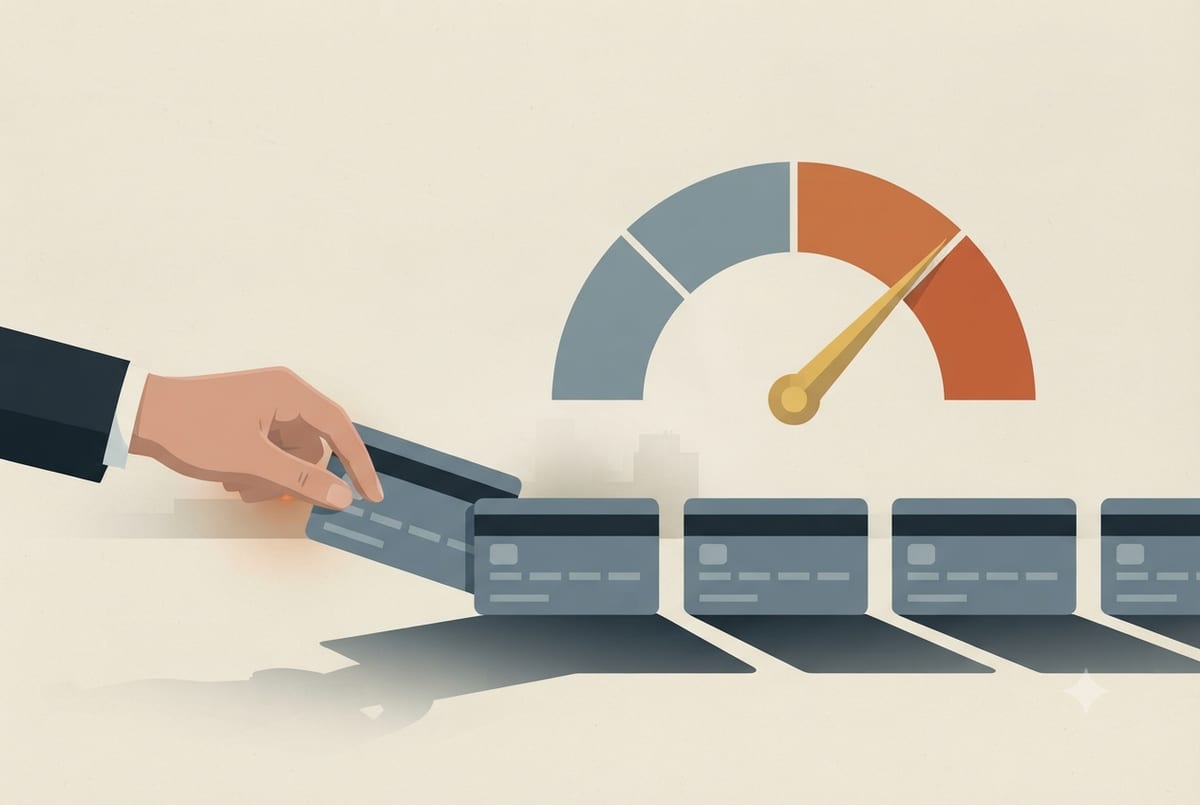
Why closing a card can lower your score
Two scoring factors take the hit.
Utilization goes up. Your credit utilization is the share of your total credit limit you are currently using, and it is one of the largest inputs to your score. When you close a card, its limit disappears from your total available credit. If you carry any balance on other cards, that same balance now represents a bigger share of a smaller total, so your utilization jumps, even though you did not borrow a cent more. The timing of when balances are reported makes this even more sensitive.
Average account age can shrink. Length of credit history matters too. Closing an old card does not remove it instantly (closed accounts in good standing stay on your report for years), but over time it stops aging and eventually falls off, which can lower your average age of accounts.
Neither of these reflects worse behavior. They are mechanical, which is exactly why closing feels harmless and is not.
The zombie card that helps you
An unused, no-annual-fee card is one of the most efficient things in your credit profile. It sits there contributing its limit (lowering utilization) and its age (supporting history), asking nothing in return. Keeping it open is almost pure upside.
The only maintenance: issuers sometimes close cards for inactivity. Prevent that by putting a small recurring charge on it, a streaming subscription, a phone bill, and setting autopay in full. The card stays alive, you never pay interest, and your score keeps the benefit.
If your zombie card does carry a fee and the issuer will not downgrade it, it helps to know what a genuinely no-fee replacement looks like before you close anything. Here are current no-annual-fee cards worth comparing:
When closing is actually right
Keeping cards open is the default, not a law. Close a card when:
- An annual fee is not worth it, and you cannot downgrade it to a no-fee version of the same card (downgrading keeps the limit and age).
- The card tempts you to overspend, and the behavioral risk outweighs the scoring benefit.
- You need to remove a joint holder or close an old shared account, such as after a divorce.
In these cases the small, usually temporary score dip is worth it. And it is worth it precisely because the math runs the other way if you carry a balance: at today's average card APR of 24.00%, a few hundred dollars of revolving debt costs more in a single year than most annual fees do, so a fee you cannot justify rarely deserves to keep a card open.
Keep open or close?
- Move
- Keep open; add a small recurring charge
- Move
- Downgrade to no-fee if possible, else close
- Move
- Close; the behavior matters more
- Move
- Close, accept the small dip
How to close without much damage
If you do close one, protect your score first: pay down balances on your other cards so your utilization stays low even after the closed card's limit disappears. Try to downgrade instead of closing where the issuer allows it. And keep your overall utilization well controlled, which is the single biggest lever either way.
Before you decide, run the Credit Score Action Simulator to see the likely direction and rough size of the score move for your specific accounts, balances, and utilization. If you are replacing a card rather than just closing one, browse current no-annual-fee and rewards cards first so the decision is a swap, not just a subtraction.
Quick answers
Does closing a card hurt your score? It can, by raising your utilization (its limit disappears) and eventually shortening your credit history.
Should I keep an unused card open? Usually yes, if it has no annual fee. Add a small recurring charge so the issuer does not close it.
When should I close one? For an annual fee you cannot downgrade away, a spending-temptation problem, or an old joint account.
Sources
- Consumer Financial Protection Bureau: Credit reports and scores
- Federal Trade Commission: Understanding your credit
Methodology
Scoring effects follow how major credit-scoring models weigh utilization and length of credit history; exact impact varies by your full profile. Closed accounts in good standing typically remain on your report for up to ten years. This is general educational information, not personalized credit advice.
What to Do Now
Frequently Asked Questions
Does closing a credit card hurt your credit score?
Should I keep an unused credit card open?
When does closing a credit card make sense?
How can I close a card without hurting my score?
The 5-minute money briefing
One email per week. New rates, fed moves, and what to actually do about them.
No spam. Unsubscribe anytime.
Act on this: today's top cards



Ranked by SwitchWize's composite score. We may earn a referral fee, and it never changes the ranking order.
Editorial review
What changed since the last update
Was this guide helpful?
Found an inaccurate, outdated, or missing claim? Report a correction. We verify reports against the relevant source before changing a guide or ranking.
