- Your issuer reports your balance to the bureaus around the statement closing date, not the due date, and your score reflects that reported number.
- Paying down before the statement closes reports low utilization, even if you always pay in full, and costs no interest thanks to the grace period.
- It matters most right before you apply for a loan, mortgage, or new card, when a lower reported utilization can lift your score.
Two people can handle credit identically, both charging a few thousand dollars a month and paying every bill in full, and end up with noticeably different scores. The difference is not discipline. It is timing, specifically the gap between the day your balance is reported and the day it is due. Almost no one uses that gap, and it is one of the cleanest score levers there is. Rates on this page were last verified recently. The strategy is simple: pay credit card before statement date score improves by reporting lower utilization than waiting until the due date.
The score does not see how responsible you are over the month. It sees a single snapshot, and you get to choose what is in the frame.
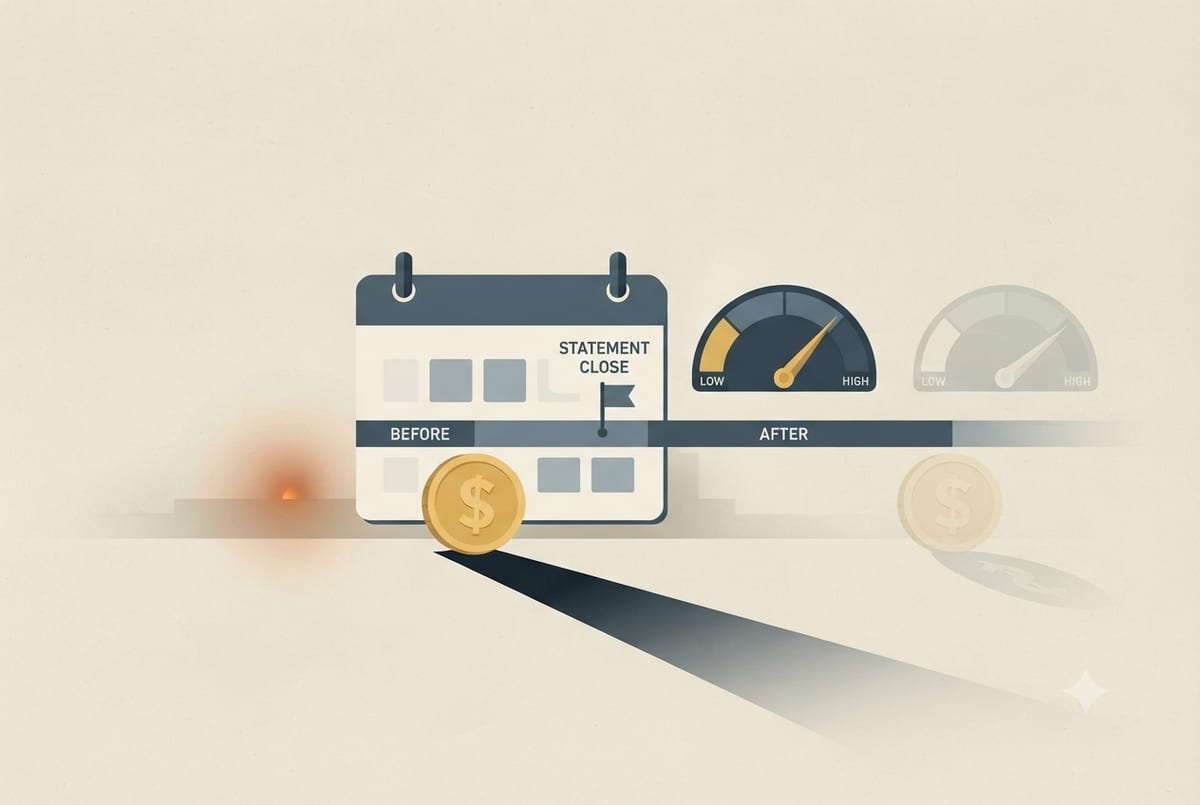
The two dates that matter
Every card has two dates people conflate:
- The statement (closing) date. This is when your billing cycle ends. Your balance on that day is calculated and reported to the credit bureaus. Your score reflects this number.
- The due date. Usually about three weeks after the statement date. This is when payment is required to avoid interest and keep your grace period.
Here is the catch most people miss: paying by the due date keeps you interest-free, but it happens after your balance has already been reported. So even a diligent payer who clears the bill every month can have a high balance reported if that balance was sitting there on the statement date.
Why the reported balance drives your score
Utilization, the share of your credit limit you are using, is one of the biggest factors in your score. And utilization is measured on the reported balance, the statement-date snapshot. Charge $4,000 on a card with a $10,000 limit and let it ride to the due date, and the bureaus see 40% utilization, which drags your score, even though you pay it off a few days later and never touch a dollar of interest.
The person who looks "worse" here is not worse with money. They just let the snapshot catch a high balance. None of this changes what you owe in interest: as long as you pay the statement balance by the due date, you're nowhere near the current average credit card APR of 24.00%, you're only changing what gets reported.
The move: pay before the statement closes
The fix is to pay the balance down before the statement date, so a low balance gets reported. Crucially, this does not mean carrying a balance or paying interest. Thanks to the grace period, you can:
- Make a payment mid-cycle, before the statement closes, to knock the balance down.
- Pay any remaining statement balance by the due date, as usual, to stay interest-free.
You end up reporting low utilization and paying zero interest. Some people set a recurring mid-cycle payment; others simply pay a few days before the statement date each month.
Same spender, two outcomes
- Balance reported
- The full statement balance
- Reported utilization
- High, if you charged a lot
- Balance reported
- A small balance
- Reported utilization
- Low
When to use it
This matters most right before you apply for credit, a mortgage, an auto loan, or a new card, because lenders pull your score at a single moment. Making sure a low balance is reported in the month or two beforehand can lift your score right when it counts. The utilization mechanic also explains why closing a card hurts: both change the ratio without changing your behavior.
When timing matters most
- Action
- Pay down before your statement closes for the month or two beforehand
- Action
- Time the payment on your highest-utilization card first
- Action
- Pay by the due date as usual; timing matters most right before you apply
Run your own numbers with our credit utilization impact calculator to see the score-band effect of paying down before versus after your statement date. If you're also comparing cards while you clean up utilization, here's what's currently available:
Quick answers
Does paying before the statement date help? Yes. It reports a lower balance, which lowers utilization and can raise your score, with no interest.
Statement date vs due date? The statement date is when your balance is reported; the due date is when payment is required to avoid interest. Your score uses the statement-date balance.
When does it matter most? Right before applying for a loan, mortgage, or new card.
Sources
Reporting timing follows standard card-issuer practice, cross-checked against the Consumer Financial Protection Bureau's guides on credit reports and scores and credit cards. Exact statement-closing dates vary by issuer, so confirm yours directly in your card's app or statement.
Methodology
Reporting timing follows standard issuer practice (balances are typically reported at or near the statement closing date) and how major scoring models weigh revolving utilization. Exact reporting dates vary by issuer; check your card. This is general educational information, not personalized credit advice.
Frequently Asked Questions
Does paying my credit card before the statement date help my score?
What is the difference between the statement date and the due date?
Can I lower my utilization without carrying a balance?
When does utilization timing matter most?
The 5-minute money briefing
One email per week. New rates, fed moves, and what to actually do about them.
No spam. Unsubscribe anytime.
Act on this: today's top cards



Ranked by SwitchWize's composite score. We may earn a referral fee, and it never changes the ranking order.
Editorial review
What changed since the last update
Was this guide helpful?
Found an inaccurate, outdated, or missing claim? Report a correction. We verify reports against the relevant source before changing a guide or ranking.
