5 Premium Credit Cards Compared 2026: Amex Platinum, Sapphire Reserve, Citi Strata Elite, Venture X, and Robinhood Platinum
Amex Platinum, Chase Sapphire Reserve, Citi Strata Elite, Capital One Venture X, and Robinhood Platinum compared side by side: fees, credits, and what each card is realistically worth after the coupon-book breakage.
The Bottom Line
Four of the five cards advertise roughly $1,500 to $3,500+ in combined perks against fees of $395 to $895. Once you apply the same Coupon-Book Breakage Rate this site applies to every premium card, only two or three of those credits per card typically survive contact with a normal life. Capital One Venture X clears its fee the most reliably because its credits require the least behavior change; Amex Platinum and Chase Sapphire Reserve can out-earn it, but only for readers who will genuinely use the lounge network and the narrower merchant-specific credits.
- Four of the five cards advertise roughly $1,500-$3,500+ in combined value against $395-$895 fees, but realistic usage typically recovers 40-60% of the advertised total, not all of it.
- Capital One Venture X clears its fee most reliably because its main credit needs no merchant-matching; Amex Platinum and Chase Sapphire Reserve can out-earn it, but only for readers who use the lounge network and narrower credits.
- Robinhood Platinum is the newest and least-proven card here, reworked in public before its July 2026 go-live after users said it looked like a coupon book, a claim this site's own Coupon-Book Breakage Rate methodology was built to measure, not just describe.
01
Quick answer
Amex Platinum ($895), Chase Sapphire Reserve ($795), Robinhood Platinum ($695), Citi Strata Elite ($595), and Capital One Venture X ($395) all pitch the same basic trade: pay a steep annual fee, get back more than the fee in travel credits, lounge access, and elevated rewards. On paper each one clears its own fee several times over. In practice, a realistic cardholder recovers something closer to half of any card's advertised credit total, since most of that total comes from narrow, merchant-specific, or easy-to-forget credits rather than cash-like ones. Understanding these trade-offs is essential when evaluating premium credit cards compared 2026, since your actual value depends on spending patterns.
The full comparison below shows every card's fee, advertised value, and perk categories side by side, the same way you'd see them summarized in a glossy comparison chart. After that, this guide goes further than that kind of summary: a realistic, breakage-adjusted value for each card, worked scenarios, and a decision framework, so you can pick based on which credits you would actually use, not which card has the longest list.
02
The five cards, side by side
Apply today
Apply today
Gold members, by invite
Apply today
Apply today
Clears its fee most reliably
Table shows selected features of each card and is not comprehensive. Travel-credit and advertised-value figures are the issuer's own stated cash-equivalent value, not a redemption estimate. Fees and terms last checked October 1, 2026. Robinhood Platinum in particular changed its terms once between its March 2026 announcement and its July 2026 go-live and may change again; verify current terms with each issuer before applying.
Amex PlatinumApply today
$895
Apply today
Chase Sapphire ReserveApply today
$795
Apply today
Robinhood PlatinumGold members, by invite
$695
Gold members, by invite
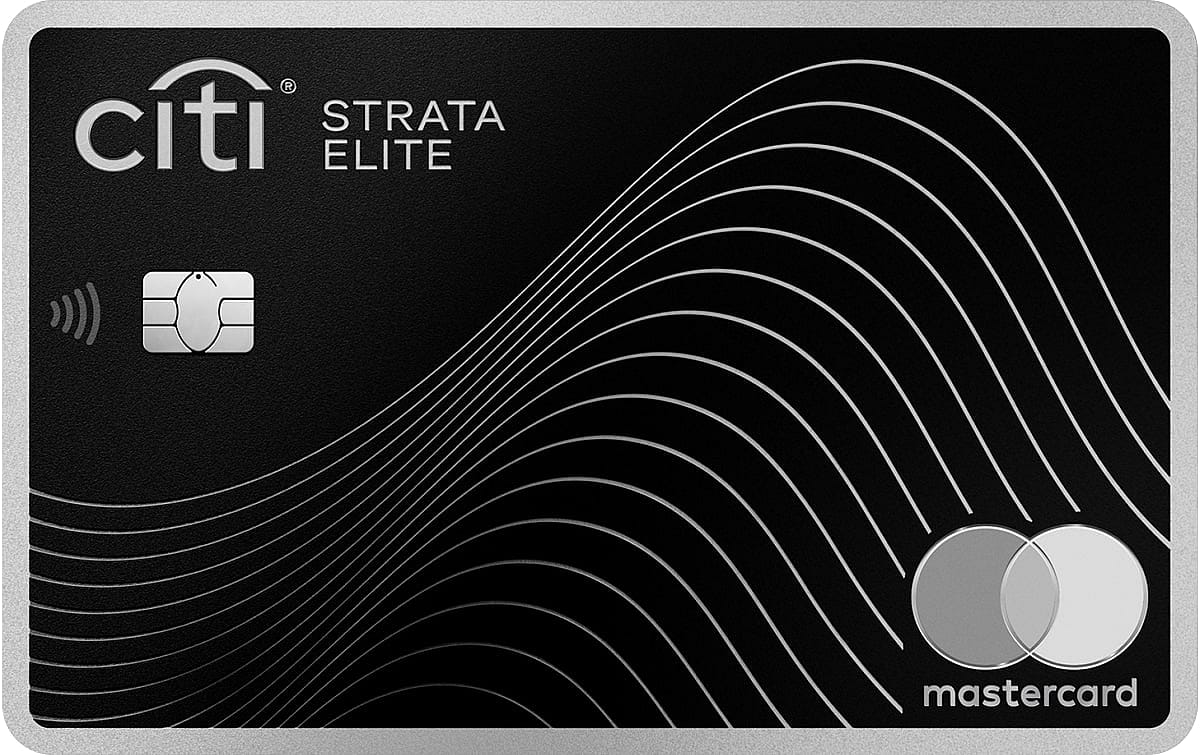
Citi Strata EliteApply today
$595
Apply today
Capital One Venture XApply today
$395Clears its fee most reliably
Apply today
Table shows selected features of each card and is not comprehensive. Travel-credit and advertised-value figures are the issuer's own stated cash-equivalent value, not a redemption estimate. Fees and terms last checked October 1, 2026. Robinhood Platinum in particular changed its terms once between its March 2026 announcement and its July 2026 go-live and may change again; verify current terms with each issuer before applying.
Sources for the figures above: issuer benefit pages for Amex Platinum, Chase Sapphire Reserve, Citi Strata Elite, and Capital One Venture X, cross-checked against this site's own Fee Reality data; Robinhood Platinum figures from Robinhood's public card terms as summarized in published reviews, and The Wall Street Journal's July 22, 2026 reporting on the card's revamp.
03
Why the advertised value overstates what you'll actually get
This site's Coupon-Book Breakage Rate measures the gap between advertised and realistic value, card by card.
Every one of these cards adds up its credits assuming perfect use: every monthly credit claimed on time, every merchant-specific credit spent at the right merchant, every travel credit booked through the right portal. Almost no single cardholder does all of that. This site's Coupon-Book Breakage Rate measures the gap between that advertised total and what a realistic cardholder recovers: advertised value minus usable value, divided by advertised value.
There is no issuer-disclosed, card-specific breakage data (issuers treat this as proprietary), but the closest real market signal comes from the CFPB: U.S. cardholders earned more than $40 billion in credit-card rewards in 2022 and ended that year with more than $33 billion in unredeemed rewards balances. That covers rewards broadly, not premium-card credits specifically, but it is the most authoritative public data point available, and it points the same way as what this comparison finds card by card below: a lot of advertised value sits unused.
A 2025 Wall Street Journal profile of a rewards-tracking couple found that once you strip advertised value down to what a specific cardholder actually used, an Amex Platinum holder expected to realize roughly $1,300 in credits in a given year against roughly $3,500 in advertised value, a recovery rate of about 37%. She was skipping a $155 Walmart+ credit specifically because she does not shop at Walmart, exactly the kind of narrow, merchant-locked credit that drives most cards' breakage.
Realistic value by credit-usage tier
The bars below apply the same easy-credits-only versus restricted-credits framework used throughout this site's premium-card coverage. "Easy" credits are ones most cardholders use without changing their habits (Chase's $300 travel credit, Venture X's portal credit). "Restricted" credits require a specific merchant, hotel program, or category match (Resy, Walmart+, Blacklane, Waymo). Each bar's red marker sits at the card's own annual fee; a bar segment extending past the marker clears the fee on credits alone. Points are valued at 1.5 cents each. Lounge access, Global Entry/TSA credits, and health or lifestyle memberships are left out of every card's bar, since their value depends almost entirely on the person.
- Amex Platinum. Easy ($700): $200 airline fee credit, $200 Uber Cash, $300 digital entertainment credit. Restricted ($1,794): $600 Fine Hotels + Resorts/Hotel Collection, $400 Resy, $120 Uber One, $219 CLEAR+, $155 Walmart+, $300 lululemon.
- Chase Sapphire Reserve. Easy ($588): $300 travel credit, $288 Apple TV and Apple Music. Restricted ($2,010): $500 The Edit, $250 select Chase Travel hotels (2026 only), $300 Exclusive Tables dining, $300 StubHub, $120 Lyft, $120 Peloton, and up to $420 in DoorDash promos (up to $35 a month starting October 1, 2026, per published reports; Chase's page listed $25 a month before that).
- Robinhood Platinum. Easy ($300): $300 flight credits. Restricted ($1,320): $700 hotel credits through Robinhood, $250 Waymo, $250 dining, $120 DoorDash.
- Citi Strata Elite. Easy ($500): $300 Citi Travel hotel benefit, $200 Splurge credit (which includes American Airlines). Restricted ($200): $200 Blacklane.
- Capital One Venture X. Easy ($450): $300 Capital One Travel credit, plus 10,000 anniversary miles worth $150 at 1.5 cents. Restricted: none counted.
Net cost = annual fee minus the figure above. At the "easy credits only" tier, only Venture X clears its fee ($450 against $395, about $55 ahead) before you use a single restricted credit or earn a single reward point. Strata Elite comes close ($500 against $595, about $95 short), Amex Platinum and Sapphire Reserve fall about $195 and $207 short, and Robinhood Platinum is about $395 short, because most of its value sits in hotel, Waymo, and dining credits. Use half of the restricted credits and every card clears its fee on credits alone, Strata Elite only barely ($600 against $595). Amex Platinum and Sapphire Reserve have the most upside if you genuinely use their merchant credits: up to roughly $1,600 (Amex) and $1,800 (Chase) more than their fees at full use.
04
Card by card
Fee-descending order, matching the comparison table above.
Amex Platinum: deepest lounge network, narrowest credits
At $895, Amex Platinum has both the largest credit stack and the most credits that require real behavior change to use: CLEAR Plus only matters if you already fly through CLEAR-enabled airports, lululemon and lifestyle credits assume you shop at specific retailers, and the $200 airline fee credit covers incidentals only, not tickets. Cardholders reported in early 2026 that a popular workaround (loading United TravelBank to buy flights outright) stopped triggering the credit, so treat "incidentals only" as strictly enforced now. The card earns its keep through Centurion Lounge access for frequent flyers and the $600 hotel credit for anyone who already books through Fine Hotels + Resorts; note that Centurion Lounge guests cost $50 each, and since July 8, 2026 a guest must be on the same flight as the cardholder. See the full Amex Platinum breakdown and how it stacks up against Chase Sapphire Reserve and Venture X individually.
Chase Sapphire Reserve: the easiest single credit to use
The $300 travel credit applies automatically to nearly any travel purchase, no merchant-matching required, which makes Sapphire Reserve's floor value more reliable than Amex Platinum's even at a lower advertised total. Its restricted credits (Exclusive Tables dining, StubHub, DoorDash) still require real behavior match. The DoorDash promos have shifted twice in 2026: since April 17, the two $10 monthly promos for non-restaurant orders require a $20 minimum order, and starting October 1, a $15 monthly promo usable on restaurant and other orders replaces the old $5 restaurant promo, per published reports on the change. Full breakdown at Sapphire Reserve vs. Amex Platinum and the three-way comparison with Venture X.
Robinhood Platinum: newest, least proven, already revised once
Robinhood announced the card in March 2026 and drew criticism for perks that looked like a coupon book, per The Wall Street Journal's July 2026 reporting. Robinhood reworked the benefits before the card went live for invited Robinhood Gold members on July 22, 2026. The live version carries $1,000 in travel credits (up to $700 at participating hotels booked through Robinhood with a two-night minimum, plus $300 in flight credits paid as $150 every six months), a $250 Waymo credit, a $250 dining credit, and a $10 monthly DoorDash credit with no minimum order. That is a more usable card than the one first announced, but it is also evidence that Robinhood is still iterating on the product in public. Treat every figure for this card as more likely to change than the other four, and confirm current terms directly with Robinhood before applying.
Robinhood Platinum is not currently tracked in this site's product database or Fee Reality system, unlike the other four cards in this comparison, since it has no established affiliate relationship and its terms have already changed once since launch. Figures here come from Robinhood's own card terms and WSJ's reporting, not this site's own longitudinal tracking.
Citi Strata Elite: Citi's return to the premium tier, simplified
Strata Elite replaced Citi's discontinued Prestige card with a shorter, broader credit list rather than Amex or Chase's long menu of narrow ones. The $200 Splurge credit and $200 Blacklane chauffeur credit are genuinely differentiated, but the card's elevated earning (6x-12x on Citi Travel bookings) depends on booking through Citi's own portal rather than direct with airlines and hotels. This is the newest addition to SwitchWize's premium-card coverage; expect deeper independent analysis as more real usage data accrues.
Capital One Venture X: lowest fee, least homework
At $395, Venture X remains the card in this set that clears its own fee with the least effort: book one trip a year through Capital One's portal and the $300 credit alone gets most of the way there, and the 10,000 anniversary miles (about $150 at 1.5 cents each) push it past the fee. It has the smallest advertised value of the five, but also the smallest gap between advertised and realistic value. Full head-to-head guides: Venture X vs. Amex Platinum and Venture X vs. Sapphire Reserve.
05
Which card fits your situation
06
Pay-in-full versus revolver verdict
Every calculation above assumes you pay the statement balance in full every month. At the average card APR of 24.00%, carrying a balance on any $395-$895 fee card erases the entire realistic value of its credits within a month or two. If you would carry a balance on any of these five cards, skip this comparison and use the credit card interest calculator first.
07
Track your actual usage instead of guessing
The gap between advertised and realistic value only matters in the abstract until you know which specific credits you would use. Card Autopilot tracks perk usage across every premium card you actually hold and tells you which one to reach for on your next purchase, automatically, instead of a spreadsheet. If you're deciding whether to switch or add a card, run the numbers first at the annual fee breakeven hub or the Benefits Realization Gap.
08
How we compared these cards
Sourcing and methodology behind every figure on this page.
Fees, credits, and terms for Amex Platinum, Chase Sapphire Reserve, Citi Strata Elite, and Capital One Venture X are drawn from this site's own sourced card records, the same data behind the Benefits Realization Gap and annual fee breakeven hub. Robinhood Platinum, not yet part of that tracked catalog, is sourced from Robinhood's public card terms and cross-checked against The Wall Street Journal's reporting on the card's launch and revamp. The "easy vs. restricted credit" tiers follow the same methodology applied throughout this site's premium-card coverage; see the Real Annual Value guide and the Coupon-Book Problem for the full rubric.
Compensation disclosure: SwitchWize may earn a referral fee when you apply through partner links on this site. SwitchWize does not currently have an affiliate relationship with Robinhood; that card is covered editorially only.
09
Sources
- CFPB credit card cost guidance: how fees and benefit structures affect overall card cost.
- CFPB, Consumer Credit Card Market Report 2023: 2022 rewards earned and unredeemed balances.
- Federal Reserve consumer credit resources: how card terms and benefit programs can change.
- The Wall Street Journal, "Robinhood Revamps $695 Platinum Card After Customers Take Issue With Perks," July 22, 2026.
- The Wall Street Journal, "Using Premium Credit-Card Rewards Is Becoming a Part-Time Job," November 5, 2025.
Terms referenced on this page were last checked October 1, 2026. Offers, fees, APRs, rewards, eligibility, and program rules can change, and Robinhood Platinum in particular has already changed once since its March 2026 announcement. This article is educational information, not individualized financial advice.
FAQ
Frequently asked questions
Which of these five premium cards is the best value in 2026?
By realistic, breakage-adjusted value, Capital One Venture X most reliably clears its $395 fee: its $300 credit applies to any Capital One Travel booking with no merchant-matching required, and its 10,000 anniversary miles are worth about $150 at 1.5 cents each. Amex Platinum and Chase Sapphire Reserve can deliver more total value, but only for readers who will actually use Centurion or Sapphire Lounges and the narrower merchant-specific credits.
Is Robinhood Platinum worth the $695 annual fee?
It is too new to have a reliable real-world usage track record. Robinhood reworked the card's benefits after users said the version announced in March 2026 looked like a coupon book, then opened it to invited users on July 22, 2026. Most of its value sits in restricted credits (hotel stays booked through Robinhood, Waymo, dining, DoorDash), and it has the shortest public history of any card in this comparison.
Why is Citi Strata Elite's advertised credit total so much lower than Amex Platinum's?
Strata Elite carries fewer, broader credits (a $300 hotel credit, a $200 Splurge credit, a $200 chauffeur credit) rather than a long list of narrow merchant-specific ones. That makes its advertised total smaller, but it can also mean a higher share of that total is actually usable, since there are fewer categories to miss.
How much of the advertised credit value do people actually use?
There is no public, card-specific breakage data (issuers do not disclose it), but CFPB data on the broader rewards market found cardholders earned more than $40 billion in rewards in 2022 and were sitting on more than $33 billion in unredeemed rewards balances at the end of that year. This site's Coupon-Book Breakage Rate models realistic usage per card rather than assuming the advertised total, using the same tiered easy-credit-vs-restricted-credit method applied throughout this comparison.
Can I hold more than one of these five cards?
Yes, but each additional premium annual fee needs its own justification. If two cards' benefits mostly overlap (for example, two lounge networks you would rarely both use), the second card is usually not worth its fee on top of the first.
Act on this: today's top cards


Ranked by SwitchWize's composite score. SwitchWize currently has no compensated product links.

SwitchWize was founded on the simple belief that banking should work for people, not the other way around. We break down information barriers with transparent rate comparisons, clear guidance, and simple tools — so every American can decide with confidence.
Read our full ethos