- Premium travel cards carry $395-$895+ annual fees, but their stated credit totals can exceed $1,500. The gap between sticker value and usable value is where most cardholders lose money.
- Amex Platinum offers the deepest lounge network and largest credit stack. It is designed for frequent flyers who travel 10+ times per year and can use multiple niche credits.
- Chase Sapphire Reserve has a simpler, more usable credit structure: a $300 travel credit that applies to almost any travel purchase automatically. Easier to maximize for most people.
- Capital One Venture X is the most straightforward option at a lower annual fee: simpler credits, solid lounge access via Priority Pass and Capital One Lounges, and strong points earning.
- Transferable points are typically valued at 1.5-2 cents each by independent analysts when transferred to airline or hotel programs. Actual redemption value varies significantly.
This guide is limited to publicly available, higher-fee travel cards whose value depends on lounges, travel protections, and statement credits. If you want a first travel card or a simpler mid-tier option, begin with the general travel card guide. For benefits tied to one carrier or hotel program, use the airline or hotel rankings.
Why sticker value and usable value are different things
Premium travel cards are the most marketed and least universally suitable products in consumer credit. The annual fees run $395-$895 or higher. The benefit stacks look extraordinary on paper, sometimes totaling $1,500 or more in stated credits (Amex itself now advertises roughly $3,500 in stated Platinum benefits, most of which very few cardholders capture in full). But stated value and usable value are different things, and the difference is where most cardholders leave money on the table.
The best premium travel cards 2026 are genuinely valuable for a specific type of person: someone who flies 10 or more times per year, uses airport lounges regularly, and can extract most of the credit stack without contorting their spending. For anyone below that threshold, a mid-tier card at $250 or less often returns more net value with far less complexity.
This guide breaks down the real math, the usable-vs-sticker gap, and the decision framework for choosing between the three most-discussed premium options.
Quick picks
- Card
- Amex Platinum
- Annual fee range
- $895
- Core advantage
- Centurion + Priority Pass + Delta Sky Club (with restrictions)
- Card
- Chase Sapphire Reserve
- Annual fee range
- $795
- Core advantage
- $300 auto travel credit, 3x dining, 4x flights/hotels booked direct
- Card
- Capital One Venture X
- Annual fee range
- ~$395 (verify current fee)
- Core advantage
- $300 travel credit via portal, Priority Pass, 2x on everything
- Card
- Amex Platinum or Hilton Aspire
- Annual fee range
- Verify current fee
- Core advantage
- Fine Hotels program or Hilton Diamond status
- Card
- Premium card with low authorized user fee
- Annual fee range
- Verify current AU fee
- Core advantage
- Status and lounge access for travel companions
- Card
- Capital One Venture X
- Annual fee range
- ~$395 (verify current fee)
- Core advantage
- Lower fee, simpler credit structure, strong baseline
Dollar value: real value vs sticker value
The Amex Platinum is the most-advertised premium card and also the hardest to fully optimize. Here is a realistic breakdown of what a typical traveler actually captures, current as of the September 2025 refresh:
Stated credits (verify all current amounts and terms at americanexpress.com):
- $200 airline incidental credit: realistic usable value for most cardholders = $150 (many find it difficult to spend the full amount on qualifying incidentals rather than ticket purchases)
- $600 hotel credit (Fine Hotels + Resorts or Hotel Collection, paid as two $300 semi-annual credits): realistic value if you book those programs = $350 (splitting the credit into two separate booking windows makes fully using both halves harder than a single credit of the same size)
- $219 CLEAR Plus credit: realistic value = $0 for most cardholders (CLEAR is a niche biometric security product; useful at about 50 U.S. airports but irrelevant if you already have TSA PreCheck and do not face long security lines)
- $300 digital entertainment credit ($25/month across select services): realistic value = $110-$150 (requires activating each month across a limited set of eligible streaming and news services; easy to forget)
- $155 Walmart+ credit ($12.95/month): realistic value = $0-$155 (only valuable if you use Walmart+ for grocery delivery or other services regularly)
- Saks Fifth Avenue credit ($50 semi-annual, $100/year total): realistic value = $0-$50 (requires spending at Saks, which does not fit most cardholders' normal shopping patterns; Amex has announced this credit ends July 1, 2026, so treat it as a shrinking, temporary benefit, not a permanent one)
Lounge access (most variable line item):
- Centurion Lounge access: value depends entirely on your home airport and travel frequency. A traveler who flies through JFK, LAX, or ATL with Centurion Lounges 10+ times per year may value this at $500+. A traveler who rarely passes through a Centurion location may value it at $0.
- Priority Pass Select: broad access to 1,300+ lounges globally. At $27-$32 per lounge visit as a non-member, 10 visits per year = $270-$320 in access value. At 2 visits per year = $54-$64.
Realistic usable credit total for a typical traveler: $580-$680 (the airline, hotel, and digital entertainment credits; Walmart+ and Saks are excluded from this conservative total since they only add value if you already use those specific merchants) Net annual fee after realistic credits: $895 − $630 = $265
Rule of thumb: net cost = annual fee − realistic usable credits. If that number is negative or near zero, the card is close to break-even before you even count rewards on spend.
Rewards on card spend (illustrative, not guaranteed): If you spend $5,000/month at a blended 2x earn rate on most purchases (5x on flights booked directly and hotels through Amex Travel): approximately 120,000 points annually. At an independent analyst estimate of 1.5 cents per point via transfer redemptions, that is approximately $1,800 in travel value. This assumes you transfer and redeem well rather than redeeming at lower cash-back rates.
The coupon-book problem: the Amex Platinum is profitable for the cardholder when their lifestyle already fits the credit menu. If you would have subscribed to the streaming services anyway, shopped at Saks anyway, and flown through Centurion airports regularly, the credits are additive. If you have to change your spending behavior to capture the credits, you are working for the card instead of the card working for you.
Choose a premium travel card if
- You fly 8 or more times per year and use airport lounges on most trips
- You can realistically use at least 70% of a card's annual credit stack based on how you already spend
- You want a central card that earns transferable points redeemable with both airline and hotel programs
- Elite status, travel insurance coverage, and concierge service matter to your travel experience
- Your spend is high enough ($7,000+ per month) that the earning rate on a premium card meaningfully outpaces simpler alternatives
Consider a mid-tier card or no annual fee card instead if:
- You fly fewer than 6 times per year or travel primarily for leisure
- You cannot identify specific credits you would actually use
- You value simplicity and would rather have predictable cash back than manage a credit calendar
- Your credit score is below 720 (premium cards typically require excellent credit)
American Express Platinum Card
Why it stands out: The most comprehensive lounge access available on any consumer credit card, combined with the largest credit stack in the market. For a very frequent flyer (12+ trips annually) who passes through airports with Centurion Lounges, the lounge access alone can justify a significant portion of the annual fee.
Lounge access: Centurion Lounges (exclusive, highest quality), Priority Pass Select, Delta Sky Club access with restrictions for non-Delta cardholders as of recent policy changes (verify current Delta access terms at americanexpress.com, as access rules for Amex Platinum holders have changed), and access at Air France, Lufthansa, and Plaza Premium lounges in certain locations.
Earning structure: High-rate multipliers on airfare booked directly with airlines and hotels booked through Amex Travel. Lower rates on general spending. Verify current earning rates at americanexpress.com before applying.
Terms note: Annual fee, credit amounts, lounge access rules, and earning rates all require verification at americanexpress.com. Amex updates these periodically.
Who should apply: Frequent flyers who travel 10+ times per year, pass through airports with Centurion Lounges, and can use the majority of the credit stack without restructuring their spending.
Who should skip: Travelers who fly fewer than 8 times per year, those whose home airport does not have a Centurion Lounge, or anyone who finds the credit stack complex and would realistically use fewer than half the credits.
Chase Sapphire Reserve
Why it stands out: The Sapphire Reserve wins on simplicity and clarity. Its primary annual travel credit ($300 per card anniversary year) applies automatically to almost any travel purchase: flights, hotels, parking, taxis, rideshare. There are no category restrictions and no portal requirement. You spend $300 on travel; the credit posts. That clarity alone separates it from more complex credit stacks.
Earning structure: 8x points on purchases through Chase Travel, 4x on flights and hotels booked direct, 3x on dining, 1x on everything else. Ultimate Rewards points are among the most versatile transferable currencies, with transfer partners including United, Southwest, Hyatt, Marriott, British Airways, and others. Verify current transfer partners and ratios at chase.com.
Lounge access: Priority Pass Select with guest access. Chase is also building out its own Sapphire Lounge network in select airports. Verify current locations.
Travel insurance: Sapphire Reserve is consistently ranked among the best in primary car rental insurance, trip delay reimbursement, and trip cancellation coverage. These protections can be worth hundreds of dollars when you actually need them.
Terms note: Verify the current annual fee, earning rates, $300 travel credit terms, and lounge access at chase.com before applying.
Who should apply: Frequent travelers who eat out regularly (the 3x dining rate is meaningful), want simple travel insurance, and prefer a credit structure where the primary benefit ($300 travel credit) is nearly effortless to capture.
Who should skip: Travelers whose spending is concentrated heavily on groceries or non-travel, non-dining categories where the 1x rate underperforms simpler cards.
Capital One Venture X
Why it stands out: The Venture X occupies a distinct position: premium lounge access and solid rewards at a lower annual fee than the Platinum or Sapphire Reserve. The annual fee is approximately $395 (verify current fee at capitalone.com). The $300 annual travel credit applies through the Capital One Travel portal, and a 10,000-mile anniversary bonus (worth approximately $100 at 1 cent per mile for portal redemptions) partially offsets the fee further.
Net fee math (simplified): Approximate annual fee: $395 (verify current fee) $300 travel portal credit: minus $300 (if you book through the Capital One portal) 10,000 anniversary miles: minus approximately $100 in portal travel value Net cost after benefits: approximately $0 for a traveler who uses the portal credit
Lounge access: Priority Pass Select with unlimited visits and guest access, plus access to Capital One Lounges (currently operating in a small but growing number of airports). Verify current lounge locations at capitalone.com.
Earning structure: 2x miles on all purchases, 5x on flights through Capital One Travel, 10x on hotels and rental cars through Capital One Travel. Verify current rates at capitalone.com.
Transfer partners: Capital One miles transfer to several airline programs including Air Canada Aeroplan, Turkish Miles and Smiles, and others. The transfer partner list is smaller than Chase or Amex but growing. Verify current partners and ratios at capitalone.com.
Who should apply: Travelers who want genuine premium lounge access and a strong earning rate without the complexity of managing a multi-credit stack. Particularly well-suited to people upgrading from a mid-tier card who want simplicity.
Who should skip: Travelers who have strong existing loyalty to Chase or Amex transfer partners and would sacrifice transfer optionality by switching to Capital One.
Real value vs sticker value: the key question to ask
Before applying for any premium travel card, answer three questions honestly:
1. Which specific credits will I use based on how I already spend? List each credit. For each one, ask: would I have spent this money anyway, at this merchant or through this channel, in a normal year? If the answer is no for more than two credits, adjust your usable value estimate downward.
2. How many times per year do I pass through a qualifying lounge airport? Look up your home airport and your most common layover airports. Count how many have Centurion Lounges, Chase Sapphire Lounges, or Priority Pass access. Multiply by the number of trips you take through those airports. If you are looking at fewer than 6 qualifying lounge opportunities per year, the lounge access value drops sharply.
3. Can I transfer points to a program where I want to redeem? Transferable points are most valuable when you have a specific redemption in mind: an international business class flight, a Hyatt property in Tokyo, or a partner airline program where you have existing miles. If your travel is primarily domestic leisure at standard prices, transferring points may not outperform booking travel directly at 1 cent per point.
If your honest answers to all three questions point to strong usage, a premium card likely pays off. If any answer is weak, a mid-tier card at $95-$250 will serve you better.
When this recommendation changes
- When the Amex Platinum raises its annual fee again (it went from $450 to $550 in 2017, $550 to $695 in 2021, and $695 to $895 in the September 2025 refresh), recalculate the usable credit total against the new fee before renewing
- If Chase Sapphire Reserve's $300 travel credit is ever made more restrictive, the card's core advantage weakens
- When Capital One's lounge network grows substantially, the Venture X's lounge access story improves relative to competitors
- If you change travel frequency (drops below 6 trips per year), step down to a mid-tier card and reallocate the annual fee difference toward actual travel spending
How we ranked
We evaluated premium travel cards on four dimensions: real usable credit value (estimated for a traveler who uses 70% of stated credits), lounge access quality and breadth, transferable points program strength, and clarity of the benefit structure. Cards with higher annual fees were required to show proportionally higher confirmed value. Annual fee figures and benefit amounts all require verification with each issuer, as these change.
SwitchWize earns referral revenue when readers apply for cards through links on this site. That does not influence which cards we recommend. Not all premium travel cards on the market are represented here. For the broader category, compare current offers on our travel rewards cards page, or read best airline credit cards and best hotel credit cards if a co-branded card fits your travel pattern better than a general premium card.
Quick answer
A premium travel card is worth its $395-$895+ annual fee only if your lifestyle already matches the credit menu: 8-10 or more trips a year, regular lounge use, and the ability to capture most of the stated credits without changing your normal spending. The net cost formula is annual fee minus realistic usable credits; for a typical Amex Platinum user that's roughly $895 − $630 = $265 before counting rewards earned on spend. Chase Sapphire Reserve is the simplest to value because its main $300 credit applies automatically to any travel purchase. Capital One Venture X offers the strongest value-to-fee ratio at a lower annual fee. If you travel fewer than 6-8 times a year, a mid-tier card at $95-$250 usually returns more net value.
Sources
- The Consumer Financial Protection Bureau's credit card marketing and terms resources cover how issuers are required to disclose fees, rewards terms, and APR.
Annual fees, credit amounts, and point valuations referenced here were verified June 25, 2026 and change frequently; confirm all current terms directly with each card issuer before applying. This is educational information, not personalized financial advice.
What to Do Now
This is educational information, not personalized financial advice. Point and mile valuations cited are from independent analysts and represent estimated ranges; actual redemption value varies based on program, availability, and booking choices. Verify all current annual fees, credit amounts, and benefit terms directly with each card issuer before applying.
Frequently Asked Questions
Are premium travel cards worth it?
What is a travel credit card lounge?
What are transferable points?
How do I decide between the Amex Platinum and Chase Sapphire Reserve?
What if I do not travel enough for a premium card?
The 5-minute money briefing
One email per week. New rates, fed moves, and what to actually do about them.
No spam. Unsubscribe anytime.
Act on this: today's top cards

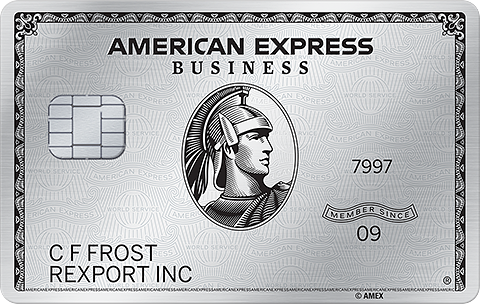

Ranked by SwitchWize's composite score. We may earn a referral fee, and it never changes the ranking order.
Editorial review
What changed since the last update
Was this guide helpful?
Found an inaccurate, outdated, or missing claim? Report a correction. We verify reports against the relevant source before changing a guide or ranking.
