How to choose
What to weigh before you pick
It usually comes down to 3 things. Compare your options on each before deciding.
What you earn on the spending you actually do.
The fee weighed against the rewards and credits you will use.
The intro offer and the spend required to earn it.
- Citi Double Cash earns a flat 2% on all purchases, simpler and higher on non-bonus spending, while Chase Freedom Unlimited wins on dining (3%), drugstores (3%), and Chase Travel portal bookings (5%).
- Pairing CFU with a Chase Sapphire card unlocks transfer partners like Hyatt and United, pushing effective earn rates to 2.25–7.5%, a $500+ annual advantage on typical spending.
- Both cards charge $0 annual fees and 3% foreign transaction fees, so neither is built for international use, but together they cover nearly every domestic spending category.
Choosing between two of the most popular no-annual-fee cashback cards comes down to how you spend, whether you want category bonuses, and whether you plan to build a broader credit card ecosystem. The Chase Freedom Unlimited offers a layered rewards structure, 1.5% base cashback plus 3% on dining and drugstores and 5% through Chase Travel, while the Citi Double Cash keeps things flat and simple at 2% on everything (1% when you buy, 1% when you pay). On standalone cashback alone, CFU edges ahead only if you spend heavily on dining; otherwise, Double Cash's flat 2% earns more on general purchases. But the real story is what happens when you pair either card with a premium sibling. CFU points become transferable to Hyatt, United, and Southwest through a Chase Sapphire pairing, while Double Cash points unlock Air France/KLM and Singapore KrisFlyer through a Citi Strata Premier. If you're deciding between Chase Freedom Unlimited vs Citi Double Cash in 2026, the answer depends on whether you value simplicity or ecosystem upside. This guide breaks down every angle with real dollar comparisons so you can pick the card, or combination, that pays you the most.
Chase Freedom Unlimited vs Citi Double Cash 2026: Full Feature Comparison
The table below captures the core differences between these two cards as of June 2026. Both have $0 annual fees, but their reward structures, welcome bonuses, and intro APR offers differ meaningfully.
- Chase Freedom Unlimited
- 1.5% on everything
- Citi Double Cash
- 2% (1% at purchase + 1% at payment)
- Chase Freedom Unlimited
- 3%
- Citi Double Cash
- None
- Chase Freedom Unlimited
- 3%
- Citi Double Cash
- None
- Chase Freedom Unlimited
- 5% (Chase Travel)
- Citi Double Cash
- None
- Chase Freedom Unlimited
- $200 after $500 in 3 months
- Citi Double Cash
- $200 in points after $1,500 in 6 months
- Chase Freedom Unlimited
- 0% for 15 months
- Citi Double Cash
- None
- Chase Freedom Unlimited
- 0% for 15 months
- Citi Double Cash
- 0% for 18 months
- Chase Freedom Unlimited
- 3%
- Citi Double Cash
- 3%
- Chase Freedom Unlimited
- Hyatt, United, Southwest, JetBlue, British Airways, Marriott, IHG, and more (via Chase Sapphire)
- Citi Double Cash
- Air France/KLM, Singapore KrisFlyer, Turkish, Avianca LifeMiles (via Citi Strata Premier)
- Chase Freedom Unlimited
- Visa
- Citi Double Cash
- Mastercard
Sources: chase.com and citi.com, verified June 2026.
Dollar-Impact Breakdown: How Annual Spend Changes the Math
The Chase Freedom Unlimited vs Citi Double Cash 2026 comparison shifts at different spending levels. Here's a worked scenario followed by a tier-based dollar-impact ladder.
Worked Example: A Household Spending $40,000 Per Year
Consider a household, call them the Nguyens, spending $8,000 on dining, $1,200 at drugstores, $4,000 on travel booked through Chase Travel (for CFU) or direct (for Double Cash), and $26,800 on everything else.
CFU standalone earnings:
- Annual Spend
- $8,000
- Rate
- 3%
- Cashback
- $240
- Annual Spend
- $1,200
- Rate
- 3%
- Cashback
- $36
- Annual Spend
- $4,000
- Rate
- 5%
- Cashback
- $200
- Annual Spend
- $26,800
- Rate
- 1.5%
- Cashback
- $402
- Annual Spend
- $40,000
- Rate
- Cashback
- $878
Double Cash standalone earnings:
- Annual Spend
- $40,000
- Rate
- 2%
- Cashback
- $800
- Annual Spend
- $40,000
- Rate
- Cashback
- $800
For the Nguyens, CFU wins by $78 per year standalone, driven almost entirely by $8,000 in dining. Without that dining spend, Double Cash wins.
Dollar-Impact Ladder by Annual Spend Tier
This ladder assumes the same spending proportions as the Nguyen example (20% dining, 3% drugstores, 10% portal travel, 67% general):
- CFU Standalone
- $220
- Double Cash Standalone
- $200
- CFU + Sapphire Preferred (net of $95 AF)
- $234
- CFU Standalone
- $549
- Double Cash Standalone
- $500
- CFU + Sapphire Preferred (net of $95 AF)
- $729
- CFU Standalone
- $1,098
- Double Cash Standalone
- $1,000
- CFU + Sapphire Preferred (net of $95 AF)
- $1,552
- CFU Standalone
- $2,195
- Double Cash Standalone
- $2,000
- CFU + Sapphire Preferred (net of $95 AF)
- $3,198
The gap widens dramatically at higher spending levels when CFU is paired with a Sapphire card. At $50,000 in annual spend, the Sapphire-paired CFU earns over $550 more than Double Cash after accounting for the $95 annual fee.
The Marketing Hook vs. Long-Term Reality
Both cards lead with attractive headlines. CFU advertises "5% on travel" and Double Cash promotes "2% on everything." Here's what the fine print reveals:
CFU's "5% on travel" hook: This rate applies only to travel booked through the Chase Travel portal, not directly with airlines or hotels. If you book a $2,000 flight on United's website, you earn 1.5%, not 5%. The portal sometimes prices flights or hotels slightly higher than direct booking, which can erase part of the bonus. That said, Chase Travel pricing is generally competitive, and the 5% rate is real when you use it intentionally.
Double Cash's "2% on everything" hook: The 2% rate requires you to pay your bill. You earn 1% when you make the purchase and 1% only when you pay for that purchase. If you carry a balance, you still earn the first 1%, but the interest charges at a variable APR (currently averaging around 24.00% across the industry) will far exceed the second 1% cashback. For example, carrying a $5,000 balance for one month at 24.00% APR costs roughly $100 in interest, wiping out $100 worth of cashback. The "2% on everything" promise only works if you pay in full every month.
The real long-term differentiator isn't either headline rate. It's the transfer-partner ecosystem. Standalone, these cards earn between $800 and $878 on $40,000 of spend. Paired with premium cards, that jumps to $1,200–$1,317. The flashy cashback rates matter less than whether you're building toward a rewards ecosystem that multiplies your points.
What Changes With Transfer Partner Pairings
This is where the Chase Freedom Unlimited vs Citi Double Cash 2026 decision gets interesting for travel-focused spenders.
CFU + Chase Sapphire Preferred ($95 AF)
When CFU earns Ultimate Rewards points and you hold a Sapphire card, those points transfer 1:1 to partners like Hyatt, United, Southwest, JetBlue, Air Canada Aeroplan, British Airways, Virgin Atlantic, Marriott, and IHG. Typical transfer redemption value: 1.5–2.0 cents per point, according to multiple industry valuations (The Points Guy, Upgraded Points).
On the Nguyens' $40,000 spending at 1.5 cents per point, CFU earns an effective $1,317, versus $800 from Double Cash standalone. Net of the $95 Sapphire annual fee: $1,222, still $422 ahead.
Double Cash + Citi Strata Premier ($95 AF)
Double Cash's ThankYou Points also become transferable with a Strata Premier pairing. Citi's partners include Air France/KLM, Avianca LifeMiles, Singapore KrisFlyer, and Turkish Airlines, a strong set for international premium-cabin awards, though it lacks Chase's standout Hyatt partnership.
At 1.5 cents per point, the Nguyens' Double Cash earns an effective $1,200. Net of the $95 fee: $1,105.
- Effective Annual Return on $40K
- $878 (2.2%)
- Annual Cost
- $0
- Effective Annual Return on $40K
- $800 (2.0%)
- Annual Cost
- $0
- Effective Annual Return on $40K
- $1,317 (3.3%)
- Annual Cost
- $95
- Effective Annual Return on $40K
- $1,200 (3.0%)
- Annual Cost
- $95
This is especially important if you're someone who books one or two international trips per year. The difference between cash redemption and transfer-partner redemption can mean the difference between economy and business class on the same points balance.
How to Decide Which Card Is Right for You
If you're deciding between these two cards, or wondering whether to carry both, follow these steps:
Rule of thumb: CFU's dining bonus only overtakes Double Cash's flat rate once dining spend reaches about half of everything else you charge. In formula terms, break-even dining spend = 0.5 x (non-dining, non-travel spend). Below that ratio, Double Cash's 2% wins on the blended total; above it, CFU's 3% dining edge pulls ahead. Run your own numbers through our cashback calculator, or run a full Money Map scan to see how this decision fits your broader financial picture.
- Best card
- Chase Freedom Unlimited
- Best card
- Citi Double Cash
- Best card
- Chase Freedom Unlimited
- Best card
- Citi Double Cash
- Best card
- Carry both
- Calculate your annual dining and drugstore spending. If you spend more than $4,000 per year on dining and drugstores combined, CFU's 3% bonus categories outweigh Double Cash's flat 2% advantage on general spending. Pull three months of credit card statements and multiply by four for a rough annual figure.
- Determine whether you want a Chase Sapphire or Citi Strata Premier pairing. If you already hold or plan to open a Chase Sapphire Preferred or Reserve, CFU is the clear winner because its points become transferable to high-value travel partners. If you're in the Citi ecosystem with a Strata Premier, Double Cash's transfer option is nearly as strong for international awards.
- Check your Chase 5/24 status. Chase will typically decline your CFU application if you've opened five or more new credit cards (from any issuer) in the past 24 months. Citi has no equivalent restriction. If you're near the 5/24 limit, apply for CFU first and save Citi applications for later. You can review your recent account openings on your free credit report at annualcreditreport.com.
- Assess your intro APR needs. CFU offers 0% for 15 months on both purchases and balance transfers. Double Cash offers 0% for 18 months on balance transfers only. If you're financing a large purchase, CFU provides more flexibility. If you're consolidating existing debt, Double Cash gives you three extra months at 0%.
- Consider holding both cards. Since both have $0 annual fees, a combined strategy, CFU for dining, drugstores, and Chase Travel, plus Double Cash for everything else, earns roughly 2.4% blended on $40,000 of spending, beating either card alone. Read our guide to optimizing multiple cashback cards for more on this approach.
Pros and Cons
Where Chase Freedom Unlimited Wins
- Higher earning on bonus categories: 3% on dining and drugstores, 5% on Chase Travel portal bookings
- Easier welcome bonus: $200 after just $500 in 3 months (effective return: 40% on required spend)
- Dual intro APR: 0% for 15 months on both purchases and balance transfers
- Stronger transfer-partner ecosystem: Hyatt, United, Southwest access through Sapphire pairing
- Better for dining-heavy spenders: $80+ per year more than Double Cash on $8,000 of restaurant spending
Where Chase Freedom Unlimited Falls Short
- Lower base rate: 1.5% on non-bonus spending vs. Double Cash's 2%, a real disadvantage on everyday purchases
- 5/24 rule: Chase's strict application policy blocks applicants with 5+ new cards in 24 months
- Portal dependency for 5% travel rate: You must book through Chase Travel to earn the top rate, which limits flexibility
- 3% foreign transaction fee: Not suitable for international spending
Where Citi Double Cash Wins
- Simplicity: Flat 2% on all purchases with no categories to track or activate
- Higher on general spending: 0.5 points more per dollar on non-bonus purchases
- Longer balance transfer window: 18 months at 0%, three months more than CFU
- No application velocity rule: No equivalent to Chase's 5/24 restriction
- Strong international transfer partners: Singapore KrisFlyer and Turkish Airlines are uniquely valuable for long-haul premium awards
Where Citi Double Cash Falls Short
- No bonus categories: Misses the extra 1–3% that CFU earns on dining, drugstores, and portal travel
- Harder welcome bonus: Requires $1,500 in 6 months vs. CFU's $500 in 3 months
- No purchase intro APR: Only balance transfers get 0%; no relief for large new purchases
- Weaker domestic travel partners: Lacks a standout hotel partner like Hyatt
- 3% foreign transaction fee: Same international limitation as CFU
Choose CFU If... / Choose Double Cash If...
Choose Chase Freedom Unlimited if:
- You spend $5,000+ per year on dining (3% earning advantage)
- You'll pair it with a Chase Sapphire Preferred or Reserve now or later
- You'd book travel through Chase Travel for the 5% rate
- You want the easier welcome bonus ($200 after $500)
- You need 0% intro APR on both purchases and balance transfers
Choose Citi Double Cash if:
- You want one flat rate with no categories to manage
- You don't have (and don't plan to get) a Chase Sapphire card
- Your spending is spread evenly across categories with no dining-heavy tilt
- You want the longest balance transfer 0% window (18 months)
- You're already in the Citi ecosystem as a Strata Premier holder
Use both if:
- You want to maximize returns with $0 in combined annual fees
- CFU handles dining (3%), drugstores (3%), and Chase Travel (5%)
- Double Cash handles everything else at 2%
- Combined effective rate on $40,000: approximately 2.4%, beating either card alone
Welcome Bonus Comparison
CFU has the lower barrier to entry:
- CFU: $200 cashback after $500 spend in 3 months, an effective 40% return on required spend
- Double Cash: $200 in ThankYou Points after $1,500 spend in 6 months, an effective 13.3% return on required spend
For example, consider Marcus, a recent graduate with modest monthly expenses of $600. He'd hit CFU's $500 threshold in his first month of normal spending. Double Cash's $1,500 target would take nearly three months of deliberate card use. If you're a new cardholder or light spender, CFU's bonus is meaningfully easier to capture.
If you're someone who carefully tracks welcome bonus requirements, this three-to-one difference in spending thresholds is worth factoring into your timeline.
Intro APR Offers: Different Strengths for Different Needs
Chase Freedom Unlimited: 0% intro APR on purchases AND balance transfers for 15 months. After that, a variable APR applies (the current average card APR is 24.00%).
Citi Double Cash: 0% intro APR on balance transfers for 18 months. No intro APR on purchases.
Both charge balance transfer fees (typically 3–5% of the transferred amount). On a $5,000 balance transfer, expect a $150–$250 fee regardless of which card you choose.
If you're paying down existing credit card debt, Double Cash's 18-month window gives you three extra months to pay at 0%. If you have a large near-term purchase, such as furniture, appliances, or a medical bill, AND a balance to transfer, CFU's combined 15-month window on both transaction types is more practical. For more on managing credit card debt strategically, the CFPB's guide to balance transfers covers the regulatory perspective.
Using Both Cards Together
A common cashback optimizer setup uses both cards with $0 in combined annual fees:
- CFU for dining (3%), drugstores (3%), and Chase Travel (5%)
- Double Cash for all other purchases at 2%
On the Nguyens' $40,000 spending pattern, this combined approach earns roughly $960 per year, $82 more than CFU alone and $160 more than Double Cash alone.
Add a Chase Sapphire Preferred and/or Citi Strata Premier, and both cards' points become transferable, pushing the effective combined rate to 3–3.5% on travel redemptions. Read our comparison of Citi Double Cash vs Wells Fargo Active Cash for another perspective on flat-rate alternatives.
For additional context on how credit card rewards interact with your broader financial picture, the Federal Reserve's consumer credit data tracks national trends in revolving credit balances.
Quick answer
For most households, Citi Double Cash earns more because its flat 2% beats Chase Freedom Unlimited's 1.5% base rate on ordinary purchases. CFU pulls ahead once you spend more than roughly $4,000 a year combined on dining and drugstores, since its 3% bonus categories outrun Double Cash's flat-rate advantage on the rest of your spending. The gap widens further if you already hold a Chase Sapphire Preferred or Reserve, because CFU's points then become transferable to travel partners worth 1.5 to 2 cents each. Both cards charge no annual fee, so many optimizers simply carry both and split spending by category rather than picking just one.
Sources
- Chase.com — Chase Freedom Unlimited's published earn rates, welcome bonus terms, and intro APR window.
- Citi.com — Citi Double Cash's published earn structure, welcome bonus terms, and balance transfer window.
- CFPB: what is a balance transfer — regulatory context on balance-transfer mechanics and fees.
- Federal Reserve: consumer credit (G.19) — national revolving credit balance trends referenced above.
Methodology
SwitchWize compares credit card rewards using verified public data from issuer websites (chase.com, citi.com), supplemented by third-party points valuations from The Points Guy and Upgraded Points (as of June 2026). We model dollar-impact scenarios using representative spending patterns and update rates, bonuses, and benefits regularly. Our full methodology, including how we handle affiliate relationships, is available at /methodology.
This is educational information, not personalized financial advice.
The verdict: Citi Double Cash wins as a standalone card for simplicity and general spending at a flat 2%. Chase Freedom Unlimited wins if you spend heavily on dining or plan to pair it with a Chase Sapphire card, where transfer partners push effective earn rates above 3%. Both cards cost $0 per year, so holding both and splitting spending by category is the highest-earning no-fee strategy for most households.
What to Do Now
Frequently Asked Questions
Which earns more cashback: Chase Freedom Unlimited or Citi Double Cash?
What is the welcome bonus on each card?
Does CFU earn Ultimate Rewards points or cashback?
What is the difference between CFU and Chase Freedom Flex?
Does either card have a foreign transaction fee?
Which has better 0% intro APR offers?
Should I pair CFU with a Chase Sapphire card?
What about Chase's 5/24 rule?
The 5-minute money briefing
One email per week. New rates, fed moves, and what to actually do about them.
No spam. Unsubscribe anytime.
Act on this: today's top cashback
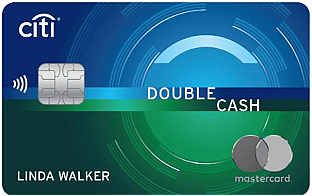

Ranked by SwitchWize's composite score. We may earn a referral fee, and it never changes the ranking order.
Editorial review
What changed since the last update
Was this guide helpful?
Found an inaccurate, outdated, or missing claim? Report a correction. We verify reports against the relevant source before changing a guide or ranking.
