- Citi Custom Cash is the strongest no-effort pick: automatic 5% on your top spend category each billing cycle, no annual fee, no activation required.
- Amex Blue Cash Preferred's 6% on U.S. supermarkets clears its $95 annual fee once you spend roughly $1,583/year on groceries, and most families hit that by spring.
- Rotating-category cards like Chase Freedom Flex and Discover it cap the 5% rate at $1,500 per quarter and require you to opt in every 90 days.
The average American household spends roughly $9,000 a year on groceries, gas, and dining. Swipe a basic 1% rewards card on those purchases and you earn about $90. Switch to a card that pays 5% on even one of those categories and the number jumps to $450 or more, a $360 difference for buying exactly the same things.
That gap is why the best 5% cash back cards 2026 deserve a close look, but the right card depends on how you actually spend. A family that loads up at the supermarket every week needs a different card than a solo apartment-dweller who orders most things from Amazon. Rotating-category cards can pay handsomely if you remember to activate each quarter, while set-it-and-forget-it cards reward consistency with zero effort. And every dollar of rewards evaporates if you carry a balance at today's average card rate of 24.00%.
This guide models real spending data across 12 popular cards, ranks the top five by net annual cash back, and gives you a clear decision framework so you can pick the right card in minutes. If you're deciding between a flat-rate cash back card and one of these boosted-category options, the comparison table and dollar-impact ladder below will settle it. This is especially important if you're someone who has never calculated how much a single spending category actually costs you per year.
Best 5% Cash Back Cards 2026: How the Top Cards Compare
We evaluated 12 no-annual-fee and low-fee cash back cards against Bureau of Labor Statistics Consumer Expenditure Survey averages. Card data verified recently. The live table below pulls current terms and offers from our rate database, so the cards it surfaces and their order can shift as issuers change rates and terms. The profiles that follow explain how each card's mechanics work so you can match the right structure to your spending, regardless of which one currently tops the table.
Citi Custom Cash: Automatic Top-Category 5%
How it works: Automatically earns 5% on your highest-spend eligible category each billing cycle, up to $500 per month ($25 maximum at the 5% rate). No activation needed. Eligible categories include restaurants, gas stations, grocery stores, select travel, home improvement stores, and more.
The math: If you spend $500 per month on groceries, that is $300 per year at 5%, with no annual fee and no category tracking required.
The limit: The 5% rate is capped at $500 per month in a single category. Everything above that, and all other categories, earns 1%.
Best for: People who want automatic high-rate cash back without thinking about quarterly calendars.
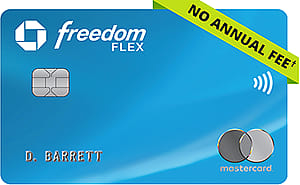
Chase Freedom Flex: Rotating 5% Categories
How it works: 5% on rotating quarterly categories (must be activated), 5% on travel booked through the Chase portal, 3% on dining and drugstores, 1% on everything else. When paired with the Chase Sapphire Preferred or Reserve, Ultimate Rewards points transfer to airline and hotel partners at 1.25–1.5 cents per point.
The math: Spending $1,500 each quarter in the rotating category earns $75 per quarter, or $300 per year, before the always-on 3% dining and drugstore earnings kick in.
The downside: You must log in and activate categories every quarter. The 5% rate caps at $1,500 per quarter.
Best for: Chase ecosystem users who want to stack cash back into travel rewards over time. Learn more about pairing strategies in our best credit cards 2026 guide.
Amex Blue Cash Preferred: 6% on Groceries
How it works: 6% on U.S. supermarkets (up to $6,000 per year in purchases), 6% on select U.S. streaming subscriptions, 3% on transit and U.S. gas stations, 1% elsewhere. It is the only major card offering 6% on groceries.
The math: $6,000 in grocery spend at 6% equals $360. Subtract the $95 annual fee and you net $265. You break even at roughly $1,583 per year in grocery spend, well below the national average.
Watch out for: The 6% rate does not apply at wholesale clubs (Costco, Sam's Club) or superstores (Walmart, Target). Only traditional grocery stores qualify.
Best for: Families spending $3,000 or more per year at traditional supermarkets.
Discover it Cash Back: First-Year Match
How it works: 5% on rotating quarterly categories (up to $1,500 per quarter), 1% on everything else. Unique perk: Discover matches all cash back earned in your first 12 months, effectively doubling your rewards in year one.
The math: $300 in rotating-category cash back × 2 (first-year match) = $600 in first-year value with no annual fee.
Drawbacks: The match disappears after year one. You must activate categories each quarter or earn only 1%.
Best for: New cardholders who want outsized first-year value without paying a fee.
Note: Following the 2025 acquisition, Discover it cards began moving to Capital One's website and app on July 27, 2026, in waves running through early 2027. The card keeps its name, its earning rates, its $0 annual fee, and the first-year Cashback Match; what changes is where you manage the account.
Chase Amazon Prime Rewards: Amazon and Whole Foods
How it works: 5% back at Amazon.com and Whole Foods Market, 2% at restaurants, gas stations, and drugstores, 1% on everything else. Requires an active Amazon Prime membership ($139 per year).
The math: If you spend $3,000 per year on Amazon (roughly the average Prime member), that is $150 per year at 5%, which more than justifies the Prime fee you are already paying.
The trade-off: Rewards are Amazon-centric. Categories outside Amazon and Whole Foods are mediocre compared to other cards on this list.
Best for: Heavy Amazon and Whole Foods shoppers who already pay for Prime.
Side-by-Side Comparison Table
Modeled on average U.S. household spend: $5,700 groceries, $2,100 gas, $3,800 dining, $4,400 online shopping per year.
- Top Rate
- 6% groceries
- Cap
- $6,000/yr
- Annual Fee
- $95
- Net Cash Back
- ~$510
- Top Rate
- 5% top category
- Cap
- $500/mo
- Annual Fee
- $0
- Net Cash Back
- ~$380
- Top Rate
- 5% rotating
- Cap
- $1,500/qtr
- Annual Fee
- $0
- Net Cash Back
- ~$340
- Top Rate
- 5% rotating (matched)
- Cap
- $1,500/qtr
- Annual Fee
- $0
- Net Cash Back
- ~$600
- Top Rate
- 5% Amazon/WF
- Cap
- No cap
- Annual Fee
- $0 (Prime req.)
- Net Cash Back
- ~$330
Dollar-Impact Ladder: How Annual Spending Changes Your Reward
These estimates assume you direct all eligible spending to the card's bonus category and pay in full every month.
- At 1% (Baseline)
- $30
- At 5%
- $150
- At 6% (Amex BCP)
- $180
- Extra vs. 1%
- $120–$150
- At 1% (Baseline)
- $50
- At 5%
- $250
- At 6% (Amex BCP)
- $300
- Extra vs. 1%
- $200–$250
- At 1% (Baseline)
- $60
- At 5%
- $300
- At 6% (Amex BCP)
- $360
- Extra vs. 1%
- $240–$300
- At 1% (Baseline)
- $100
- At 5%
- $500
- At 6% (Amex BCP)
- $455 (cap hit)
- Extra vs. 1%
- $355–$400
For example, consider a household, call them the Nguyens, spending $5,700 per year at traditional grocery stores and $2,100 on gas. With the Amex Blue Cash Preferred, they earn $342 on groceries (6%) and $63 on gas (3%), totaling $405. After subtracting the $95 annual fee, they net $310. If they added a Citi Custom Cash dedicated to dining at $3,800 per year (capped at $500 per month), they would pick up another $190 at 5%. Their two-card annual haul: roughly $500, versus $116 from a basic 1% card. That is a $384 difference for swiping a different piece of plastic.
The Marketing Hook vs. Long-Term Reality
Credit card issuers love big numbers on billboards: "Earn 5% cash back!" But the fine print matters more than the headline. Here is what the flashy hooks obscure:
"5% cash back" sounds unlimited, but it usually is not. Citi Custom Cash caps the 5% rate at $500 per month in purchases. Chase Freedom Flex and Discover it cap it at $1,500 per quarter. Spend beyond the cap and you drop to 1%. If your grocery bill alone exceeds $500 a month, part of that spending earns the base rate.
"Rotating categories" sound exciting, but they demand effort. Every quarter you must log in and activate. Miss the window and three months of spending earns 1%. Surveys by the Consumer Financial Protection Bureau consistently show that a meaningful share of cardholders forget to activate at least once a year.
"First-year cashback match" is genuinely valuable, once. Discover it's dollar-for-dollar match doubles your year-one rewards. In year two, the card's effective return drops by half. Plan for the long game, not just the honeymoon.
The biggest hook of all: ignoring interest. A card offering 5% cash back at an APR of 24.00% still charges roughly $480 per year in interest on a $2,000 revolving balance. That wipes out every dollar of rewards, and then some. If you carry a balance, a 0% intro APR card does more for your bottom line than any cash back percentage. Check where card rates are trending:
Pros and Cons of 5% Cash Back Cards
Where 5% Cards Win
- Outsized returns on targeted spending. A single high-spend category at 5% can return $250–$360 per year with no behavior change.
- No annual fee on most options. Citi Custom Cash, Chase Freedom Flex, and Discover it all cost $0 per year.
- Stackable with flat-rate cards. Pair a 5% category card with a 2% flat-rate card and you cover all purchases at above-average rates.
- Welcome bonuses add first-year value. Many of these cards offer $150–$200 sign-up bonuses after meeting a modest spending threshold.
Where 5% Cards Fall Short
- Quarterly activation requirements on rotating cards mean forgotten opt-ins cost you real money.
- Spending caps limit high earners. Once you exceed the cap, the effective rate on total category spend drops below 5%.
- Category restrictions can be narrow. Amex Blue Cash Preferred excludes Costco, Walmart, and Target from its 6% grocery rate.
- Temptation to overspend. Chasing a 5% bonus on a category you would not normally use is a net loss, not a gain.
- APR risk. Carrying even a small balance month to month at 24.00% erases all rewards quickly.
How to Choose and Apply for the Right 5% Card
If you're deciding between these cards, follow these steps:
- Pull your last three months of bank and card statements. Total your spending in groceries, gas, dining, and online shopping. Identify your single largest category: that is where a 5% card delivers the most value.
- Match your top category to the right card. One dominant category like groceries or dining points to Citi Custom Cash. Heavy grocery spending above $2,600 per year at traditional supermarkets points to Amex Blue Cash Preferred. Amazon-heavy spending points to Chase Amazon Prime Rewards.
- Check your credit score before applying. Most 5% cards require good to excellent credit (typically 670 or above). Each application generates a hard inquiry, so space them out by at least 90 days. Read our credit score guide for details on how inquiries affect your score.
- Set calendar reminders for quarterly activations if you choose Chase Freedom Flex or Discover it. Missing even one quarter costs you up to $75 in bonus cash back.
- Pair your 5% card with a flat 2% card for all non-bonus spending. The ideal zero-fee combo for most people is Citi Custom Cash (5% on your top category) plus Citi Double Cash (2% on everything else), yielding an estimated $480–$550 per year on average household spending.
Use the Credit Card Sign-Up Bonus Value Calculator to quantify welcome-offer value before you decide.
Match your spending pattern to a card
- Best card
- Citi Custom Cash
- Best card
- Amex Blue Cash Preferred
- Best card
- Discover it Cash Back
- Best card
- Chase Freedom Flex
- Best card
- A flat 2% card instead
Decision Framework: Choose the Card That Fits Your Spending
Choose Citi Custom Cash if you have one dominant spending category, you dislike tracking quarterly rotations, and you want a zero-fee card that works on autopilot.
Choose Chase Freedom Flex if you are already in the Chase ecosystem (or plan to get a Sapphire card), you are comfortable activating categories each quarter, and you value travel transfer partners over straight cash.
Choose Amex Blue Cash Preferred if your household spends $2,600 or more per year at traditional grocery stores and you want the highest possible grocery return: 6% beats every other card on this list.
Choose Discover it Cash Back if you are a new cardholder, you want the first-year match to maximize early returns, and you do not mind rotating categories.
Choose Chase Amazon Prime Rewards if you already pay for Amazon Prime and spend $2,000 or more per year on Amazon and Whole Foods.
Choose a flat 2% card instead if your spending is spread evenly across many categories. A badly matched 5% card with caps can actually return less than a simple 2% card with no caps. Browse all cash back card offers to compare.
If you are a retiree on a fixed income, a parent managing household groceries, or a freelancer with irregular spending, the "right" card may differ from what works for a dual-income family. Match the card to your actual receipts, not to marketing copy.
How to Stack Multiple Cards for Maximum Cash Back
A single 5% card leaves money on the table for non-bonus purchases. Here is a two-card setup that covers all spending at above-average rates:
- Card one, Citi Custom Cash: Handles your biggest single category at 5% (no fee).
- Card two, Citi Double Cash or Wells Fargo Active Cash: Handles everything else at 2% flat (no fee).
- Optional card three, Chase Freedom Flex or Discover it: Add a rotating-category card if you are willing to activate quarterly and want to layer 5% on a second category each quarter.
Total annual fee for this stack: $0. Estimated annual cash back on average household spending: $480–$550. Each new application creates a hard inquiry, so space them at least three months apart. See our guide to credit score factors and our broader best credit cards 2026 overview for pairing tips.
One Thing That Erases All of This: Carrying a Balance
The rewards math only works if you pay your full statement balance every month. At today's average card APR of 24.00%, a $2,000 revolving balance costs roughly $480 per year in interest. That single cost wipes out every dollar of cash back from any card on this list, and leaves you worse off than if you had used a debit card.
If you currently carry a balance, focus on a 0% intro APR card or a balance transfer offer first. Once the balance is gone, come back and pick a 5% cash back card to start earning instead of paying. The Balance Transfer Savings Calculator can show you exactly how much you would save by moving existing debt to a 0% promotional rate.
Consider a scenario: Marcus, a 34-year-old renter, carries a $3,500 balance on a card charging 24.00%. He earns roughly $180 per year in 5% cash back on groceries with his Citi Custom Cash, but pays about $840 per year in interest on the revolving balance. His net position is negative $660. If Marcus transferred that balance to a 0% intro card for 15 months and paid it down, he would save that $840 in interest, then resume earning $180 per year in pure profit from his 5% card.
Rewards are one piece of a bigger picture. Run Money Map to see how your card strategy fits alongside your savings, debt, and mortgage rather than in isolation.
Quick answer
There is no single best 5% cash back card; the winner depends on how concentrated your spending is. Citi Custom Cash is the strongest no-effort pick because it automatically applies 5% to your top category with no activation and no fee. Amex Blue Cash Preferred wins for households spending $2,600 or more a year at traditional grocery stores, since its 6% rate clears the $95 fee easily. Chase Freedom Flex and Discover it can out-earn both if you reliably activate quarterly categories, but a missed quarter drops that spending to 1%. Whichever card you pick, the rewards only count if you pay the statement balance in full every month.
Sources
Methodology
SwitchWize models each card's net annual value using Bureau of Labor Statistics Consumer Expenditure Survey spending averages, applying each card's published bonus rates, caps, and annual fees. We verify card terms directly from issuer disclosures and update data monthly. Rankings reflect editorial judgment weighted toward net dollar return for a typical U.S. household, not issuer compensation. For full details on our process, see our methodology page. The CFPB's credit card agreement database is a useful independent source for verifying card terms.
This is educational information, not personalized financial advice.
What to Do Now
Frequently Asked Questions
Which 5% cash back card earns the most?
Is a 5% cash back card worth it with an annual fee?
What is a rotating category card?
Can I combine a 5% card with another rewards card?
The 5-minute money briefing
One email per week. New rates, fed moves, and what to actually do about them.
No spam. Unsubscribe anytime.
Act on this: today's top cards
Ranked by SwitchWize's composite score. SwitchWize currently has no compensated product links.
Editorial review
What changed since the last update
Was this guide helpful?
Found an inaccurate, outdated, or missing claim? Report a correction. We verify reports against the relevant source before changing a guide or ranking.
