How to choose
What to weigh before you pick
It usually comes down to 3 things. Compare your options on each before deciding.
What you earn on the spending you actually do.
The fee weighed against the rewards and credits you will use.
The intro offer and the spend required to earn it.
- Both cards earn 2% flat cashback with no annual fee, but Active Cash adds cell phone protection worth $200-$500 per year and a much easier welcome bonus.
- Citi Double Cash only pulls ahead if you pair it with a premium Citi card to unlock airline transfer partners, turning 2% into 3-4% travel value.
- If you carry a balance on either card, the average credit card APR of around 24% wipes out every cent of cashback. Pay the debt first.
Choosing between two no-annual-fee cards that both pay 2% cashback sounds like a coin flip, but it isn't. The Citi Double Cash and Wells Fargo Active Cash share headline rewards, yet they serve different cardholders once you look past the marketing. Active Cash pairs its flat 2% with a low-threshold $200 welcome bonus, a 0% intro APR on purchases, and cell phone protection that can save hundreds of dollars a year. Citi Double Cash counters with an 18-month balance transfer window and, critically, the ability to funnel earnings into Citi ThankYou Points, which become far more valuable when paired with a premium Citi card and transferred to airline partners.
If you're deciding between these two cards in 2026, the right pick depends on whether you're a straightforward cashback user or a travel-points optimizer willing to hold a second Citi card. This guide on Citi Double Cash vs Wells Fargo Active Cash 2026 breaks down the real dollar differences at several spending levels, exposes where the marketing doesn't match reality, and gives you a clear decision framework. We also link to a cashback calculator so you can run your own numbers. This is especially important if you're someone who wants a single everyday card that maximizes value without complex point strategies.
Quick answer
For most people, Wells Fargo Active Cash is the better standalone 2% cashback card: an easier $200 welcome bonus ($500 spend versus Citi's $1,500), free cell phone protection worth $200-$500 a year, and simpler cash redemption. Citi Double Cash only pulls ahead if you already hold, or plan to add, a premium Citi card like the Strata Premier, which unlocks ThankYou Point transfers to airline partners worth 1.5 to 2 cents each, turning the flat 2% into 3-4% travel value. If you're carrying a balance on either card, skip this decision for now and use a balance transfer card instead, since the roughly 24% average card APR erases any cashback advantage. And if you want to see how a 2% card fits into your broader finances, run a free scan at Money Map before applying for either.
Citi Double Cash vs Wells Fargo Active Cash 2026: Full Comparison
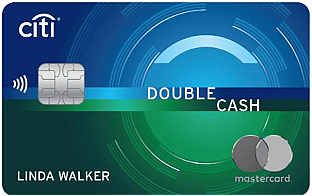
The core question in the Citi Double Cash vs Wells Fargo Active Cash 2026 debate is whether you need anything beyond flat cashback. On paper, the cards look nearly identical. Both charge no annual fee. Both skip foreign-transaction-fee waivers. Both require a recommended credit score of 670 or above. The differences live in the details, and those details can be worth hundreds of dollars a year.
- Citi Double Cash
- 2% (1% on purchase + 1% on payment)
- Wells Fargo Active Cash
- 2% (at point of sale)
- Citi Double Cash
- $0
- Wells Fargo Active Cash
- $0
- Citi Double Cash
- $200 in ThankYou Points after $1,500 in 6 mo
- Wells Fargo Active Cash
- $200 cash after $500 in 3 mo
- Citi Double Cash
- None
- Wells Fargo Active Cash
- 0% for 12 months
- Citi Double Cash
- None
- Wells Fargo Active Cash
- Up to $600/claim, $25 deductible
Verified against citi.com and wellsfargo.com as of June 2026. Card data on this page was checked recently.
Additional details worth noting: both cards carry a 3% foreign transaction fee, making neither suitable for international spending. Active Cash runs on the Visa Signature network, while Double Cash is a Mastercard. And Citi Double Cash earns ThankYou Points that can transfer to airline partners, but only if you also hold a premium Citi card. Without that pairing, the points redeem at a flat 1 cent each, identical to cash.
For a deeper look at how Citi's card stacks up against another popular competitor, see our guide on Discover It vs Citi Double Cash.
Welcome Bonus Breakdown: The Marketing Hook vs. Reality
Both issuers headline "$200 bonus," and both know the number grabs attention. But the paths to earning that bonus are dramatically different, and this is where the marketing-hook deconstruction matters most.
Wells Fargo Active Cash requires just $500 in spending within the first 3 months. Most households hit that threshold on groceries and gas alone in a single month. The bonus arrives as direct cash. The effective return on that required spend is 40%, an eye-catching number, though it only applies to the first $500.
Citi Double Cash requires $1,500 in spending within 6 months. The threshold is 3x higher, the time window is 2x longer, and the reward lands as ThankYou Points (worth $200 as a statement credit, or potentially more if transferred via a premium Citi card). The effective return on required spend drops to about 13.3%.
- Bonus
- $200 cash
- Spend Required
- $500
- Time Window
- 3 months
- Return on Spend
- 40%
- Bonus
- $200 in points
- Spend Required
- $1,500
- Time Window
- 6 months
- Return on Spend
- 13.3%
The flashy "$200 bonus" hook is identical in dollar terms, but Active Cash delivers it with far less effort. For a new cardholder choosing their first 2% card, the Active Cash bonus is meaningfully easier to capture.
Long-term reality check: Welcome bonuses are one-time events. After year one, both cards earn identical 2% cashback on every dollar. The ongoing value difference comes entirely from Active Cash's cell phone protection and Double Cash's transfer-partner option, not from the bonus. Don't let a welcome offer drive a multi-year card decision.
Dollar-Impact Ladder: How Spending Level Changes the Math
Your annual spending determines how much each card actually puts back in your pocket. Here's a tier-by-tier breakdown for the Citi Double Cash vs Wells Fargo Active Cash 2026 comparison, assuming full statement payments each month.
- 2% Cashback
- $200
- Active Cash Year 1 Value
- ~$600 (bonus + cell protection)
- Double Cash Year 1 Value
- ~$400 (bonus only)
- 2% Cashback
- $500
- Active Cash Year 1 Value
- ~$900
- Double Cash Year 1 Value
- ~$700
- 2% Cashback
- $1,000
- Active Cash Year 1 Value
- ~$1,400
- Double Cash Year 1 Value
- ~$1,200
- 2% Cashback
- $2,000
- Active Cash Year 1 Value
- ~$2,400
- Double Cash Year 1 Value
- ~$2,200
Active Cash values include ~$200 estimated annual cell phone protection value. Double Cash values assume no premium Citi card paired (points redeemed at 1 cent each).
Consider a household like the Nguyens, who spend $30,000 per year across groceries, gas, utilities, and dining. With Wells Fargo Active Cash, they'd earn $600 in cashback plus the $200 first-year bonus, and their two iPhones would be covered by the card's cell phone protection, saving them roughly $264 per year compared to carrier insurance at $11/month per line. Their Active Cash year-one value: approximately $1,064. Year two and beyond: roughly $864.
With Citi Double Cash (no premium pairing), the Nguyens would earn the same $600 cashback, collect the $200 bonus, but have no phone coverage. Year-one value: $800. Year two: $600.
The gap widens if the Nguyens pair Double Cash with a Citi Strata Premier ($95 annual fee). Transferring ThankYou Points to airline partners at 1.5 cents per point turns their $600 cashback into $900 of travel value. After subtracting the Strata Premier's fee (partially offset by its own travel credits), year-two value rises to roughly $900, beating Active Cash, but only if they actually book award flights through transfer partners.
How the 1% Buy + 1% Pay Structure Actually Works
Citi Double Cash splits its 2% into two halves: 1% when you make a purchase and 1% when you pay your bill. This structure is a holdover from the card's original design, meant to reward on-time payment behavior. In practice:
- If you pay your statement balance in full each month, you earn the full 2%. No difference from Active Cash.
- If you carry a revolving balance and make only the minimum payment, you still earn the second 1%, but only on the amount you actually pay that month.
- If you miss a payment entirely, you lose the second 1% for that billing cycle.
Functional reality: for responsible cardholders who pay in full, the split structure is invisible. You get 2%, same as Active Cash. But if you carry a balance, neither card makes sense. The average credit card APR sits around 24.00%, and 2% cashback on a $5,000 balance loses to the roughly $1,200 in annual interest charges. If you're carrying debt, a balance transfer card is the right tool, not a rewards card.
Card APRs have remained elevated even as deposit rates have shifted. Here's the current trend:
Cell Phone Protection: Active Cash's Hidden Edge
Active Cash's most underrated benefit has nothing to do with cashback. When you pay your monthly cell phone bill with the Active Cash card, you automatically receive:
- Up to $600 in cell phone insurance per claim
- Maximum 2 claims per 12-month period
- $25 deductible per claim
- Covers damage and theft (not loss)
For a household with two smartphones valued at $1,000 or more each, this benefit carries an equivalent insurance value of roughly $200-$500 per year. For comparison, Verizon Total Mobile Protection costs about $11/month per line ($132/year per phone), and AppleCare+ for an iPhone runs about $200/year. Active Cash provides similar coverage for free; you just need to route your phone bill through the card.
Citi Double Cash has no equivalent benefit. If you're a cashback card user who also pays for phone insurance, switching that bill to Active Cash could save you more than the card earns in cashback at lower spending levels.
This is especially important if you're someone who regularly upgrades to flagship phones with $1,000+ price tags and worries about screen cracks or theft.
When Citi Double Cash Wins: The Transfer-Partner Advantage
Citi Double Cash becomes the stronger card under one specific condition: when you also hold a premium Citi card that unlocks ThankYou Points transfers to airline and hotel partners. Current transfer partners include:
- Air France/KLM Flying Blue
- Singapore Airlines KrisFlyer
- Turkish Airlines Miles&Smiles
- Virgin Atlantic Flying Club
- Avianca LifeMiles
- Wyndham Rewards
- 8+ additional partners
ThankYou Points typically deliver 1.5 to 2.0 cents per point when transferred for international premium-cabin award flights. That effectively turns the Double Cash's 2% cashback into 3-4% in travel redemption value, significantly better than Active Cash's flat 2% cash.
The catch: none of this works without a premium Citi card. The Citi Strata Premier carries a $95 annual fee. The math only justifies itself if you spend roughly $30,000 or more per year on cards and actually redeem points for international flights. For someone holding only the Double Cash, transfer partners are locked and cashback is simply cashback at 1 cent per point.
If transfer partners are the primary draw, compare dedicated travel cards before committing to the Double Cash ecosystem. The Consumer Financial Protection Bureau's credit card guide is also a useful resource for understanding reward program terms.
Pros and Cons at a Glance
Wells Fargo Active Cash: Where It Wins
- Easier welcome bonus: $200 after just $500 in spending
- Cell phone protection worth $200-$500 per year at no extra cost
- 0% intro APR on purchases for 12 months, helpful for a planned large purchase
- Simple cash redemption with no point-system complexity
- Visa Signature network with wide merchant acceptance
Wells Fargo Active Cash: Where It Falls Short
- No airline transfer partners; cashback is always cash, never more
- 3% foreign transaction fee makes it poor for international travel
- No extended balance transfer window (12 months vs. Double Cash's 18 months)
- Redemption options limited to cash, statement credit, or check
Citi Double Cash: Where It Wins
- ThankYou Points unlock 3-4% travel value when paired with a premium Citi card
- 18-month 0% intro APR on balance transfers, the longest in this comparison
- Mastercard network, which some international merchants prefer
- Strong foundation for a Citi-focused rewards ecosystem
Citi Double Cash: Where It Falls Short
- No cell phone protection
- Higher welcome bonus threshold ($1,500 vs. $500)
- Transfer-partner value requires a second card with an annual fee
- No 0% intro APR on purchases
- 3% foreign transaction fee
How to Decide Which 2% Card Is Right for You
Picking between these two cards doesn't require spreadsheets; it requires knowing which type of cardholder you are. Here's how to decide in a few steps:
- Check whether you already hold a premium Citi card (Strata Premier or equivalent). If yes, the Double Cash immediately becomes more valuable because you can transfer ThankYou Points to airline partners for 1.5-2x the cash value. If no, Active Cash is the stronger standalone card.
- Calculate your monthly cell phone bill. If you pay $50-$150/month for phone service, routing that bill to Active Cash gives you free phone insurance worth hundreds per year. Run the numbers with our cashback calculator to see total year-one value.
- Assess your balance transfer needs. If you're carrying high-interest debt, Citi Double Cash's 18-month 0% balance transfer window gives you 6 extra months of breathing room compared to Active Cash's 12-month window. But address the debt before chasing rewards.
- Decide how you want to redeem. If "cash in my account" is your answer, Active Cash keeps things simple. If "business class to Tokyo" sounds appealing and you'll invest in the Citi ecosystem, Double Cash opens that door.
- Consider holding both cards. There's no rule against it. Use Active Cash for your phone bill and everyday cash needs; use Double Cash for general spending funneled into ThankYou Points. Combined annual fees: $0.
If you're deciding between these cards and a category-bonus alternative, our guide to the best 5% cashback cards 2026 covers whether a rotating-category card might out-earn flat 2% for your spending mix.
Decision Framework: Choose Your Card
Choose Wells Fargo Active Cash if...
- This is your first or only 2% flat-rate cashback card
- You want the cell phone protection benefit (most smartphone owners should)
- You prefer simple cash redemption with no point juggling
- You want the easier $200 welcome bonus ($500 spend threshold)
- You don't hold a premium Citi card and don't plan to open one
Choose Citi Double Cash if...
- You already hold a Citi Strata Premier or similar premium Citi card
- You want to transfer points to airline partners for outsized international travel value
- You need the longest balance transfer 0% APR window (18 months on transfers)
- You're building a Citi-focused rewards ecosystem
- You prefer the Mastercard network
Choose both if...
- You want cell phone protection (Active Cash for the phone bill) AND airline transfer value (Double Cash for general spend with a premium Citi pairing)
- You're a cashback and points enthusiast who wants $0 in combined annual fees and maximum flexibility
Which Card Fits Your Situation
- Best card
- Active Cash
- Why
- Easier bonus, immediate phone protection
- Best card
- Double Cash
- Why
- Unlocks 3-4% travel value via transfer partners
- Best card
- Neither yet
- Why
- Use a 0% balance transfer card first
- Best card
- Active Cash
- Why
- Free protection beats the point-transfer upside
- Best card
- Double Cash
- Why
- ThankYou Points compound with each added card
Neither card is appropriate for international travel due to 3% foreign transaction fees. On $5,000 of overseas spending, you'd pay $150 in unnecessary fees, nearly wiping out the cashback on that spend. Carry a travel-positioned card with no foreign transaction fee for purchases abroad. The FDIC's guide to understanding fees provides more context on common card charges.
Live Card Market Comparison
To see how these two cards stack up against the broader credit card market as of June 2026, here's a snapshot of current top offers:
Browse the full credit card comparison page or check best credit cards 2026 for the latest picks across categories.
Sources
- Citi Double Cash cardholder agreement and rewards terms — citi.com
- Wells Fargo Active Cash cardholder agreement and rewards terms — wellsfargo.com
- Consumer Financial Protection Bureau: Credit Card Resources
- FDIC: Understanding Common Consumer Fees
- Upgraded Points and Bankrate card reviews (April-June 2026)
Methodology
SwitchWize evaluates credit cards by comparing published terms (APR, fees, rewards rates, and benefits) directly from issuer websites, cross-referenced with at least two independent review sources. We weight ongoing cashback value, welcome bonus accessibility, and ancillary benefits like cell phone protection based on typical household spending patterns. Card data is verified on a regular schedule and time-stamped on each page. For full details, see our methodology page.
This is educational information, not personalized financial advice. Welcome bonuses and card terms fluctuate; verify the current public offer on the issuer's website before applying. SwitchWize may receive commission when readers apply through our links; this does not affect rankings.
What to Do Now
Frequently Asked Questions
Which has a better welcome bonus: Citi Double Cash or Wells Fargo Active Cash?
Are both really 2% flat cashback?
Which has better transfer partners for travel?
Does either card have an annual fee?
Are there foreign transaction fees?
Which has cell phone protection?
Can I use both cards?
Which has better redemption flexibility?
The 5-minute money briefing
One email per week. New rates, fed moves, and what to actually do about them.
No spam. Unsubscribe anytime.
Act on this: today's top cashback

Ranked by SwitchWize's composite score. We may earn a referral fee, and it never changes the ranking order.
Editorial review
What changed since the last update
Was this guide helpful?
Found an inaccurate, outdated, or missing claim? Report a correction. We verify reports against the relevant source before changing a guide or ranking.
