- A windfall without a plan disappears: about a third of people who inherit have negative savings within two years. The fix is a fixed order, not more discipline.
- Run the money through a waterfall: park it for 30 days, reserve taxes, clear high-interest debt, fund the foundation, then invest the rest.
- History favors investing the remainder as a lump sum over easing in, though a slower approach is a reasonable trade for peace of mind.
Money that arrives all at once, an inheritance, a bonus, a legal settlement, the proceeds of a home sale, feels like the answer to every financial worry. Then, more often than not, it quietly disappears. Not to a single catastrophic decision, but to a hundred small ones made without a plan, until a sum that could have changed a trajectory is simply gone. The problem is almost never the size of the windfall. It is the absence of an order to put it in. This playbook is that order: a waterfall the money flows through, one priority at a time. This page is reviewed by the SwitchWize Editorial Team; the figures are sourced below with dates. Here is what to do with a windfall: follow this waterfall framework to protect and grow your money methodically.
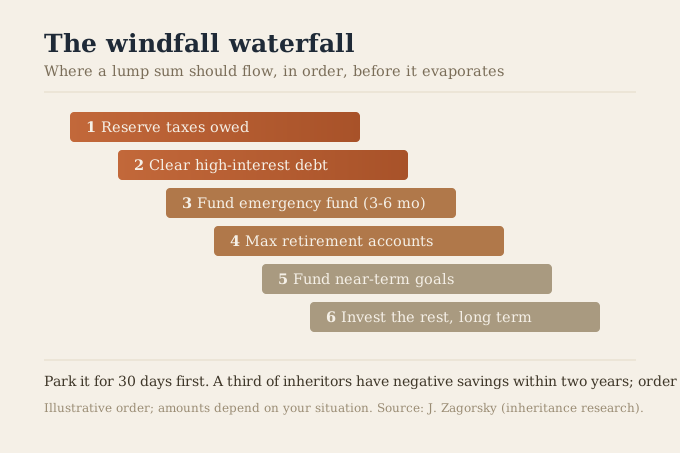
The reframe: a windfall is a test you can fail slowly
The unsettling fact about sudden money is how routinely it vanishes. About one-third of people who receive an inheritance have negative savings within two years, per research by economist Jay Zagorsky. These are not reckless people making one disastrous bet. They are ordinary people with no framework, letting the money leak into upgraded spending, impulse purchases, and requests from others, each defensible on its own, until it is gone.
The antidote is structure. A windfall handled as one big pile invites a hundred separate decisions; a windfall run through a fixed sequence asks only that you follow the order. The rest of this playbook is that sequence, and the first step is the one almost no one takes.
First, do nothing for 30 days
The most protective move is a pause. Park the money in a high-yield savings account and commit to making no large or irreversible decision for about 30 days. The worst windfall mistakes are fast ones, made in the emotional weeks right after the money lands: quitting on impulse, a rushed large purchase, or lending to the first person who hears about it. None of those improves for waiting a month, and a deliberate pause costs nothing while the money earns.
While it waits, that cash should sit somewhere safe and productive. These are current high-yield savings rates, live as of today, all FDIC-insured:
Reserve the taxes
Before treating a dollar as spendable, find out what is owed. Inheritances are generally not taxed as income to the recipient at the federal level, though income the assets later produce is, and a few states levy inheritance tax. A bonus is taxed as ordinary income, and some settlements and investment gains are taxable. Whatever the answer, set the tax portion aside immediately, so a bill later does not turn a windfall into a shortfall. This is the step that quietly saves people from the worst surprise.
Clear high-interest debt
With taxes reserved, the highest-return use of the money is usually paying off expensive debt. Eliminating a debt is a guaranteed, risk-free return equal to its interest rate, so clearing a 22% credit card balance is like earning a guaranteed 22%, which beats the uncertain return of investing the same dollars. Attack high-rate balances first. Lower-rate debt, a mortgage or a subsidized student loan, is a closer call and can reasonably be kept while you invest.
See your exact payoff date and total interest, and how much the avalanche method saves.
Find this on your card or loan statement
Find this on your card or loan statement
Total debt to eliminate
$8,500
Payoff in 22 months. Total interest: $2,373. Avalanche (highest rate first) is the math-optimal strategy.
What to do
At this pace, you will be debt-free in 1y 10m, paying $2,373 in interest. A balance transfer card at 0% APR could cut that to near zero.
Pre-tax estimates. For illustration only — not financial advice.
Build the foundation: emergency fund and retirement
Next, shore up the base. Bring your emergency fund to three to six months of essential expenses if it is not there already, since a windfall is a rare chance to fund it in one move. Then max out tax-advantaged retirement accounts for the year, an IRA and any available 401(k) room, because sheltering the money from future taxes compounds the benefit. These two steps convert a one-time event into lasting security.
Build an emergency-fund target from entered essential expenses and coverage months, including a zero-contribution safeguard.
How much you can set aside each month
Target Emergency Fund
$21,300
Use this result as one input in your broader Money Map, not as a one-off number.
What to do
Compare top emergency fund accounts
Pre-tax estimates. For illustration only — not financial advice.
Invest the rest, usually all at once
Whatever remains after the steps above is long-term money, and the question is how to put it to work. History has a clear answer: investing a lump sum all at once has beaten easing it in. Vanguard found that lump-sum investing outperformed spreading the money over 12 months, dollar-cost averaging, about two-thirds of the time, because markets rise more often than they fall and waiting on the sidelines usually costs return.
The exception is behavioral. If investing everything at once and then watching a drop would push you to sell at the worst moment, easing in over a few months is a reasonable trade of a little expected return for a lot of peace of mind. The math favors the lump sum; your own temperament decides how literally to take it.
Compare investing a lump sum all at once against spreading the same total amount evenly across several months: the real math behind why lump sum tends to win.
Lump Sum Ending Value
$133,178
Use this result as one input in your broader Money Map, not as a one-off number.
What to do
Compare brokerage accounts
Pre-tax estimates. For illustration only — not financial advice.
Methodology
This playbook sequences standard uses of a lump sum by priority; the order is our editorial framework, and the right allocation depends on your debts, tax situation, and goals. The inheritance-dissipation figure is from economist Jay Zagorsky's analysis of household survey data. The lump-sum-versus-dollar-cost-averaging finding is Vanguard's, based on decades of historical market data; past performance does not guarantee future results. Tax treatment of windfalls varies by source and state, and a large or complex windfall warrants professional tax advice. Nothing here is individualized financial, tax, or legal advice.
How we source this. The dissipation research is Zagorsky's, the lump-sum finding is Vanguard's, and the debt-payoff and tax logic are standard, all cited with dates. See our methodology and editorial team. We take no payment for organic rankings.
Sources
- Jay Zagorsky, research on inheritances and savings: roughly one-third of inheritors have negative savings within two years.
- Vanguard, lump-sum investing versus dollar-cost averaging: lump sum outperformed about two-thirds of the time.
- Federal tax treatment of inheritances and bonuses; the guaranteed-return logic of paying down high-interest debt.
Figures are current as of mid-2026 and vary by source, state, and situation. This page is informational, not financial, tax, or legal advice. Free to cite with attribution to SwitchWize.
Frequently Asked Questions
What should I do first when I receive a windfall?
Do I owe taxes on a windfall or inheritance?
Should I pay off debt or invest a windfall?
Is it better to invest a lump sum all at once or spread it out?
How do I make a windfall last?
Answer a few questions about your situation and goals. Money Map points you to the highest-value next step across savings, mortgage, cards, and debt.
Editorial review
What changed since the last update
Was this guide helpful?
Found an inaccurate, outdated, or missing claim? Report a correction. We verify reports against the relevant source before changing a guide or ranking.
