- A layoff is a runway problem: the average job search now takes about five months, but most households have far less than that saved.
- The first week decides the runway. File for unemployment immediately (it replaces only ~40% of pay), protect health coverage without overpaying, and never cash out your 401(k).
- Cut spending to essentials, add benefits, and keep the cash earning, so a limited amount of savings can cover a search measured in months, not weeks.
The message is short. Your role has been eliminated, effective immediately, and a severance document is attached. In the minutes after, the instinct is to update a resume or send a panicked note to your network. Those matter, but they are not the first financial move. A layoff is, before anything else, a runway problem: how many months your money can cover your life while you find the next job. And the decisions that set the length of that runway, benefits, health coverage, and what you do with your retirement account, are made in the first week, often before the shock has worn off. This playbook is the order to make them in. This page is reviewed by the SwitchWize Editorial Team; the figures are sourced below with dates. Understanding what to do after a layoff starts with recognizing that your first week of decisions will determine how long your financial runway truly lasts.
The reframe: a layoff is a runway problem
The number that matters after a layoff is not your bank balance. It is your runway: how many months that balance, plus benefits, minus a reduced burn rate, can cover your essential expenses. Framing it that way changes what you do first, because runway can be lengthened, and the levers that lengthen it are time-sensitive.
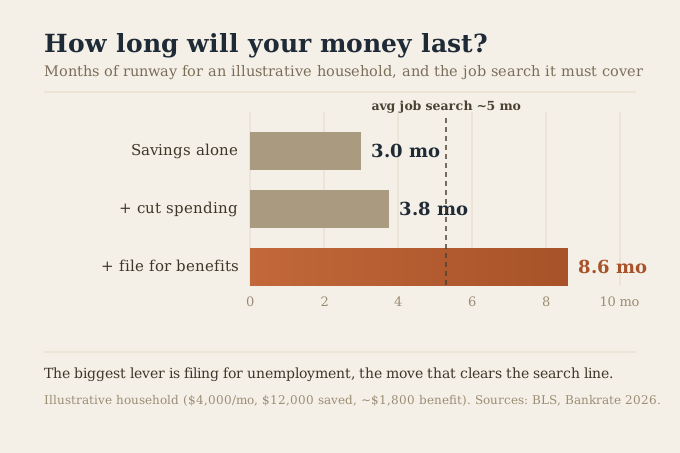
The reason runway matters is that the search takes a while. The average duration of unemployment is about 23 weeks, roughly five months, per Bureau of Labor Statistics data, though the median is nearer ten weeks. Plan for months, not weeks. And most households are not positioned for it: about 27% have no emergency savings and 59% could not cover a $1,000 emergency, per Bankrate's 2026 report. The gap between the runway people have and the runway a search requires is the whole problem, and the rest of this playbook is how to close it.
Week one: file for benefits and stop the bleeding
Two moves define the first week. The first is to file for unemployment immediately, the same day if you can. Benefits take time to process, they are not automatic, and they replace only about 40% of prior wages, from 30% to 50%, for up to 26 weeks in most states. Filing late simply shortens the window of the single largest runway extender available to you. Do it before you do anything else.
The second is to freeze the burn. Pause automatic investing, cancel or suspend discretionary subscriptions, and hold off on any large planned purchase. Do not panic-sell investments in a taxable account to raise cash unless you have exhausted safer options, because selling in a hurry can lock in losses and a tax bill at the worst time. The goal this week is not to fix everything; it is to stop the runway from shortening while you build the plan.
See how many months your cash reserve lasts under normal and stressed spending assumptions.
Cash Runway
4 months
Use this result as one input in your broader Money Map, not as a one-off number.
What to do
Plan this in Money Map
Pre-tax estimates. For illustration only — not financial advice.
Protect your health coverage without overpaying
Losing a job usually means losing employer health insurance, and the default option is often the wrong one. COBRA lets you keep your exact plan, but you pay the entire premium yourself, roughly $700 a month for individual coverage and far more for a family, with no employer contribution. Most people reach for it because it is familiar.
The better first stop is usually the health marketplace. A job loss is a qualifying life event that opens a special enrollment window, and because your income has just dropped, you often qualify for a subsidy large enough to bring a comparable plan down to $50 to $200 a month. Compare both before defaulting to COBRA. The main reasons to choose COBRA are to keep your current doctors mid-treatment or to preserve deductible progress you have already paid toward this year, since a new plan resets both. Weigh those against a premium that can be several times higher.
Never cash out your 401(k)
When money is tight, the retirement balance looks like a lifeline. Cashing it out is one of the most expensive moves available. A cash-out triggers a mandatory 20% federal withholding, and if you are under 59 and a half, a 10% early-withdrawal penalty on top of ordinary income tax. Between the three, a large share of the balance can vanish, and you lose decades of future compounding on top of it.
The correct move is a direct rollover to an IRA, which transfers the money with no withholding and no penalty and keeps it growing tax-deferred. You can also leave it in the former employer's plan if it allows it. Treat the 401(k) as untouchable runway of last resort, addressed only after unemployment benefits, spending cuts, and cash reserves are exhausted. Our 401(k) rollover guide covers the mechanics.
Extend the runway
With the urgent moves done, the work is stretching the runway to cover the search. Cut spending to essentials: housing, food, utilities, insurance, and minimum debt payments, pausing everything else. Call lenders and service providers, since many offer hardship deferrals you only get by asking. If you received severance, treat it as runway to be metered out, not a windfall, and understand how it interacts with unemployment timing in your state.
Keep the cash you are living on somewhere it still works. The runway fund should sit in a high-yield savings account, earning a competitive rate while you draw it down, not in a checking account earning nothing. These are current rates, live as of today, all at FDIC-insured banks:
When the runway is short
If the numbers do not clear the search line even after triage, move to the harder levers in order of cost. A 0% APR balance-transfer card can bridge a short gap if you have a concrete repayment plan, but treat it as a dated loan, not free money. A HELOC taps home equity at a lower rate than cards, but it puts the house at risk and should be approached cautiously. Prioritize debts by consequence, not just interest rate: keep the housing and utility payments current first. And only as a genuine last resort, after everything else, consider a retirement withdrawal, understanding its full cost. The point of sequencing is to spend the cheapest runway first and keep the most damaging options for last.
Build an emergency-fund target from entered essential expenses and coverage months, including a zero-contribution safeguard.
How much you can set aside each month
Target Emergency Fund
$21,300
Use this result as one input in your broader Money Map, not as a one-off number.
What to do
Compare top emergency fund accounts
Pre-tax estimates. For illustration only — not financial advice.
Methodology
This playbook sequences standard post-layoff financial moves by urgency and cost. The runway figures in the chart are an illustrative household, essential expenses of about $4,000 a month, a $12,000 cash reserve, and an unemployment benefit near $1,800 a month, chosen to show how the levers stack; your own numbers will differ, which is what the calculator is for. The unemployment-duration figure is the Bureau of Labor Statistics average; the benefit replacement rate and 26-week limit are national norms that vary by state. COBRA and marketplace costs are 2026 national ranges that depend heavily on age, family size, income, and location. The 401(k) withholding and penalty rules are federal. Nothing here is individualized financial, tax, or legal advice.
How we source this. Unemployment duration comes from Bureau of Labor Statistics data, the emergency-savings figures from Bankrate's 2026 report, and health-coverage and retirement rules from federal law and current market ranges, all cited with dates. See our methodology and editorial team. We take no payment for organic rankings. This is one of 18 life-event money playbooks — see the full list for whatever else is happening in your life right now.
Sources
- Bureau of Labor Statistics, average duration of unemployment (FRED UEMPMEAN).
- Bankrate, 2026 Emergency Savings Report: share with no savings and unable to cover $1,000.
- COBRA and ACA marketplace 2026 cost ranges; federal rules for 401(k) rollovers, withholding, and the early-withdrawal penalty.
Figures are current as of mid-2026 and vary by state, income, and situation. This page is informational, not financial, tax, or legal advice. Free to cite with attribution to SwitchWize.
Frequently Asked Questions
What should I do financially right after a layoff?
How long does it take to find a new job?
Is COBRA or a marketplace plan better after a layoff?
Should I cash out my 401(k) if I lose my job?
How do I make my savings last during unemployment?
Answer a few questions about your situation and goals. Money Map points you to the highest-value next step across savings, mortgage, cards, and debt.
Editorial review
What changed since the last update
Was this guide helpful?
Found an inaccurate, outdated, or missing claim? Report a correction. We verify reports against the relevant source before changing a guide or ranking.
