How to choose
What to weigh before you pick
It usually comes down to 3 things. Compare your options on each before deciding.
What you earn on the spending you actually do.
The fee weighed against the rewards and credits you will use.
The intro offer and the spend required to earn it.
- Cashback cards guarantee 1.5–5% back as cash with zero redemption hassle, best for non-travelers and beginners.
- Transferable points cards (Chase UR, Amex MR) can deliver 4–6 cents per point through airline and hotel transfer partners, but only if you put in the research.
- Co-branded travel cards pay off only when you fly 8+ segments or stay 10+ nights per year on one brand, otherwise the annual fee outweighs the perks.
This guide answers which reward currency fits you: guaranteed cash back, a single airline or hotel program, or transferable points. It does not rank every card within those categories. Once you choose a currency, use the general travel, airline, hotel, or premium travel guide for product selection.
If you're deciding between cashback, travel, or points credit cards in 2026, the short answer is: it depends on how often you travel, how much complexity you'll tolerate, and whether you're loyal to a single airline or hotel brand. Cashback cards give you a guaranteed, predictable return, typically 1.5–2% on every dollar, with no award charts, no blackout dates, and no expired miles. Travel cards tied to one brand (Delta, United, Hilton) reward loyalty with status perks and free nights, but the math only works if you concentrate enough spending and trips on that brand. Points cards with transferable currencies like Chase Ultimate Rewards or Amex Membership Rewards offer the highest ceiling, potentially 4–6 cents per point on premium cabin redemptions, but reaching that ceiling demands research, flexible travel dates, and patience for award availability.
The cashback vs travel vs points 2026 debate matters more now because welcome bonuses are at historic highs, annual fees on premium cards have climbed past $600, and the average credit card APR sits at 24.00%, meaning a single month of carried balance can wipe out an entire quarter of rewards. This guide breaks down the real dollar value at every spending tier, names the marketing hooks that mislead, and gives you a step-by-step framework to pick the right category (or combine them). If you're a credit card beginner, start here before you apply anywhere.
Cashback vs Travel vs Points 2026: Side-by-Side Comparison
The core distinction in the cashback vs travel vs points 2026 decision comes down to how your rewards are earned, valued, and redeemed. This table summarizes the key differences as of June 2026:
- Cashback Cards
- Cash
- Co-Branded Travel Cards
- Airline miles or hotel points (one brand)
- Transferable Points Cards
- Flexible points (Chase UR, Amex MR, Citi TYP)
- Cashback Cards
- 1¢ per point, fixed
- Co-Branded Travel Cards
- 1.0–3.0¢ per point, variable
- Transferable Points Cards
- 1.0–2.5¢ per point, variable
- Cashback Cards
- Lowest
- Co-Branded Travel Cards
- Medium
- Transferable Points Cards
- Highest
- Cashback Cards
- $0–$95
- Co-Branded Travel Cards
- $95–$695
- Transferable Points Cards
- $95–$695
- Cashback Cards
- Often 3%
- Co-Branded Travel Cards
- Usually 0%
- Transferable Points Cards
- Usually 0%
- Cashback Cards
- Non-travelers, simplicity seekers
- Co-Branded Travel Cards
- Brand-loyal frequent travelers
- Transferable Points Cards
- Flexible occasional travelers
This is especially important if you're someone who values simplicity: cashback cards guarantee their stated return, while travel and points cards offer higher ceilings that only materialize with the right redemption strategy.
How Cashback Cards Actually Work
Cashback cards earn a fixed percentage of every purchase as cash, credited to your account monthly. Three main subcategories exist:
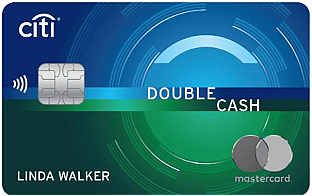
Flat-rate cashback (Wells Fargo Active Cash, Citi Double Cash): 2% on every purchase, no categories to track, $0 annual fee. Welcome bonuses: $200 after $500 spend (WF) or $200 in points after $1,500 (Citi).
Tiered/category cashback (Chase Freedom Unlimited, Amex Blue Cash Preferred): 1.5–3% base plus 3–6% in specific categories (groceries, gas, dining). Usually $0–$95 annual fee with annual category caps on the highest rates.
Rotating quarterly (Discover It, Chase Freedom Flex): 5% on rotating categories each quarter, 1% on everything else, $0 annual fee. Discover It includes year-one "Discover Match" that doubles all cashback earned.
Consider a household, call them the Garcias, spending $40,000 annually across typical categories. Here's what each cashback structure earns them:
- Effective Rate
- 2.0%
- Annual Cashback
- $800
- Effective Rate
- 2.2%
- Annual Cashback
- $878
- Effective Rate
- ~3.2%
- Annual Cashback
- $1,280
- Effective Rate
- ~1.6%
- Annual Cashback
- $640
Pros of cashback cards
- Guaranteed value: 1 cent is always 1 cent, no devaluation risk
- Zero redemption complexity: no award charts or transfer research
- $0 annual fee options widely available
- Cell phone protection on some cards (Wells Fargo Active Cash)
Cons of cashback cards
- Lower ceiling: you cannot get 4–6 cents per point like transfer-partner redemptions
- Most charge a 3% foreign transaction fee, making them poor for international travel
- Category caps limit high-rate earning to a set dollar amount per quarter or year
How Co-Branded Travel Cards Work
Co-branded travel cards are tied to a specific airline or hotel program. You earn miles or points in that program, redeemable for travel with that brand or its alliance partners.
Current annual fees and key benefits (as of June 2026):
- Annual Fee
- $650
- Key Benefits
- Sky Club + Centurion access on Delta flights, MQM bonus
- Annual Fee
- $250
- Key Benefits
- Free checked bag, expanded award availability, travel credit
- Annual Fee
- $550
- Key Benefits
- Diamond status, $400 annual credits, free annual night
- Annual Fee
- $650
- Key Benefits
- Platinum status, $300 dining credit, free annual night
- Annual Fee
- $149
- Key Benefits
- Free upgraded boardings, anniversary points bonus
When co-branded travel cards win: You fly 8+ segments per year on one airline (status earning matters), you stay 10+ nights per year at one hotel chain (free night plus status), and the card's annual credits actually align with your spending.
When they lose: You're brand-flexible, you don't fly enough to earn meaningful status, or the annual credits don't fit your travel pattern. For example, a Delta SkyMiles Reserve cardholder who flies Delta 12 times a year captures lounge access worth $500+, a free Companion Certificate (sometimes $500+), and meaningful Medallion Qualifying Miles. The same cardholder who flies Delta only 3 times a year captures perhaps $100 in benefits, far below the $650 fee.
Pros of co-branded travel cards
- Status earning accelerates loyalty perks (upgrades, lounge access, priority boarding)
- Free checked bags and companion certificates add concrete dollar savings
- Annual free-night certificates at hotels can be worth $300–$600 each
Cons of co-branded travel cards
- Brand lock-in: your miles lose value if you switch airlines or hotels
- High annual fees ($250–$650) require heavy brand-specific spending to justify
- Award charts can be devalued by the airline or hotel with no notice
How Transferable Points Cards Work
Points cards earn flexible currency that transfers to airline and hotel partners. The three main currencies:
Chase Ultimate Rewards (Chase Sapphire Preferred $95, Reserve $795): 14 transfer partners including Hyatt 1:1 (uniquely valuable). The Points Guy March 2026 valuation: 2.05 cents per point. Best for Hyatt loyalists and Chase ecosystem builders.
Amex Membership Rewards (Amex Gold $325, Platinum $895): 20+ transfer partners including Delta (unique to Amex). TPG valuation: 2.2 cents per point. Best for Delta flyers and international travelers using ANA, Singapore, or Aeroplan.
Citi ThankYou Points (Citi Strata Premier $95): 15+ transfer partners with strong Singapore, Turkish, and Avianca ratios. TPG valuation: 1.85 cents per point. Best for international travelers using Star Alliance partners.
Worked example: the Garcias again, with $40K in dining-heavy spending.
- Points Value
- $800 cash
- Welcome Bonus
- $200 cash
- Annual Fee
- $0
- Net Year-1 Value
- $1,000
- Points Value
- $500 in miles
- Welcome Bonus
- $750 in miles
- Annual Fee
- $150
- Net Year-1 Value
- $1,100
- Points Value
- $700 in UR
- Welcome Bonus
- $1,538 in UR
- Annual Fee
- $95
- Net Year-1 Value
- $2,143
For the Garcias at $40K per year, the Chase Sapphire Preferred's first-year value is roughly double the cashback or co-branded travel option because of the larger welcome bonus and higher transfer-partner valuation.
But this assumes they actually use transfer partners. If they redeemed the CSP welcome bonus at 1 cent per point through the Chase Travel portal (the cashback-equivalent route), the value drops to about $1,150, comparable to the flat cashback card. The points card advantage only materializes if you transfer to partners.
Dollar-Impact Ladder: Rewards by Annual Spending Tier
Each category has a practical value range depending on total spend. The cashback vs travel vs points 2026 math shifts at higher tiers:
- Cashback (2% flat)
- $200
- Co-Branded Travel
- $250–$400
- Transferable Points (3–4% effective)
- $300–$450
- Cashback (2% flat)
- $500
- Co-Branded Travel
- $625–$1,000
- Transferable Points (3–4% effective)
- $750–$1,125
- Cashback (2% flat)
- $1,000
- Co-Branded Travel
- $1,250–$2,000
- Transferable Points (3–4% effective)
- $1,500–$2,250
- Cashback (2% flat)
- $2,000
- Co-Branded Travel
- $2,500–$4,000
- Transferable Points (3–4% effective)
- $3,000–$4,500
At $10,000 per year, the gap between categories is small, roughly $50–$250. At $50,000 or more, transferable points can deliver $500–$1,250 more than flat cashback annually, but only with active transfer-partner research and flexible travel plans. If you're a set-it-and-forget-it person, the cashback column is your reliable floor.
Marketing Hook Deconstruction: The Welcome Bonus Trap
Credit card issuers lead with eye-catching welcome bonuses: "Earn 60,000 points after $4,000 in spending!" or "Get $200 cash back after just $500 in purchases!" These bonuses are real, and they often represent the single biggest chunk of value in year one.
Here's the long-term reality: welcome bonuses are one-time. After the first year, your return depends entirely on the card's ongoing earn rate and annual fee. A $695 annual-fee card that delivers a $1,500 welcome bonus looks great in year one. In year two, without the bonus, you need to earn at least $695 in ongoing rewards and perks just to break even on the fee, and many cardholders don't. According to CFPB research on credit card fees, consumers frequently underestimate annual costs relative to the rewards they actually redeem.
The same pattern applies to 0% intro APR offers on cashback cards. A 15-month 0% window is genuinely valuable if you have a planned large purchase, but once the intro period ends, the rate jumps to 24.00% or higher. If you're still carrying a balance at that point, the interest dwarfs any cashback earned.
The honest test: Would this card still be worth it in year three, with no welcome bonus, at full annual fee? If the answer is no, treat the card as a short-term tool and have a plan to downgrade or cancel before the second annual fee hits.
The Prerequisite: Pay in Full Every Month
Rewards are a rounding error next to interest charges. At the average credit card APR of 24.00%, a revolving $3,000 balance costs roughly $60 per month in interest, more than most cards earn back on $2,000 of monthly spending. If you carry a balance in a typical month, a 0% balance-transfer card does more for your finances than any rewards category, and the rest of this analysis can wait. Card APRs have remained elevated in recent years, as the Federal Reserve's rate decisions filter through the prime rate to consumer borrowing costs:
Decision Framework: Which Option Is Right for You
How to decide in the cashback vs travel vs points 2026 landscape comes down to your travel frequency, complexity tolerance, and brand loyalty.
Choose cashback if:
- You take 0–3 trips per year
- You value simplicity and guaranteed returns
- You dislike redemption complexity
- You're building credit and want $0 annual fee options
- You make purchases abroad rarely (or have a separate no-foreign-fee card)
Choose co-branded travel cards if:
- You fly 8+ segments per year on one specific airline
- You stay 10+ nights per year at one specific hotel chain
- You want to earn elite status (Medallion, Gold, Platinum)
- The card's annual credits match your actual spending
- You don't want to research transfer partners
Choose transferable points cards if:
- You travel 3–8 times per year with some date and routing flexibility
- You're willing to research transfer partners and award availability
- You want the option to redeem on multiple airlines or hotels
- You can target premium-cabin transfers (Hyatt, ANA, Singapore)
- You're building a Chase or Amex card ecosystem
If you're a household earning a high-yield savings rate of 4.20% on your emergency fund, your financial foundation is solid enough to start optimizing rewards. But should you carry any credit card debt, tackling that first always outranks rewards optimization.
How to Pick and Combine Cards for Maximum Value
Most rewards optimizers eventually use cards from multiple categories. Here's how to build your setup:
- Start with one card that matches your dominant spending. If you don't travel, open a flat 2% cashback card (Wells Fargo Active Cash or Citi Double Cash). If you travel 4+ times per year, open a Chase Sapphire Preferred to start building transferable points. Check your Chase 5/24 status first: if you've opened 5+ new cards from any issuer in the last 24 months, Chase will likely decline your application.
- Add a category-bonus card after 3–6 months. Layer a Discover It or Chase Freedom Flex for 5% rotating categories, or an Amex Gold for 4x at restaurants and U.S. supermarkets. This fills gaps in your primary card's earn rates.
- Evaluate a co-branded card only after you've identified brand loyalty. If after a year of tracking you find 80%+ of your flights are on Delta or 80%+ of your hotel nights are at Hilton, a co-branded card for status earning and free checked bags makes sense. Otherwise, skip it.
- Reassess annually. Tally your total rewards earned minus annual fees. If a card's net value after the welcome bonus year drops below zero, downgrade to a no-fee version or cancel before the next fee posts.
For example, consider a couple, Priya and Sam, spending $50,000 per year. They set up: Citi Double Cash ($0 annual fee, 2% flat) for everyday spending, Chase Sapphire Preferred ($95) for dining at 3x and travel at 2x with Hyatt transfers, and Amex Gold ($325) for restaurants at 4x and groceries at 4x. Combined annual fees: $420. Combined effective return at roughly 3.5–4.5%: $1,750–$2,250 per year in rewards, plus welcome bonuses on initial applications. Use our rewards calculator to model your own spending breakdown.
Chase enforces 5/24: if you've opened 5+ new cards from any issuer in the last 24 months, Chase will likely decline your application. Plan your application order: Chase first (Sapphire Preferred), then Amex and Citi after. Once you're over 5/24, you can't add Chase cards until older accounts age out, limiting your ability to build the strongest points ecosystem.
The Rewards Ceiling by Category
Each category has a practical maximum return on $40,000 of annual spending. This table captures the floor, typical, and ceiling values; the ceiling on points requires active effort:
- Floor
- $600 (1.5%)
- Typical
- $800 (2.0%)
- Ceiling (with effort)
- $1,000 (2.5%)
- Floor
- $800
- Typical
- $1,000
- Ceiling (with effort)
- $1,200
- Floor
- $600
- Typical
- $1,000
- Ceiling (with effort)
- $1,600–$2,000
- Floor
- $800
- Typical
- $1,200
- Ceiling (with effort)
- $1,600–$2,000
- Floor
- $1,000
- Typical
- $1,400
- Ceiling (with effort)
- $2,000+
- Floor
- $1,200
- Typical
- $1,600
- Ceiling (with effort)
- $2,400+
The ceiling on cashback vs travel vs points 2026 diverges most at high spending levels. Reaching the points ceiling requires active research on transfer partners, flexible travel dates and routing, patience for award availability, and tolerance for redemption complexity. The cashback ceiling is lower but reliably achievable with no effort at all.
Combining Categories: When More Cards Make Sense
If you're a frequent traveler who also wants a no-brainer card for everyday purchases, combining categories is the optimal play. A common setup for someone spending $50K per year:
- Citi Double Cash ($0 annual fee, 2% flat) for catch-all spending
- Chase Sapphire Preferred ($95) for dining (3x), travel (2x), and Hyatt transfers
- Amex Gold ($325) for restaurants (4x) and U.S. supermarkets (4x)
For travelers who fly one airline frequently, adding a co-branded card like the Delta SkyMiles Gold ($150) for status earning and free checked bags rounds out the setup.
The optimization stops when the next card's incremental benefits, including welcome bonus, category bonus, and perks, don't justify the annual fee and the hard inquiry on your credit report. Review the CFPB's guidance on managing multiple credit accounts if you're unsure about the impact on your credit profile.
Methodology
SwitchWize evaluates credit card rewards categories using publicly available earn rates, annual fees, and welcome bonus terms from issuer websites (Chase.com, AmericanExpress.com, Citi.com, WellsFargo.com, Discover.com), verified as of June 2026. Transfer-partner point valuations reference The Points Guy's March 2026 monthly valuations and NerdWallet category analyses. Our full ranking process, including how we handle affiliate relationships, is detailed on our methodology page.
This is educational information, not personalized financial advice.
Quick answer
Cashback cards guarantee 1.5-2% back with no redemption complexity, the right default for 0-3 trips a year. Transferable points cards (Chase Ultimate Rewards, Amex Membership Rewards) can be worth 4-6 cents per point through transfer partners, but only if you actually research and use them; redeemed at face value through a portal, they're no better than cashback. Co-branded travel cards pay off only for brand-loyal travelers flying 8+ segments or staying 10+ nights a year on one airline or hotel chain. Start with cashback, add a points card once travel frequency justifies the research, and add a co-branded card only after a year of data confirms real brand loyalty.
Sources
- CFPB research on credit card fees documents how consumers underestimate annual costs relative to redeemed rewards.
- The CFPB's guidance on managing multiple credit accounts covers the credit-report impact of adding cards.
What to Do Now
Frequently Asked Questions
Which credit card category earns the most: cashback, travel, or points?
What's the difference between travel cards and points cards?
Are cashback cards really worse than points cards?
What's the best cashback card in 2026?
Should beginners start with a cashback card or a points card?
How do welcome bonuses compare across categories?
Can I use multiple categories together?
What about co-branded airline and hotel cards?
The 5-minute money briefing
One email per week. New rates, fed moves, and what to actually do about them.
No spam. Unsubscribe anytime.
Act on this: today's top cashback

Ranked by SwitchWize's composite score. We may earn a referral fee, and it never changes the ranking order.
Editorial review
What changed since the last update
Was this guide helpful?
Found an inaccurate, outdated, or missing claim? Report a correction. We verify reports against the relevant source before changing a guide or ranking.
