- A $95 annual fee is the visible price tag, but interest at today's average card APR on a carried balance can cost ten times more per year, making the true no annual fee credit card cost far higher than expected.
- If you pay your statement in full every month, a no-fee rewards card is the right call because you never trigger the APR.
- If you carry a balance even occasionally, sorting by APR instead of fee saves hundreds or thousands more than skipping the annual fee ever could.
Choosing a credit card based on the words "no annual fee" feels like an obvious win. You see a concrete dollar amount, usually $0 versus $95 or $195, and it seems like free money. But the true no annual fee credit card cost goes far beyond that line item. The real expense of any credit card is the interest rate you pay when you carry a balance, and the average APR on revolving accounts is currently 24.00%. On a $5,000 balance, that single rate generates more than $1,000 in annual interest, roughly eleven times the annual fee you congratulated yourself for dodging.
This is especially important if you're someone who occasionally lets a balance roll over from month to month, even if it's only a few times a year. The "no fee" label can steer you toward a high-APR card when a fee-based card with a lower rate would actually save you money. The fee is the cost you can see. The interest is the cost that quietly compounds against you. Understanding the difference is the core decision that separates a smart card choice from an expensive one.
This guide breaks down the real math, walks you through a decision framework, and gives you concrete steps to compare cards on total cost, not just the fee line. If you're deciding between a no-fee card and a card with an annual fee, the numbers below will make the answer clear.
What the No Annual Fee Credit Card Cost Really Looks Like
People will switch to a no-fee card to save $95 a year, then carry a balance on it at 24.00% and lose ten times that in interest. The visible, small, annual cost wins the decision; the invisible, large, monthly cost is the one that actually matters. The no annual fee credit card cost, when you include interest, dwarfs the fee itself.
Consider a person named Dana who carries a $5,000 balance. Dana chose a no-annual-fee card with a 24.00% APR over a card that charges $95 per year but offers a 14.99% APR. Here is what each option costs Dana over one year:
- No-fee card: $0 fee + approximately $1,200 in interest = $1,200 total cost
- $95-fee card at 14.99% APR: $95 fee + approximately $750 in interest = $845 total cost
Dana saves $355 per year by paying the annual fee. Over three years, that gap widens to more than $1,000. The no annual fee credit card cost was $355 more expensive every single year.
Dollar-impact ladder: interest cost by balance tier
This table assumes a full year of carrying the balance at the average card APR of 24.00%, as of June 2026:
- Annual interest at avg APR
- ~$480
- A typical $95 annual fee
- $95
- Interest minus fee
- ~$385
- Annual interest at avg APR
- ~$1,200
- A typical $95 annual fee
- $95
- Interest minus fee
- ~$1,105
- Annual interest at avg APR
- ~$2,400
- A typical $95 annual fee
- $95
- Interest minus fee
- ~$2,305
- Annual interest at avg APR
- ~$6,000
- A typical $95 annual fee
- $95
- Interest minus fee
- ~$5,905
At every balance tier, the interest charge is the dominant cost. The annual fee is rounding error by comparison.
And the APR side of this trade has not been getting cheaper. Here is where card rates have been heading:
The Marketing-Hook Trap: "0% Intro APR" and "No Fee" Promises
Credit card marketing leans heavily on two hooks: the "no annual fee" badge and the "0% intro APR" offer. Both are real features. Neither tells you the long-term no annual fee credit card cost.
The 0% intro APR hook: Many no-fee cards offer 0% interest for 12 to 21 months. The promotional period is genuine: if you pay off the full balance before it expires, you pay zero interest. The problem is that according to the Consumer Financial Protection Bureau, a significant share of cardholders still carry a balance when the intro period ends. Once it expires, the APR jumps to the card's regular rate, which on many no-fee cards is 24.00% or higher. A balance that felt "free" suddenly costs hundreds per month.
The "no annual fee" hook: This framing positions the fee as the card's cost. In reality, the fee is a tiny fraction of total cost for anyone who revolves a balance. Cards with annual fees often offer lower ongoing APRs, richer rewards, or both, because the issuer recoups revenue through the fee instead of through higher interest rates.
Long-term reality: After the intro period ends, a cardholder with a $7,500 balance on a no-fee card at 24.00% pays roughly $1,800 per year in interest. A card with a $95 fee and a 15.49% APR would cost about $1,257, a difference of over $540 per year. The flashy "free" card is the more expensive product.
If you're interested in how rate gaps affect your broader finances, the State of the Rate Gap guide covers both the debt side and the idle-cash side.
Decision Framework: Choose the Right Card for Your Situation
The question "should you get a no-annual-fee card?" has a clean answer once you know one thing about yourself: do you carry a balance?
Choose a no-fee card if:
- You pay your statement balance in full every single month, no exceptions.
- You want rewards (cash back, points, miles) without a fixed annual cost eating into their value.
- You keep the card open long-term for credit history length and don't want a recurring charge.
Choose a fee-based card if:
- You carry a balance even occasionally, even two or three months per year.
- The card's lower APR saves more in interest than the fee costs (almost always true above $2,000 in revolving balance).
- The card's rewards or benefits (travel insurance, purchase protection, lounge access) exceed the annual fee in value you actually use.
- You want to consolidate higher-rate debt onto a card with a meaningfully lower ongoing rate.
Which Camp Are You In?
- Best card type
- No-fee card
- Why
- You never trigger the APR, so the fee is the only cost that matters
- Best card type
- Fee-based card
- Why
- The lower APR saves more than the fee costs almost every time above $2,000
- Best card type
- Fee-based card with the lowest available APR
- Why
- Rate, not rewards, drives the total cost of a balance
- Best card type
- No-fee card
- Why
- Zero ongoing cost to keep the account open long-term
Not sure which camp you're in?
Check your last three credit card statements. If any of them show a balance carried forward, you are a revolver, and the APR is the number that determines your no annual fee credit card cost. One month of revolving at 24.00% on a $5,000 balance costs roughly $100 in interest, more than an entire year of a typical annual fee. Run your full picture through Money Map to see how your card costs stack up against your savings and other debt.
Operational Comparison: No-Fee vs. Fee-Based Cards
- No-annual-fee card
- $0
- Fee-based card ($95/yr)
- $95
- Which matters more
- Fee matters only if you never carry a balance
- No-annual-fee card
- 24.00% or higher
- Fee-based card ($95/yr)
- Often 3–9 points lower
- Which matters more
- APR matters most for revolvers
- No-annual-fee card
- 1%–2% cash back
- Fee-based card ($95/yr)
- 2%–5% in bonus categories
- Which matters more
- Depends on spend volume
- No-annual-fee card
- 0% for 12–21 months (common)
- Fee-based card ($95/yr)
- 0% for 12–15 months (varies)
- Which matters more
- Only useful if you pay off in time
- No-annual-fee card
- Minimal
- Fee-based card ($95/yr)
- Often included
- Which matters more
- Only valuable if you use them
Pros and Cons of No-Annual-Fee Credit Cards
Pros (benefits)
- Zero fixed cost. If you pay in full monthly, your only expense is opportunity cost versus a higher-rewards card.
- Simplicity. No need to calculate whether you're "earning back" the fee each year.
- Long-term credit building. Keeping a no-fee card open indefinitely costs nothing and helps your average account age.
- Good starter option. For people new to credit or with thin files, no-fee cards are widely available and low-risk.
Cons (drawbacks and risks)
- Higher APRs. No-fee cards tend to carry APRs at or above the national average of 24.00%, making them among the most expensive products for revolvers.
- Lower rewards ceilings. Cash-back rates and bonus categories are usually less generous than fee-based alternatives.
- Fewer perks. Travel insurance, purchase protection, and concierge services are typically reserved for fee cards.
- False economy. The "free" label can discourage comparison shopping on APR, leading to higher total cost: the core no annual fee credit card cost trap.
How to Evaluate Your True Credit Card Cost
Follow these steps before choosing or switching cards:
- Pull your last three statements. Look at the "interest charged" line on each. Add them up and multiply by four for a rough annual interest cost. This is the number that determines whether a no-fee card is actually saving you money.
- Compare APRs side by side. Visit the credit card comparison page and sort by APR, not by fee. For every card you're considering, multiply its APR by your average carried balance to estimate annual interest.
- Run the numbers in a calculator. Use our credit card payoff calculator to model how long it takes to pay off your balance at different APRs, and how much total interest you'd pay on each card.
- Factor in rewards realistically. If a no-fee card offers 1.5% cash back and you spend $1,500 per month, that's $270 per year in rewards. A $95-fee card offering 2.5% back on the same spend earns $450, netting $355 after the fee, $85 more. But if you carry a balance, interest wipes out rewards entirely.
- Reassess annually. Your spending and payment habits change. A card that was right two years ago may not be right today. Set a calendar reminder to repeat this check every 12 months.
This is especially important if you've recently gone through a life change, such as a new job, a medical expense, or a move, that shifted you from paying in full to occasionally carrying a balance. That single shift changes the entire cost equation.
What Your No Annual Fee Credit Card Cost Could Fund Instead
The gap between interest paid on a high-APR no-fee card and interest paid on a lower-APR fee card is real money. If Dana from our earlier example redirected that $355 annual savings into a high-yield savings account earning 4.27%, here's what accumulates over time:
- After 1 year: ~$355 plus a small amount of interest
- After 3 years: ~$1,100+
- After 5 years: ~$1,900+
Alternatively, that $355 per year applied as extra principal on a mortgage at 7.40% could shave months off a 30-year loan and save thousands in total interest. The no annual fee credit card cost, when redirected, becomes a building block instead of a drain.
For broader strategies on making your idle cash work harder, see the guide to high-yield savings strategies and the CD laddering guide.
Quick answer
A no-annual-fee card is the right call only if you pay your statement in full every single month; skip the fee and keep the savings. The moment you carry a balance, even for two or three months a year, the math flips: the APR on a no-fee card is often several points higher than a fee-based alternative, and that gap costs far more than any $95 annual fee. Compare cards by APR first, fee second, and use a credit card payoff calculator to see the real number for your balance.
Sources
- Federal Reserve — G.19 Consumer Credit report
- Consumer Financial Protection Bureau — credit card resources
Methodology
SwitchWize ranks credit cards by total cost to the cardholder, combining annual fees, ongoing APR, and realistic reward value, rather than by promotional headlines alone. Rate data is sourced from issuer disclosures and verified against the Federal Reserve's G.19 Consumer Credit report on a rolling basis. Our full ranking and verification process is documented on the methodology page.
This is educational information, not personalized financial advice. The true no annual fee credit card cost is the interest rate you pay when you carry a balance, not the fee you avoid: if you pay in full every month, no-fee cards are a smart choice, and if you ever revolve a balance, compare cards by APR first, fee second, because the math is not close.
What to Do Now
Frequently Asked Questions
Is a no-annual-fee card always better?
How much does carrying a balance actually cost?
What should I do after reading No Annual Fee Credit Card Cost: The Hidden Price You Pay?
Can Money Map help with cards decisions like this?
The 5-minute money briefing
One email per week. New rates, fed moves, and what to actually do about them.
No spam. Unsubscribe anytime.
Act on this: today's top cards


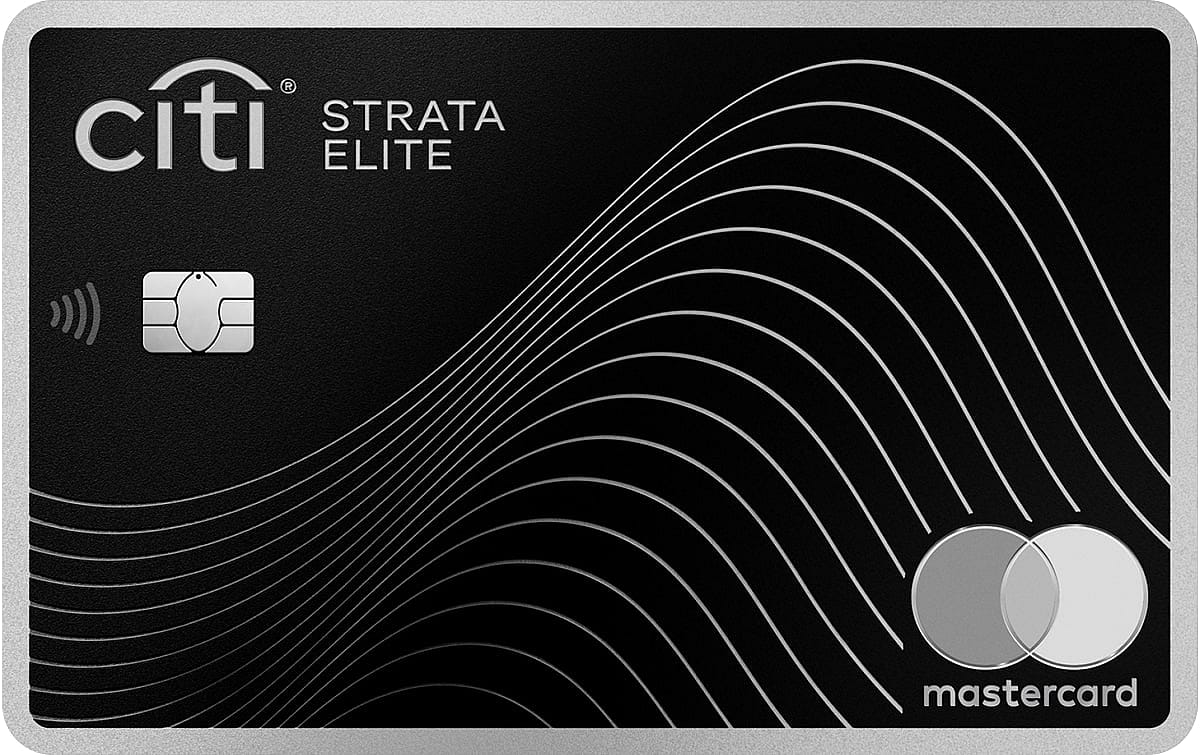
Ranked by SwitchWize's composite score. SwitchWize currently has no compensated product links.
Editorial review
What changed since the last update
Was this guide helpful?
Found an inaccurate, outdated, or missing claim? Report a correction. We verify reports against the relevant source before changing a guide or ranking.
