- Federal Regulation E requires your bank to refund electronic transfers you did not authorize, such as a hacked account.
- A scam where you were tricked into sending the money yourself is treated as authorized, and banks are often not required to refund it.
- Zelle and wires are near-instant and hard to reverse, so verify before you send and report within minutes if you are scammed.
There is a comforting assumption behind every bank app: if something goes wrong with my money, the bank will make it right. For fraud, that assumption is only half true, and the half that fails is the one scammers exploit on purpose. The law draws a hard line between money taken from you and money you were tricked into sending, and only one side of that line comes with a guaranteed refund. Rates on this page were last verified recently. The answer to 'will my bank refund a Zelle scam 2026' depends entirely on which side of that line your transaction falls.
Understanding that line is the difference between a recoverable mistake and a permanent loss, because Zelle and wire transfers are engineered to be fast and final.
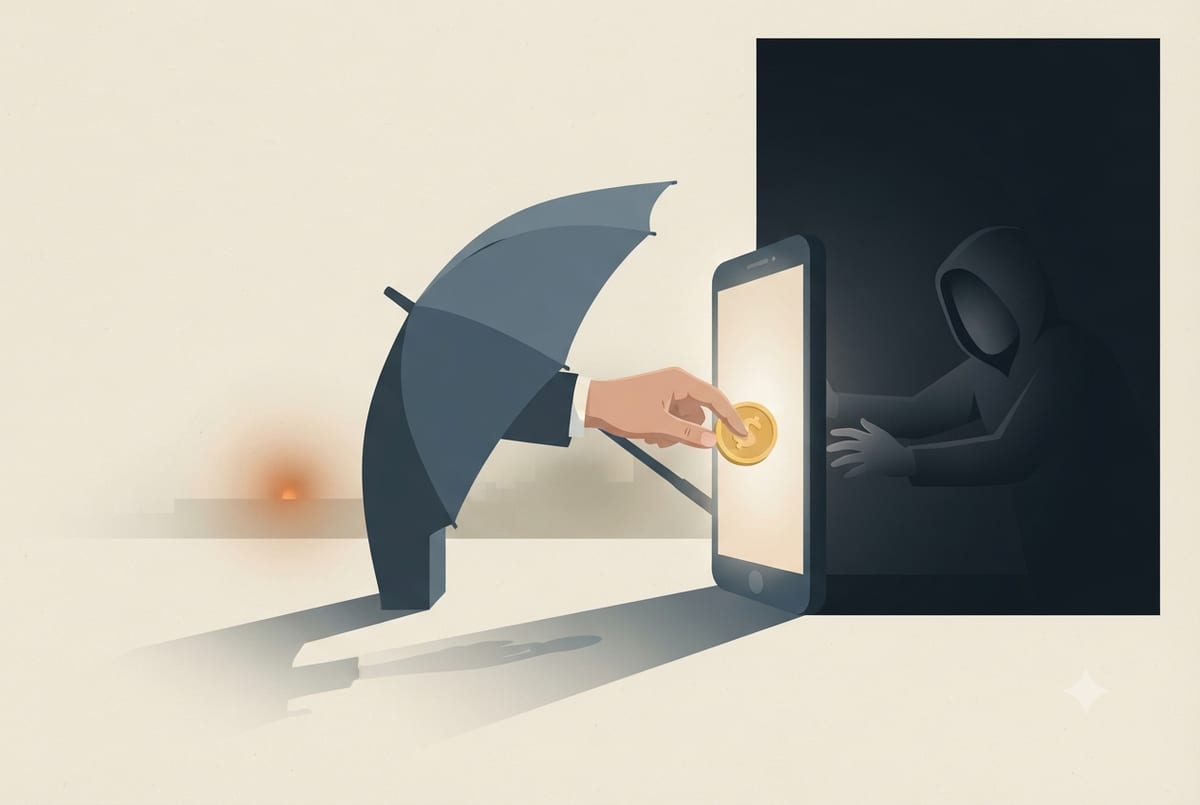
The line that decides the refund
Federal law protects electronic payments through Regulation E, but it protects one specific thing: unauthorized transfers.
- Unauthorized means a transaction you did not make. A criminal hacks your account, steals your login, or uses your card without permission. For these, Regulation E requires your bank to investigate and refund you, subject to prompt reporting.
- Authorized means a transfer you made yourself, even if you were deceived into making it. You believed a caller was your bank's fraud team and sent money to a "safe account." You wired a deposit to a fake landlord. You are the one who clicked send.
Scammers work relentlessly to move you from the first category to the second, because an authorized payment is one banks are frequently not required to refund. This is called authorized-push-payment fraud, and it is why "your account is compromised, move your money now" is the most common script.
The rule of thumb: if you clicked send, even while being lied to, the payment is authorized. If someone else clicked send using your credentials without your knowledge, it is unauthorized. That single distinction, not how convincing the scam was, is what decides whether Regulation E applies.
Why Zelle and wires are especially unforgiving
Both are built for speed and finality:
- Zelle settles in minutes between bank accounts. Once the money reaches the scammer's account, it is often withdrawn immediately, and there is no built-in buyer protection like a card chargeback.
- Wires are similar: fast, and treated as final. Recalling one depends on the money still sitting in the receiving account and the other bank's cooperation.
Because there is no chargeback mechanism the way there is with a credit card, the window to recover is measured in minutes to hours, not days. A credit card purchase can be disputed; a Zelle payment you authorized usually cannot.
What to do the moment you realize
Speed is the only real lever after money has left.
- Call your bank immediately. Ask them to attempt a recall and, if your credentials were exposed, freeze the account. The faster you report, the better the (still uncertain) odds.
- Report it. File with the FTC at reportfraud.ftc.gov, and for wire fraud with the FBI's IC3 at ic3.gov.
- Lock down access. Change passwords, turn on two-factor authentication, and check for other unauthorized changes.
- Document everything. Screenshots, phone numbers, times. If any part was truly unauthorized, this record supports a Regulation E claim.
Unauthorized vs authorized, at a glance
- Refund likely?
- Yes, Regulation E applies
- Refund likely?
- Often not required
- Refund likely?
- Yes, via chargeback
- Refund likely?
- Usually not reversible
The only reliable protection is before you send
Because the refund is not guaranteed, the defense has to happen before the money moves:
- Verify independently. If "your bank" calls, hang up and call the number on your card. Banks do not ask you to move money to a "safe account."
- Slow down. Urgency is the scammer's tool. A real emergency survives a five-minute pause to verify.
- Treat Zelle and wires like cash. Use them only with people you know and trust, and only after confirming details through a channel you initiated.
Protection against this doesn't have to cost you yield. The best checking accounts now pay up to 2.75% APY while still offering strong fraud monitoring and fast recall support, so switching banks for better fraud protection and switching for a better rate can be the same move. If a scam does set back your savings, our short-term savings calculator can help you rebuild your buffer on a realistic timeline.
Quick answers
Will my bank refund a Zelle scam? If it was unauthorized (someone else moved your money), yes, under Regulation E. If you were tricked into sending it yourself, often not.
Can a wire be reversed? Rarely, and only if reported immediately while the funds are still in the receiving account.
What do I do first? Call your bank at once to attempt a recall, then report to the FTC and IC3.
If this scare has you rethinking which bank you trust with your money, Money Map compares your current setup against stronger options in one pass, not just for fraud protection but for rate and fee gaps too.
Sources
- Consumer Financial Protection Bureau: Regulation E (12 CFR 1005) — the federal rule governing electronic fund transfer error resolution and unauthorized-transaction refunds.
- FTC: Report Fraud — federal scam-reporting portal referenced above.
- FBI Internet Crime Complaint Center (IC3) — federal reporting channel for wire and online fraud.
Methodology
Regulation E governs electronic fund transfer protections; coverage of authorized-push-payment scams is an evolving area, and some banks and networks have adopted limited reimbursement policies for certain scams. Confirm your bank's current policy and your rights. This is general educational information, not legal advice.
What to Do Now
Frequently Asked Questions
Will my bank refund a Zelle scam in 2026?
What is the difference between unauthorized and authorized fraud?
Can a Zelle or wire transfer be reversed?
What should I do right after a payment scam?
The 5-minute money briefing
One email per week. New rates, fed moves, and what to actually do about them.
No spam. Unsubscribe anytime.
Act on this: today's top savings



Ranked by SwitchWize's composite score. We may earn a referral fee, and it never changes the ranking order.
Editorial review
What changed since the last update
Was this guide helpful?
Found an inaccurate, outdated, or missing claim? Report a correction. We verify reports against the relevant source before changing a guide or ranking.
