- A money market fund aims to hold a steady $1 per share, but it is an investment, not an FDIC-insured deposit, and it can rarely break the buck and dip below $1.
- It is held at a brokerage with SIPC protection, which covers a failed broker, not investment losses.
- For guaranteed safety, an FDIC-insured savings or money market deposit account is the cleaner choice; government money market funds are the most conservative fund type.
The name does most of the damage. "Money market" sounds like a bank product, and the balance sits there paying a steady rate that looks exactly like interest, so people assume a money market fund is as safe as a savings account. It usually behaves that way. But the word "fund" is doing quiet, important work. Savings rates on this page were last verified recently. Understanding whether are money market funds safe 2026 requires recognizing that funds are investments, not deposits like those at banks.
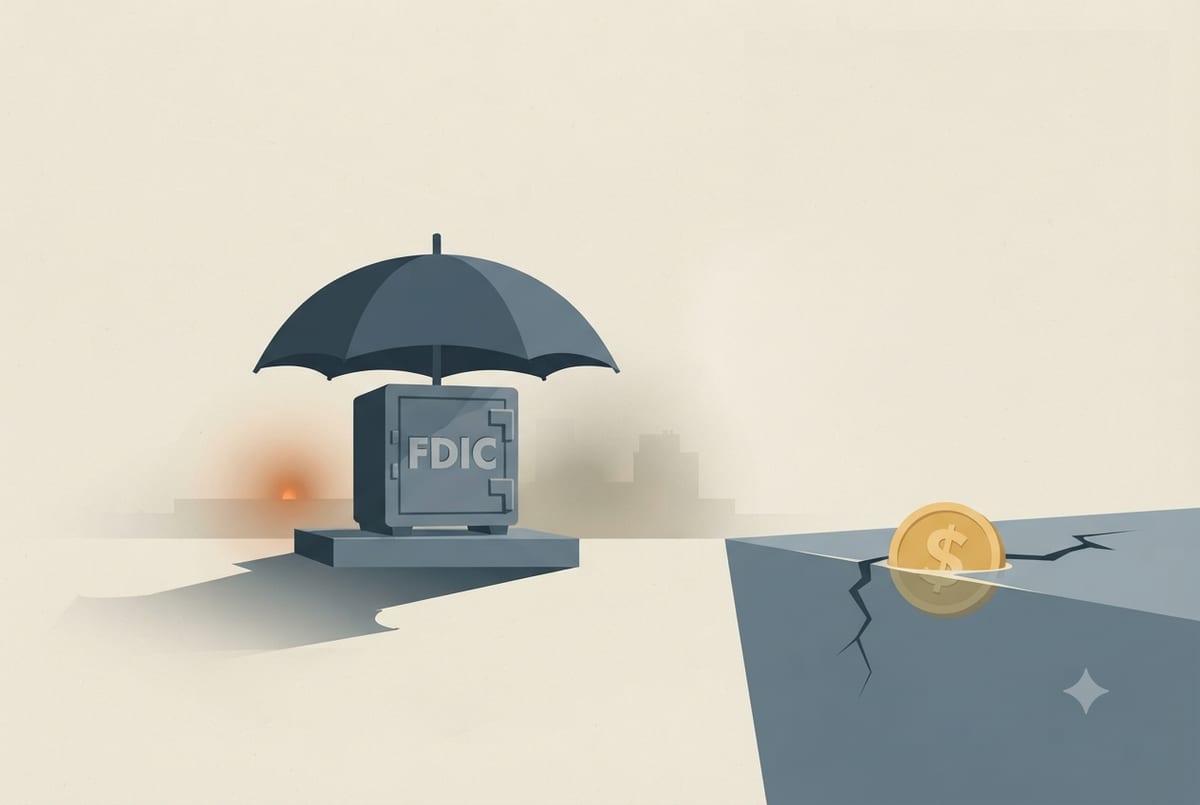
A money market fund is an investment, and the difference from an insured deposit only matters in rare moments, which are precisely the moments you would want it to matter.
What a money market fund actually is
A money market fund is a mutual fund that holds very short-term, high-quality debt (Treasury bills, commercial paper, repurchase agreements) and is managed to keep its share price at a stable $1. Buy a share for $1, and the fund works hard to make sure it is always worth $1, paying you the yield the underlying debt earns.
Almost always, it holds that dollar. But "aims to" is not "guaranteed to." The fund is an investment, and its $1 is a target, not a promise.
Breaking the buck
When a fund's share price slips below $1, it has broken the buck, and holders lose a small slice of principal. It is rare, and it takes real market stress: it famously happened in the 2008 crisis when a large fund fell to about 97 cents after a bankruptcy in its holdings, triggering a panic that reshaped the rules.
Regulations since then made funds sturdier, and government money market funds in particular are very conservative. But the tail risk is not zero, and it is a risk an FDIC-insured account simply does not have. In an insured account, a dollar is always a dollar up to the coverage limit.
FDIC vs SIPC: two different shields
This is where the confusion compounds. Money funds carry protection, just not the kind people assume:
- FDIC insurance covers bank deposits if the bank fails, up to the limit. A money market fund is not a bank deposit, so FDIC does not apply.
- SIPC protection covers your brokerage account if the broker fails and your assets go missing. It does not cover investment losses, so it would not make you whole if a fund broke the buck.
The similarly named money market deposit account at a bank is a different product entirely, and it is FDIC insured. Same words, opposite protection. The distinction between funds and accounts is the whole game, and it echoes the pass-through insurance gap in fintech apps: know exactly what wrapper your cash sits in.
What covers what
- Insured by
- FDIC
- Can you lose principal?
- No, up to the limit
- Insured by
- SIPC (broker failure only)
- Can you lose principal?
- Rarely, if it breaks the buck
- Insured by
- SIPC
- Can you lose principal?
- Very rarely; most conservative fund
When the fund is worth it anyway
None of this makes money market funds bad. They are a reasonable place for cash you hold at a brokerage, they can pay a competitive yield, and government funds are about as safe as a non-insured product gets. The trade is simple: you accept a small, rare tail risk in exchange for convenience and sometimes a slightly higher yield.
For an emergency fund or any cash you cannot afford to see dip even briefly, the FDIC-insured account is the right call. For brokerage cash you want to keep working, a government money market fund is the conservative choice.
Quick answers
Are money market funds safe? Very conservative, but they are investments, not insured deposits, and can rarely break the buck. Government funds are the most conservative.
What is breaking the buck? When a fund's $1 share price falls below $1 and holders lose a little principal.
Is a money market fund FDIC insured? No. It has SIPC protection (broker failure), not FDIC. A money market deposit account at a bank is FDIC insured.
Methodology
Money market fund structures and protections follow SEC rules and SIPC coverage terms; FDIC insurance applies to bank deposit products, not funds. Fund types and risk vary, so review a fund's prospectus. This is general educational information, not investment advice.
What to Do Now
Frequently Asked Questions
Are money market funds safe in 2026?
What does breaking the buck mean?
Is a money market fund FDIC insured?
Money market fund or a high-yield savings account?
The 5-minute money briefing
One email per week. New rates, fed moves, and what to actually do about them.
No spam. Unsubscribe anytime.
Answer a few questions about your situation and goals. Money Map points you to the highest-value next step across savings, mortgage, cards, and debt.
Editorial review
What changed since the last update
Was this guide helpful?
Found an inaccurate, outdated, or missing claim? Report a correction. We verify reports against the relevant source before changing a guide or ranking.
