- Recent rules and bureau policies removed most medical debt from consumer credit reports, so it no longer drags down your score.
- But your credit report is not the debt itself: you still owe the bill, and the provider or collector can still pursue it, including in court.
- The right response is unchanged: verify the charge, ask for an itemized bill, dispute errors, and negotiate what you actually owe.
For years, an unexpected medical bill could do double damage: it hit your finances, and then it hit your credit score, often for a charge you were still disputing with your insurer. That second injury has largely been removed. Most medical debt no longer appears on consumer credit reports, so a surprise bill will not quietly wreck your credit while you sort it out. Rates on this page were last verified recently. However, the removal of medical debt off credit report 2026 marks an important milestone in how consumer credit reporting evolves.
That is genuinely good news. It is also widely misunderstood, because people are conflating two very different things: your credit report, and the debt itself.
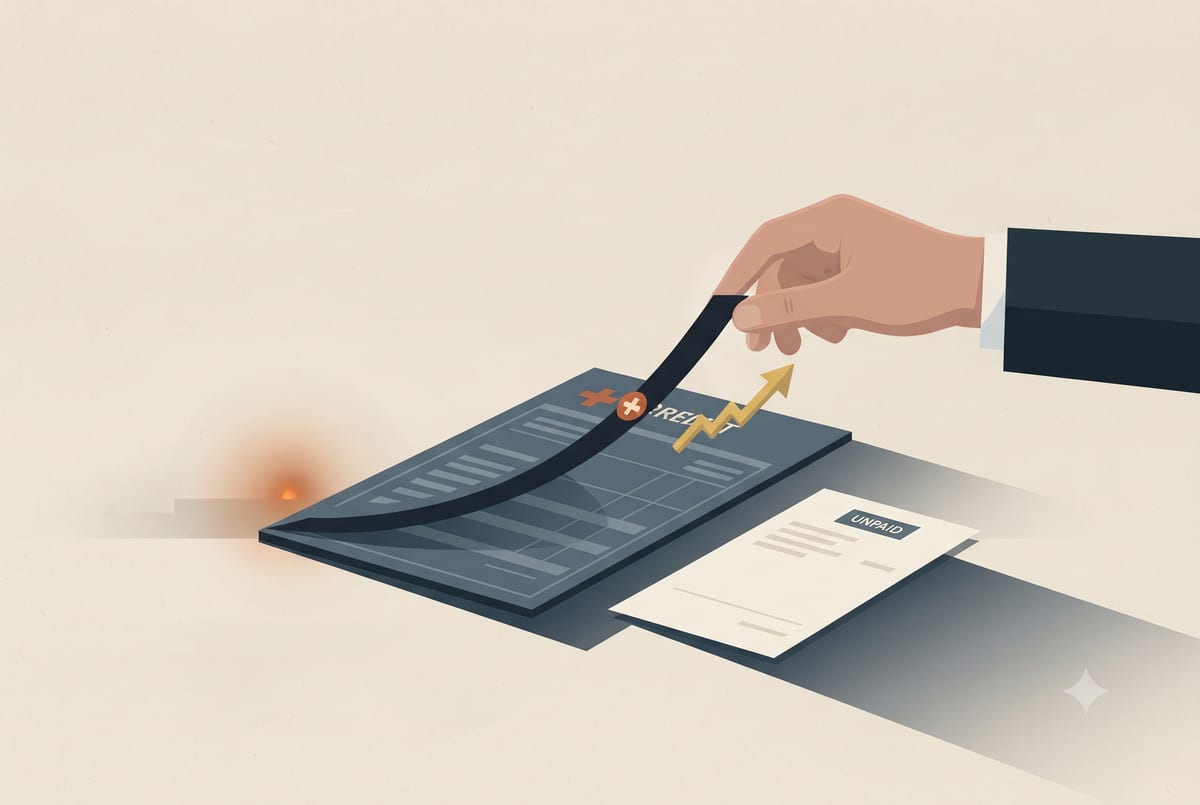
What actually changed
Recent rules and the credit bureaus' own policies removed most medical debt from consumer credit reports. In practice that has meant clearing paid medical collections, small-balance medical collections, and, under the newer rules, most unpaid medical debt as well.
The effect on your credit score is real:
- Medical collections no longer drag your score down the way they used to.
- A surprise bill you are still contesting will not silently damage your credit while it is unresolved.
- Newer credit-scoring models already weighed medical debt less heavily than ordinary debt, so this extends a direction that was already underway.
For a category of debt that is usually unexpected, often the result of billing errors, and frequently in dispute, keeping it off the score is a sensible protection.
What did not change: you still owe it
Here is the part that trips people up. Removing a debt from your credit report does nothing to the debt itself. The two are separate:
- The provider or collector can still bill you for the amount owed.
- In many cases they can still pursue the debt in court, and a judgment has its own consequences.
- The obligation does not expire because it stopped appearing on a credit report.
So the change protects your score, not your bank account. Treating an off-report medical bill as if it vanished is how a manageable bill becomes a lawsuit.
Credit report vs the debt
- On your credit report
- Mostly removed
- The debt itself
- Still owed
- On your credit report
- No longer, largely
- The debt itself
- N/A
- On your credit report
- N/A
- The debt itself
- Yes, in many cases
- On your credit report
- Nothing, it is off
- The debt itself
- Verify, dispute, negotiate
What to do about a medical bill now
The right playbook is exactly what it was before the rule change, because the underlying obligation is unchanged:
- Verify the charge and get an itemized bill. Medical billing errors are common; you may owe less than the first number.
- Check the insurance. Confirm claims were filed and applied correctly before you pay anything.
- Ask about assistance. Many hospitals offer financial assistance or charity care; you may qualify for a large reduction.
- Negotiate. Providers and collectors routinely settle for less or set up interest-free payment plans. The debt is real, so resolving it still matters.
Quick answers
Is medical debt off credit reports? Largely yes, most has been removed, so it no longer drags your score.
Does it still affect my score? Much less, often not at all, now that it is off consumer reports.
Do I still owe the bill? Yes. The credit-report change does not erase the debt; verify, dispute errors, and negotiate.
Methodology
Medical-debt credit-reporting changes reflect recent federal rulemaking and the credit bureaus' own policies; the exact scope and status of some rules has been subject to change and litigation, so confirm current details. Removal from credit reports does not affect the enforceability of the underlying debt, which is governed by state law. This is general educational information, not legal or credit advice.
Frequently Asked Questions
Is medical debt off credit reports in 2026?
Does medical debt still affect my credit score?
Do I still have to pay a medical bill that is off my credit report?
What should I do about a medical bill now?
The 5-minute money briefing
One email per week. New rates, fed moves, and what to actually do about them.
No spam. Unsubscribe anytime.
Answer a few questions about your situation and goals. Money Map points you to the highest-value next step across savings, mortgage, cards, and debt.
Editorial review
What changed since the last update
Was this guide helpful?
Found an inaccurate, outdated, or missing claim? Report a correction. We verify reports against the relevant source before changing a guide or ranking.
