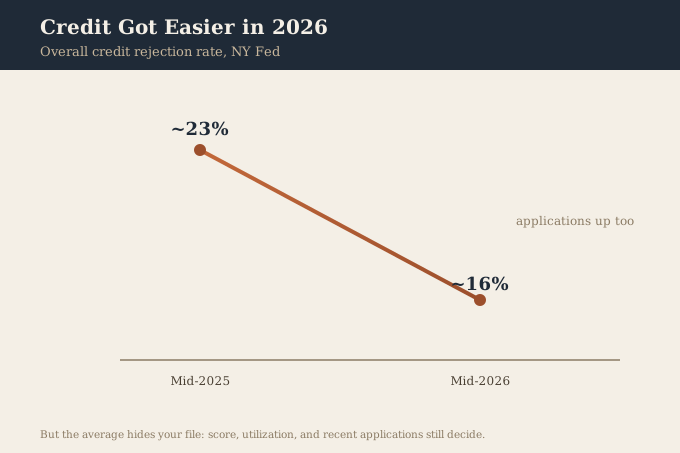
- Credit access loosened in 2026: the New York Fed's rejection rate fell to about 16% from roughly 23% a year earlier, and applications hit a post-2021 high.
- Easier on average is not easy for everyone. Rejection still concentrates among thin files, low scores, and high utilization.
- The move is not to apply everywhere; it is to fix your score, utilization, and application timing first, then apply once, deliberately.
There is a widely held belief that credit got harder to get, and a year ago it was true. Heading into 2026, rejection rates were high and lenders were cautious. But the data turned, and the story people are still repeating has not caught up. Credit access has loosened this year, which changes the calculus for anyone thinking about a new card, a limit increase, or a loan. Understanding your credit card approval odds 2026 requires looking at current lending trends rather than outdated assumptions.
The improvement is real and measurable. It is also uneven, which is the part that matters for your own application.
What the data actually shows
The clearest read comes from the New York Fed's Survey of Consumer Expectations, which tracks how often people apply for credit and how often they are turned down. In mid-2026, the overall rejection rate fell to about 16%, down from roughly 23% a year earlier, and close to the lowest level since 2021. At the same time, applications rose to their highest level since 2021.
Read together, those two numbers describe a genuine loosening: more people are asking for credit, and a larger share are getting it. That is the opposite of the tightening narrative from 2025.
- Mid-2025
- ~23%
- Mid-2026
- ~16%
- Mid-2025
- Lower
- Mid-2026
- Highest since 2021
- Mid-2025
- Tightening
- Mid-2026
- Loosening
Why "easier on average" is not "easy for you"
An average is a single number laid over millions of very different files. A loosening market lifts the odds at the margin, but approval is still decided on the specifics of your credit report. Rejection continues to concentrate where it always has:
- Low or thin credit scores, where the lender has little history to trust.
- High utilization, when your balances sit close to your limits at the moment the report is pulled.
- Recent application clusters, which read as risk and add hard inquiries.
- Insufficient income for the limit requested.
None of these are fixed by a friendlier market. They are fixed by preparing your file before you apply.
The move: tighten your file, then apply once
If access is loosening and you have a real need, this is a reasonable window. The mistake is treating it as open season and applying broadly, which stacks inquiries and drops your average account age for little gain. The better sequence:
- Check your score and know roughly where you stand.
- Pay balances down so your utilization is low when the issuer pulls your report.
- Space out applications rather than clustering them.
- Apply once, deliberately, for the card or limit you actually want.
If you are denied anyway, the issuer must send an adverse-action notice stating why. That reason is your exact to-do list; work it directly rather than reapplying blind.
Sources
- Federal Reserve Bank of New York, SCE Credit Access Survey (rejection-rate and application-demand series).
- Summary of the mid-2026 reading, CuraDebt on the June 2026 survey.
Figures are rounded and cover all credit types, not credit cards alone. Individual approval outcomes vary by lender and file. This is general educational information, not credit advice.
Frequently Asked Questions
Is it easier to get a credit card in 2026?
What is the credit rejection rate in 2026?
Why was I denied a credit card even though credit is easing?
Should I apply for credit now while access is loosening?
Act on this: today's top cards



Ranked by SwitchWize's composite score. We may earn a referral fee, and it never changes the ranking order.
Editorial review
What changed since the last update
Was this guide helpful?
Found an inaccurate, outdated, or missing claim? Report a correction. We verify reports against the relevant source before changing a guide or ranking.
