
The short answer: Compare installment fees and payment options. Chase’s interest-saving balance can preserve a plan while avoiding interest on new statement purchases.
A fixed monthly fee is only part of the decision. The payment option you choose can determine whether other purchases accrue interest or your plan ends early.
By Jay Rege · November 4, 2026
The refrigerator costs $1,200. Your credit card offers to spread the purchase over a year. You accept, keep using the card and reach the next payment screen.
Now there is more than one plausible amount to pay.
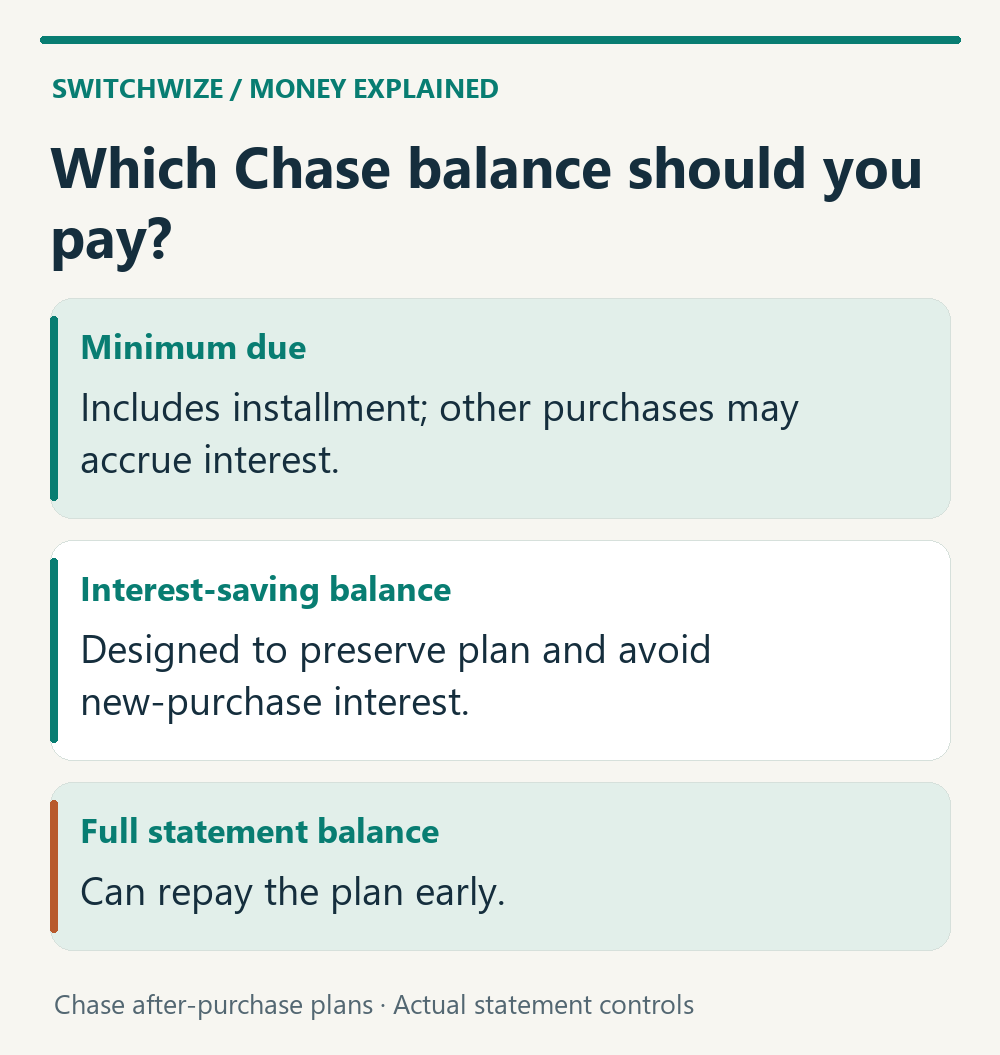
Chase's after-purchase Pay Over Time plan illustrates the problem. The installment is included in the minimum payment, but paying only that minimum is not the same as avoiding interest on other purchases. Paying the full statement balance, meanwhile, can repay the plan earlier than you intended. Chase offers an “Interest saving balance” designed to keep the plan running while avoiding interest on new statement purchases.
The example is about that particular product. Other issuers use different names and rules. Before accepting installments, understand both the borrowing cost and the payment instructions you will have to follow afterward.
A small monthly fee can be a meaningful borrowing cost
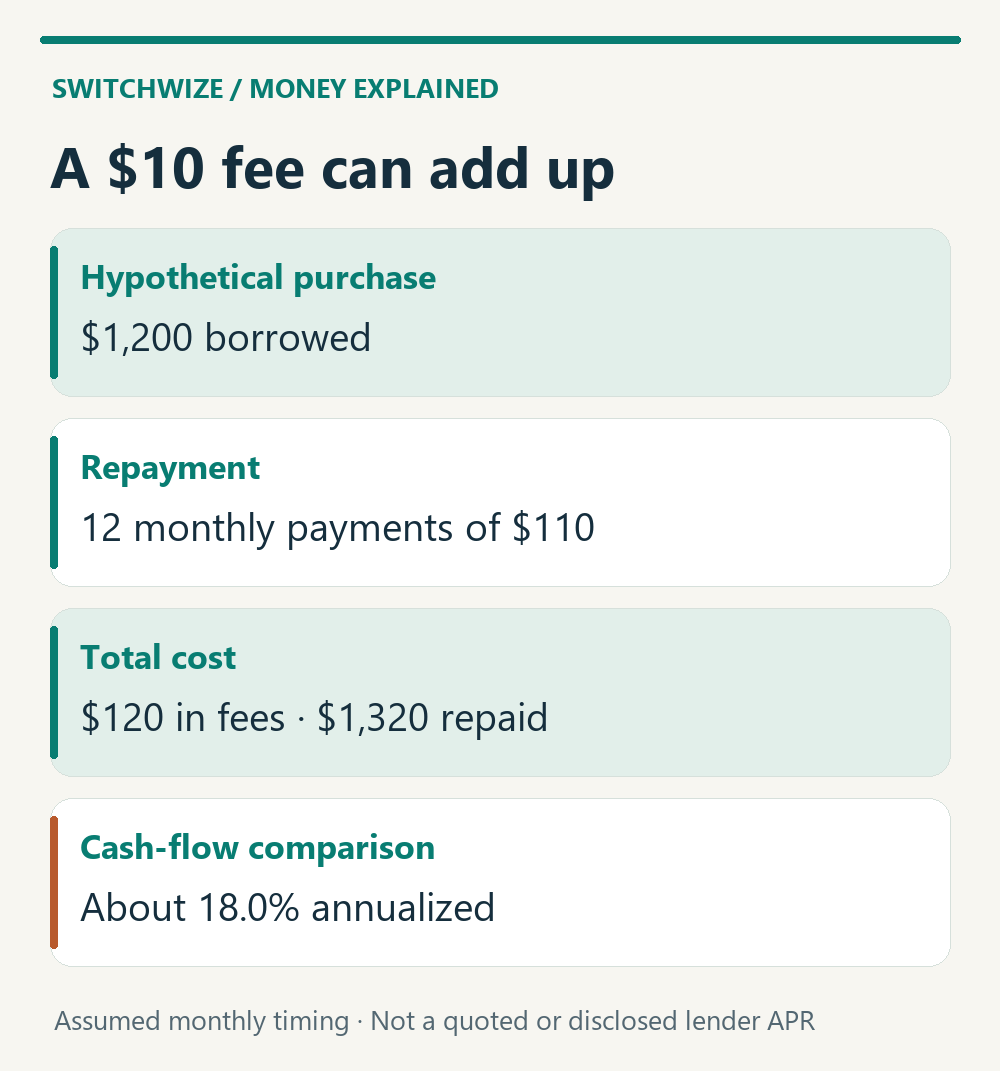
Use a hypothetical offer, not a current quote: a $1,200 purchase, 12 equal monthly principal repayments and a $10 monthly fee. Each scheduled payment is $110. Pay all 12 and you return $1,320, including $120 in fees.
The fees equal 10% of the original purchase. That does not make this a 10% annual borrowing rate. You repay principal along the way, so you do not have the full $1,200 available for the whole year.
Assume the first payment falls one month after the purchase and the rest come monthly. To compare this fee with an interest rate, find the monthly rate that would produce the same payments: about 1.50%. Multiplying that by 12 gives an annualized comparison rate of about 18.0%. Monthly compounding gives an effective annual rate of about 19.5%. These are our cash-flow calculations, not Chase's disclosed APR or a current offer. Actual payment dates and fees can change the result.
This is why a dollar fee should be compared with the cost of another loan over the same repayment schedule. Comparing it with a savings rate on the original $1,200 for a full year overstates how long the borrowed money remains available.
Three payment options serve different purposes
The minimum payment keeps required payments on schedule if you pay it on time, but may leave ordinary purchase balances accruing interest. The full statement balance clears the amounts shown on the statement, including the remaining plan balance under Chase's stated rules. Paying it can be sensible if you now want to stop the plan and avoid future fees; it is a problem only if you intended to keep the installments.
The interest-saving option serves a narrower purpose: pay what Chase calculates is needed to avoid interest on new statement purchases while preserving the planned installments. It does not eliminate a plan's fixed fee. Even when the plan charges no interest on that purchase, its fixed fees still cost money.
The practical lesson is to read the payment option as carefully as the offer. “Autopay is on” does not tell you which amount it will withdraw. Recheck the selection after starting a plan and make sure the bank account can cover it.
The CFPB's explanation of grace periods provides the wider context. A grace period is the time between the end of a billing cycle and the payment due date during which eligible purchases may avoid interest. Carrying balances can affect that treatment. The exceptions built into a particular installment program need to be checked rather than assumed.
Check the rest of the card, not just this purchase
Suppose the refrigerator is the only balance you intend to finance. You also put groceries and fuel on the same card. Your goal is to keep financing the appliance while paying the ordinary purchases without interest.
That requires the issuer's specified payment, not a self-invented combination of balances. Other promotional balances, refunds, fees and payments can complicate the calculation. Chase's FAQ specifically flags balance transfers as a case needing attention. Ask the issuer how the offer works with the balances already on your account before relying on it.
Federal payment-allocation rules also matter. Payments above the required minimum generally go first toward the balance with the highest annual percentage rate, subject to exceptions. That does not give a cardholder unrestricted power to direct every extra dollar to whichever balance they prefer. Check the card agreement and the issuer's actual calculation.
The plan is useful only if the full bill fits
A fee-free offer can be attractive to someone who already has cash for the purchase and follows the payment rules. A priced plan may also offer a manageable schedule at a lower total cost than another available loan. Neither benefit requires pretending that installments make the refrigerator cheaper.
The risk is evaluating one payment at a time. A $110 installment can fit this month's budget while several plans together do not. Include rent, existing debt payments and other essentials before treating the quoted installment as affordable.
Chase says early repayment carries no penalty and avoids future plan fees. That is useful flexibility, but it does not mean a plan can simply be canceled and restored later. Read the terms before starting, including what happens after a missed payment.
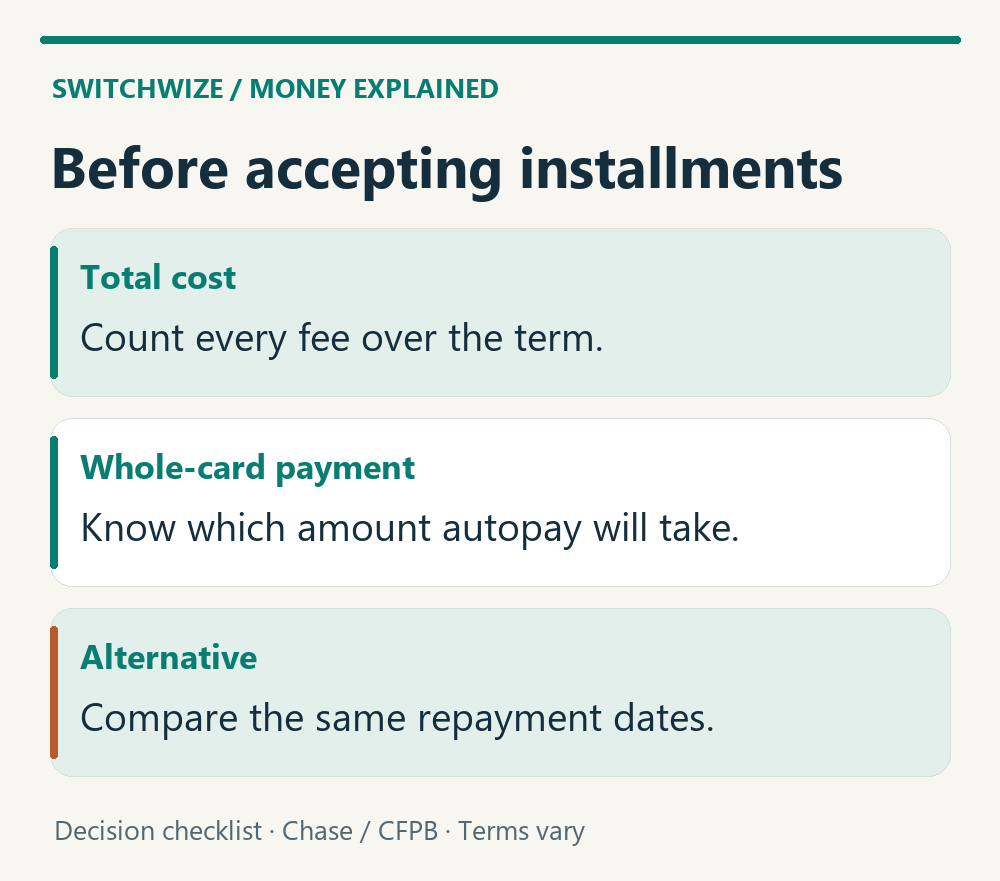
Before accepting, save the offer and record the total financing cost, the payment needed to handle the whole card as intended, and the cost of an alternative loan. If any of these remains unclear, resolve it before the refrigerator becomes a second problem.
Sources
Chase: after-purchase plan FAQ; Chase: interest-saving balance; Chase: general Pay Over Time FAQ; CFPB: grace periods; Regulation Z: payment allocation.
Checked November 4, 2026. U.S. Chase Pay Over Time after-purchase plans, not a description of all installment products or deferred-interest offers. Refrigerator, $10 fee and cash flows are hypothetical. Comparison rates are calculated from assumed equal monthly payments, exclude other charges and are not a legally disclosed APR. No account enrollment or personal credit assessment was performed.