- As of September 19, 2026, the best 1-year CD paid 4.45% APY and the best 5-year CD paid 4.50% APY, a gap of only 5 basis points for four extra years locked up.
- One bank, Popular Direct, posted the exact same 4.50% APY on its 2-year CD and its 5-year CD the same day, no reward at all for the extra three years.
- On a $25,000 balance, that gap is worth about $12.50 a year, nowhere near enough to make up for losing access to the money for years longer.
Renata split a small inheritance three ways last week: an emergency fund top-up, a brokerage deposit, and a CD. For the CD, she did what most people do. She looked at the rate table, saw the 5-year number was the highest on the page, and locked it, assuming a longer commitment should pay more. Rates on this page were last checked recently. It's the reasonable assumption. It's also, right now, close to false.
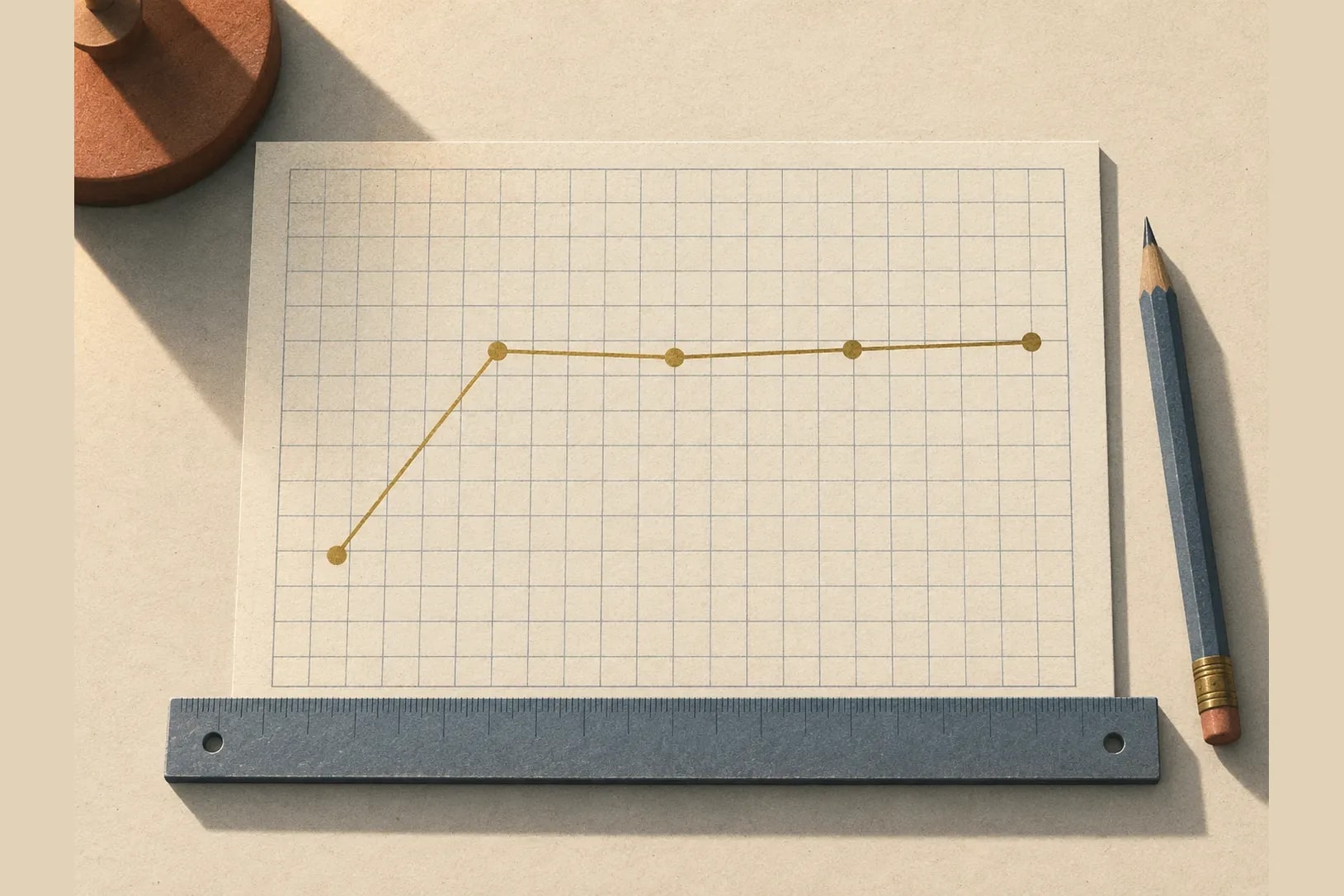
Why a 5-year CD should pay more
A bank is asking for something when it sells you a 5-year CD instead of a 1-year one: your money, locked away, for years it can't be sure you won't need back. Normally that's worth a premium. Right now it barely is.
- Best APY (2026-09-19)
- 4.45%
- Bank
- EagleBank
- Best APY (2026-09-19)
- 4.50%
- Bank
- United Fidelity Bank
- Best APY (2026-09-19)
- 4.50%
- Bank
- Popular Direct
- Best APY (2026-09-19)
- 4.50%
- Bank
- Popular Direct
Walk from the 1-year column to the 5-year column and the number moves five hundredths of a percentage point. Popular Direct's own posted rates make the point cleanest of all: the same bank pays the same 4.50% APY whether you lock for two years or five, meaning three of those years buy you nothing beyond what the shorter term already paid.
The Fed's rate path since 2022
To see why a 5-basis-point gap is strange, it helps to know what this same comparison looked like the last two times the Fed moved.
In June 2022, inflation hit a 40-year peak of 9.1%. The Fed answered with the fastest tightening cycle since it began targeting the funds rate in 1982, eleven hikes in sixteen months, taking the rate from near zero to 5.25-5.50% by July 2023, the highest level since early 2001. Banks, expecting cuts within a year or two, had no reason to pay extra for locking savers in long. By April 2023, top 1-year CDs averaged around 5.17% while most 5-year CDs paid well below 5%. By mid-2024, the gap had widened further: Capital One was offering 5.00% on a 1-year CD against just 3.90% on a 5-year, a full 110 basis point inversion, short-term CDs paying more than long-term ones, the exact opposite of how a normal curve works.
Then the cutting actually started. The Fed's first cut since the pandemic landed on September 18, 2024, down to 4.75-5.00%. Three more cuts followed through December, landing at 4.25-4.50%. The Fed paused through early 2025, resumed with three more cuts in late 2025 to 3.50-3.75%, and held there through every meeting in 2026 up to July. Normally, once a cutting cycle plays out, the curve un-inverts and starts sloping upward again, longer CDs paying more, because banks regain confidence about locking in today's rate for years. That's the textbook next chapter. It isn't what happened.
Why the curve went flat
On September 16, 2026, the Fed raised rates for the first time in three years, a quarter point to 3.75-4.00%. Markets are now pricing in the possibility of another hike before year-end. That reversal, not just "a Fed move happened," is why the curve went flat rather than steep. A bank prices a CD partly on where it expects rates to head. Deep inversion in 2023-2024 reflected near-certainty that cuts were coming. A steep, normal upward curve would reflect confidence that cuts are over and rates are heading down from here in a predictable way. What actually happened is neither: two years of cuts, a sudden hike, and real uncertainty about whether that hike is a one-off correction or the start of something new. When a bank doesn't know which way rates go next, it has no reliable edge to price into a longer CD, so it stops paying extra for one. Flat isn't the absence of a signal. It's the market's honest admission that it doesn't have one right now.
The complication: a flat curve doesn't make a 5-year CD a bad choice for everyone. If you genuinely believe the September hike is a one-off and rates resume falling from here, a 5-year CD at 4.50% locks in today's rate against that decline, a real hedge, not a mistake, for money you're confident you won't need for years. The trap isn't locking long. It's locking long for a premium that isn't actually there, while telling yourself the bigger number is the reward.
Why the bigger number feels like the better deal
This is an easy mistake, not a careless one. "5-year CD, 4.50% APY" reads as more serious, more committed, more rewarded than "1-year CD, 4.45% APY," even when the actual difference is five hundredths of a point. People compare the CD to a checking account paying near zero and feel like they won. The comparison that actually matters, the one against the shorter CD sitting right next to it on the same rate table, gets skipped.
The cost shows up later, not now. Break a 5-year CD early and most banks charge a penalty worth several months to a year of interest, depending on the bank and the term. Lock five years for a 5-basis-point premium and then need the money in year two, and the penalty erases the entire reason you chose the longer term in the first place.
What a flat curve means
A curve this flat isn't rewarding patience. It's telling you the bank doesn't know what happens next either, and it isn't willing to bet against you finding a better rate elsewhere before your five years are up.
Compare the term next to it, not the term you assumed you wanted. Lock only the length that's actually paying you more. Keep the rest liquid until the curve tells you otherwise, and check again before you renew, since a flat curve today doesn't guarantee a flat curve next quarter. Consider a CD ladder instead of one long CD: it captures most of the top rate while leaving a portion free to re-lock every year if the gap between terms ever widens again.
Renata's bank still had her inside the short window most banks allow to cancel a new CD without penalty. She called, shortened her term from five years to two, and left the rest of her deposit liquid. Same 4.50%. Three fewer years locked away for it.
Quick answers
Should I get a 1-year or 5-year CD right now? Compare the actual rate gap first. On September 19, 2026, it was about 5 basis points, not enough to justify losing access to your money for four extra years.
Why are CD rates so close across terms? The market isn't confident rates will fall much over the next several years, so banks have little reason to pay extra for a longer lockup.
What should I do instead of locking a long CD? Consider a CD ladder or a high-yield savings account, both of which let you react if the gap between terms widens again.
Methodology
CD rates cited here were checked directly against SwitchWize's tracked rate observations on 2026-09-19 and reflect the best publicly advertised APY per term at that time; rates change and your own bank's offer may differ. Fed funds rate history (the 2022-2023 hiking cycle, the 2024-2025 cutting cycle, and the September 2026 hike) is drawn from Federal Reserve FOMC statements and contemporaneous CNBC/CBS News reporting. Historical CD rate figures for 2023-2024 are drawn from contemporaneous CNBC and U.S. News reporting on CD rates during that period. Early-withdrawal-penalty ranges are described generally based on common industry practice, not one specific bank's terms; always confirm the penalty on your own CD's disclosure before locking. This is educational information, not personalized financial advice.
What to Do Now
Frequently Asked Questions
Should I get a 1-year or 5-year CD right now?
Why are CD rates the same across different terms?
What is the risk of locking a long CD when rates might rise further?
What is a CD ladder and does it help here?
Act on this: today's top cds



Ranked by SwitchWize's composite score. We may earn a referral fee, and it never changes the ranking order.
Editorial review
What changed since the last update
Was this guide helpful?
Found an inaccurate, outdated, or missing claim? Report a correction. We verify reports against the relevant source before changing a guide or ranking.