
The short answer: Selected buy-now-pay-later data can inform some lending decisions without changing a credit score. Reporting, scoring and approval are separate.
Some buy-now-pay-later information can now inform a lending decision without changing the score you check. Here is what that means before your next application.
By Jay Rege · November 4, 2026
Your credit score looks the same. Your borrowing may look different to a lender.
In October, TransUnion began giving one lender partner a limited set of information about buy-now-pay-later loans and other purchases financed at checkout. It says these data do not currently affect consumer credit scores. The information is limited, comes from one provider, and does not show every installment loan a person has.
That is a small rollout with a useful lesson: watching your score does not tell you everything a lender can consider. A credit score is one input to a decision. It is not a promise that another loan will be approved.
For people using installment plans before applying for a card or loan, the question has become more specific. Which information is reported, who can use it, and what does it show about the money they still owe?
The report, the score and the decision are separate
A credit report records borrowing information, while a scoring model turns the information it uses into a number. The lender makes a separate decision about whether to offer credit, at what price and for how much. The score displayed in your app may also differ from the score a lender uses.
The Federal Trade Commission explains that there are different scoring systems. The number you see is useful, but it cannot describe every lender's process.
In a fictional example, Maya has three installment plans with $200 left on each. She owes $600 even if the score she follows has not moved. Whether a particular lender receives those balances depends on reporting, the bureau and the lender's access. Her repayment obligation does not depend on any of those things.
That distinction matters more than guessing how many points a purchase might cost. Maya needs to know whether the payments fit her budget and what her prospective lender will require her to disclose.
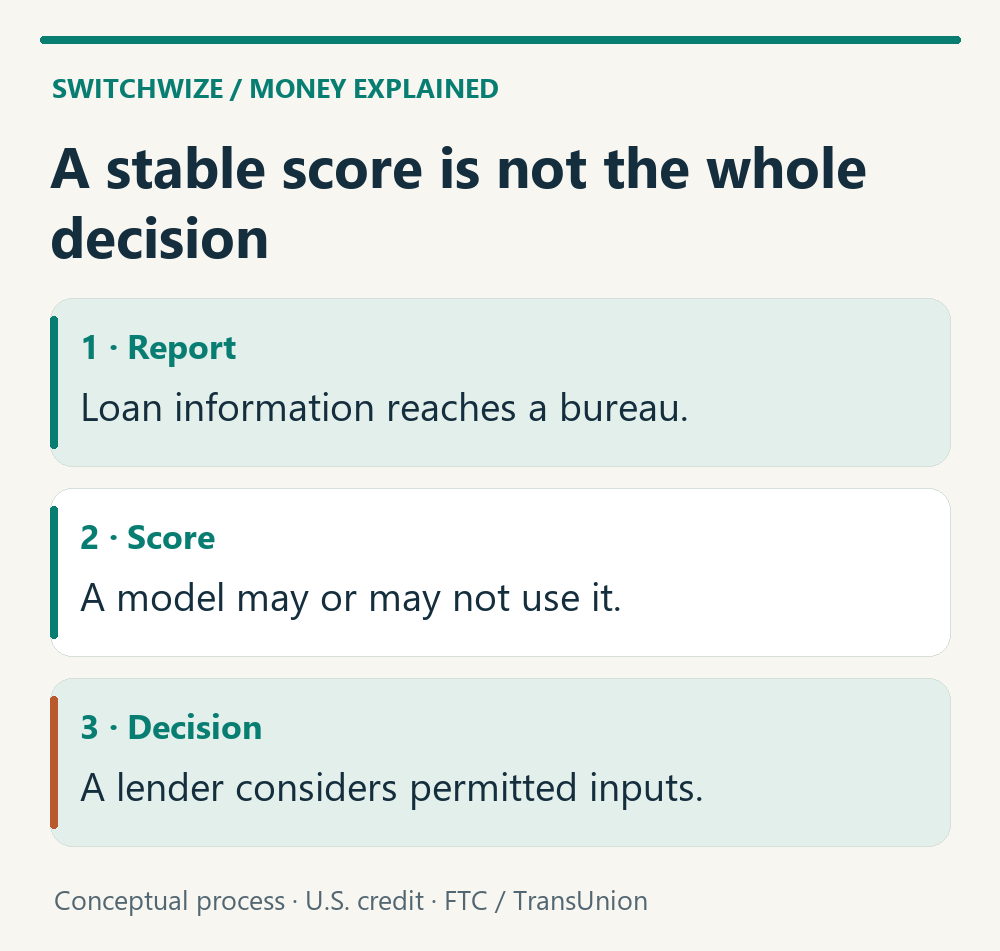
Reporting a loan does not mean every score uses it
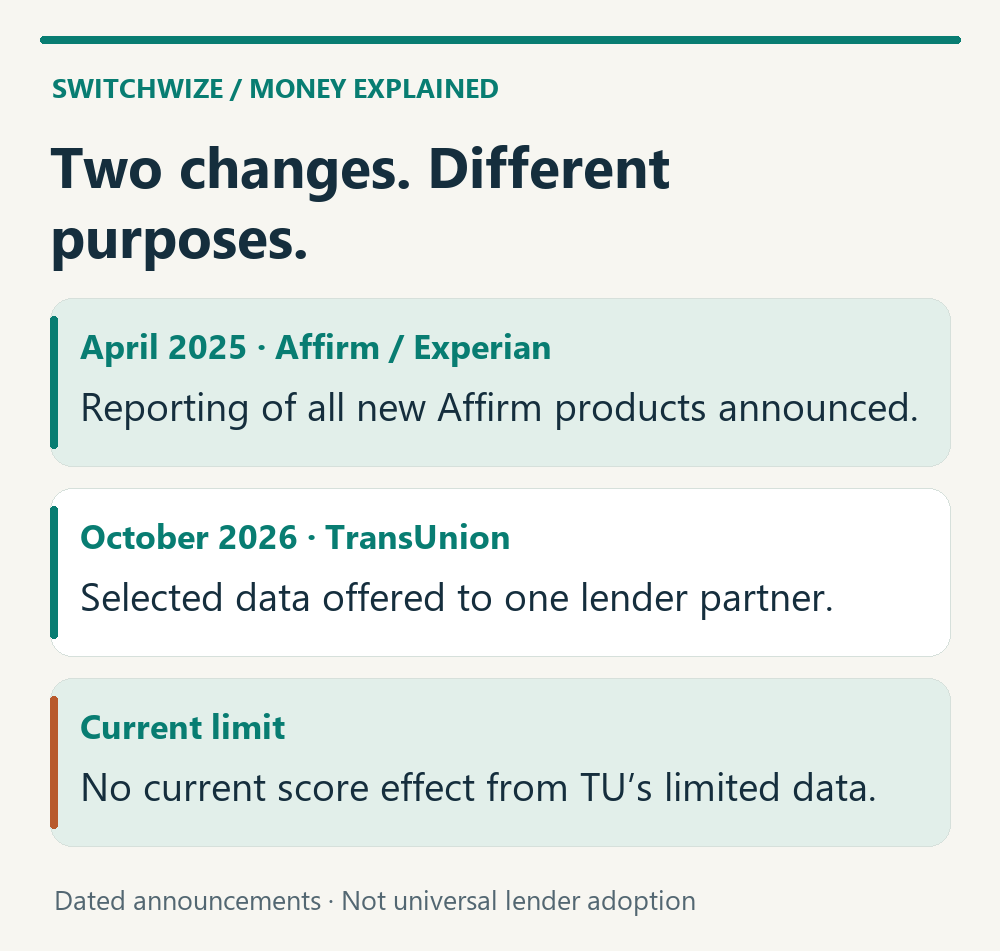
Affirm and Experian announced that Affirm would report all pay-over-time products issued from April 1, 2025, including Pay in 4. Their announcement said the new reporting would not enter traditional scores in the near term. That is a dated announcement about one provider and bureau, not a rule for every installment service.
TransUnion's October 2026 change concerns access to selected information for one lender partner. Its measures include open balances and repayment trouble. They are not a complete record of a person's installment borrowing.
These are different developments. One concerns sending information to a bureau. The other concerns a lender receiving selected information. Neither establishes universal use in lending or scoring today.
Before taking a plan, read the terms for that exact product and country. Do not assume a short pay-in-four plan and a longer interest-bearing loan have identical reporting policies, even under the same brand.
More information could help responsible borrowers
Additional information need not be bad news for borrowers. It can show that someone has managed installment payments successfully, as well as reveal payments they are struggling to make.
A lender seeing outstanding obligations may make a more realistic assessment of whether someone can handle another payment. A record of successful repayments could also be useful. But a rollout announcement is not proof of better approvals, lower prices or fewer defaults. Those outcomes need to be measured.
The important question is how the information is interpreted. Three small purchases are not automatically equivalent to three large personal loans. Nor does a history of on-time payments mean every new payment is affordable.
Our view is that lenders should explain how additional installment information changes their decisions, and distinguish repeated responsible use from repayment problems. Consumers should be able to check information about them and challenge mistakes. That is an editorial recommendation, not a claim that every lender already does this well.
Count the payments even when the score stays still
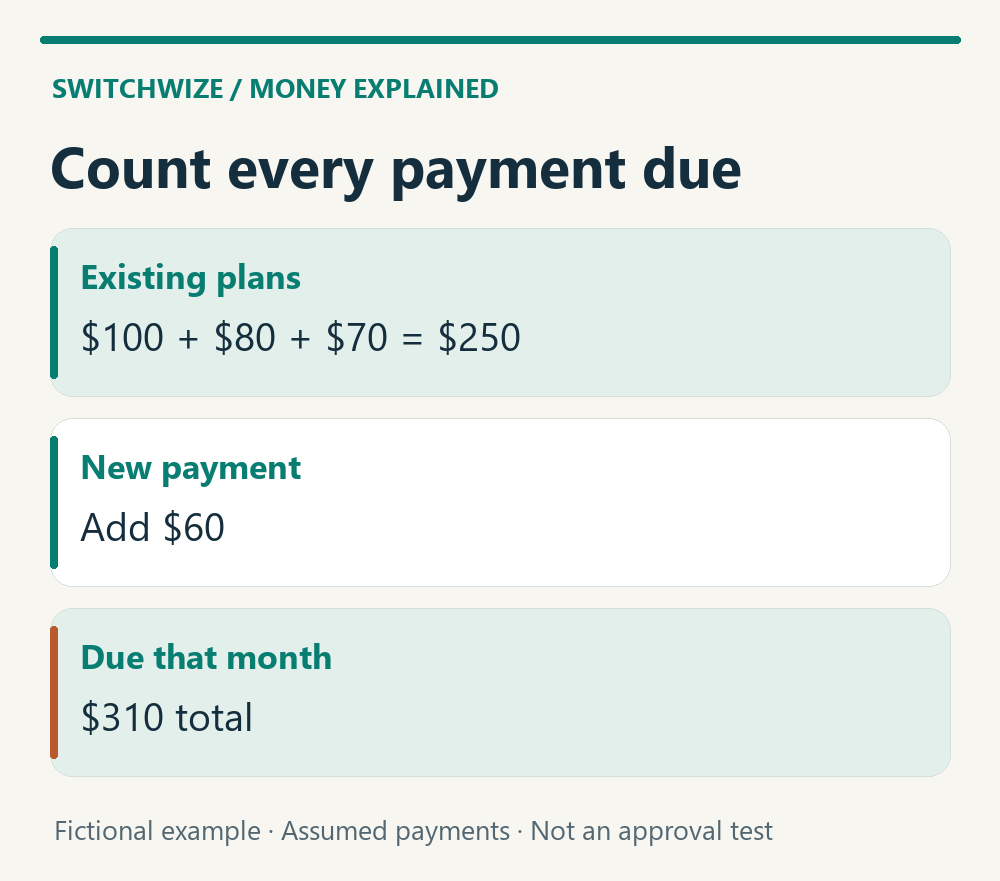
Return to Maya. Suppose her fictional plans require $100, $80 and $70 over the next month. The total is $250. A new plan requiring $60 during that same month would raise it to $310. The affordability question is the combined $310, not the smallest payment advertised at checkout.
This calculation needs no prediction about a score. Write down each payment date, remaining balance and funding account. Include ordinary card bills and other debts. Timing matters: two affordable-looking payments can still cause trouble if both arrive before payday.
Before an important application, check your reports through AnnualCreditReport.com, the authorized source identified by the FTC. Review the actual entries and keep the agreements for plans that may not appear. Answer application questions accurately; an absent entry is not permission to leave out a debt you are asked to disclose.
If a lender denies credit using information in a consumer report, read the adverse-action notice. The CFPB explains that it identifies the reporting company and your right to request that report free within 60 days. It can also show a score used and key factors affecting it. Do not infer the reason from an unrelated score alert.
You do not need to abandon every installment plan. You do need a better question than whether your score went down: before borrowing again, what do you owe, what will come due, and what information will this lender use?
Sources
TransUnion: October 2026 lender access; TransUnion: consumer explanation; Affirm and Experian reporting announcement; FTC: credit scores; CFPB: denial and report rights.
Checked November 4, 2026. U.S. consumer credit; product, bureau and lender practices vary. Maya and all payment amounts are hypothetical. This is a source-based explanation, not an account test, lender interview or prediction of a reader's score or approval. The provider comparison records documented developments and does not claim complete current market coverage.