- On $50,000 in annual business spend, a 2% flat cash-back card earns $1,000 per year. A category card earning 3x points on advertising and travel can outperform that, but only if the spend actually falls in the bonus categories.
- Most small business credit cards require a personal guarantee: if the business cannot pay, you are personally liable. This is standard and not a reason to avoid business cards, but it is something to understand before applying.
- The best business card for most small businesses is the simplest one: a flat 2% cash-back card eliminates the need to track bonus categories and ensures every dollar earns the same rate.
Quick answer
The best business credit card for most small businesses is a flat-rate cash-back card with no annual fee: the Amex Blue Business Cash (2% on the first $50,000 per year) or the Chase Ink Business Unlimited (1.5% on everything, 12-month 0% intro). On $50,000 in annual spend, the 2% card returns $1,000 a year with zero category tracking. Category cards like the Ink Business Preferred (3x on advertising and travel) win only when your spend actually concentrates there. Two things to know before applying: nearly every small business card requires a personal guarantee, and carrying a balance at the average card APR of 24.00% costs far more than any rewards earn. Our guide to the best business credit cards 2026 helps you identify which rewards structure matches your actual spending patterns.
Quick picks
- Pick
- Ink Business Unlimited (Chase)
- Why
- 1.5% cash back on everything, no annual fee, Chase ecosystem
- Pick
- American Express Blue Business Cash
- Why
- 2% on first $50,000/year, then 1%, no annual fee
- Pick
- Ink Business Preferred (Chase)
- Why
- 3x on travel and top spend categories, strong sign-up bonus
- Pick
- Ink Business Unlimited or Amex Blue Business Cash
- Why
- Both $0 annual fee
- Pick
- Ink Business Unlimited or Amex Blue Business Cash
- Why
- 12-month 0% intro on purchases
- Pick
- Brex or Ramp
- Why
- No personal guarantee with qualifying revenue
- Pick
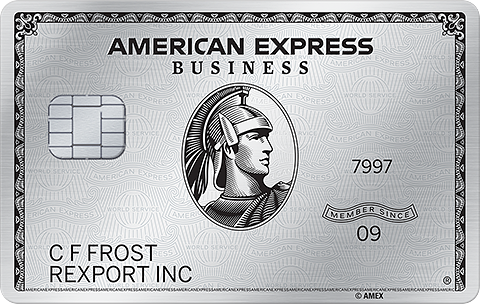
- Amex Business Platinum
- Why
- Premium travel perks, high annual fee justified at scale
- Pick
- Capital One Spark Cash Plus
- Why
- 2% unlimited cash back, no cap
Editorial picks based on publicly available card terms. Verify current offers, rates, and sign-up bonuses with each issuer before applying.
Annual fee vs rewards at $5,000 a month
Most business owners think in monthly spend, so start there. $5,000 a month is $60,000 a year, and at that level the annual-fee question has a clean answer.
The rule: an annual fee is worth paying only when the card out-earns a free 2% card by more than the fee. Divide the fee by the extra reward rate to find the spend where it breaks even.
- Extra rate vs a free 2% card
- n/a
- Annual spend to break even
- n/a
- Monthly equivalent
- n/a
- Worth it at $5,000/mo?
- The default
- Extra rate vs a free 2% card
- +1 point (3% vs 2%)
- Annual spend to break even
- $9,500
- Monthly equivalent
- $792
- Worth it at $5,000/mo?
- Yes, comfortably
- Extra rate vs a free 2% card
- +1 point
- Annual spend to break even
- $15,000
- Monthly equivalent
- $1,250
- Worth it at $5,000/mo?
- Yes
- Extra rate vs a free 2% card
- +1 point
- Annual spend to break even
- $25,000
- Monthly equivalent
- $2,083
- Worth it at $5,000/mo?
- Yes
- Extra rate vs a free 2% card
- +1 point
- Annual spend to break even
- $69,500
- Monthly equivalent
- $5,792
- Worth it at $5,000/mo?
- No
That last row is the one that catches people. At $5,000 a month, a one-point rate edge earns about $600 a year, so a $695 premium fee loses money on the earn rate alone. A card at that price has to justify itself on travel credits, lounge access, or employee-card controls, not on rewards.
To run it for your own number: divide the annual fee by the extra rate as a decimal, then by twelve. A $95 fee at one extra point is $95 / 0.01 / 12, or about $792 a month. The annual fee break-even calculator does it with your real figures, and the business credit card rewards calculator compares structures against your actual category mix.
Two things this arithmetic ignores, both of which can flip the answer: a sign-up bonus in year one, and points that redeem above one cent. Treat the table as the ongoing case, not the first year.
The same comparison in annual terms
Flat 2% cash-back card (no annual fee): $50,000 x 2% = $1,000/year in cash back
3x category card on advertising ($20,000/year), 1x elsewhere ($30,000/year): $20,000 x 3% = $600 + $30,000 x 1% = $300 = $900/year (before accounting for points value)
1.5% flat card (no annual fee): $50,000 x 1.5% = $750/year
2% card with $95 annual fee: $1,000 - $95 = $905 net (needs $4,750+ annual spend just to break even vs a no-fee card)
Note: Points cards value depends on redemption. Chase points redeemed for travel may be worth 1.25 to 1.5 cents each, which can change the math. Cash-back comparisons use face-value equivalents.
Figures are illustrative. Verify current reward rates before applying.
Business spend profile: which card wins
- Best card type
- Ink Business Preferred
- Reason
- 3x on advertising
- Best card type
- Amex Business Platinum or Ink Preferred
- Reason
- Strong travel categories and perks
- Best card type
- Ink Business Cash
- Reason
- 5x on office supply stores and internet/phone
- Best card type
- Amex Blue Business Cash or Spark Cash Plus
- Reason
- 2% on everything, no category tracking
- Best card type
- Ink Business Unlimited
- Reason
- 1.5% flat, no annual fee, low maintenance
- Best card type
- Amex Business Platinum
- Reason
- Annual fee justified by credits and perks
Run your actual category mix through the business credit card rewards calculator to see which structure earns more on your spend, and use the annual fee break-even calculator before paying for a premium card. If you prefer pure simplicity, see the best cash-back business credit cards; if you are financing a large purchase, start with the best 0% APR business cards. And since the card works best alongside the right operating account, see the best banks for small business.
Personal guarantee: what it means
Nearly every small business credit card requires a personal guarantee. This means:
- You are personally liable for the full balance if the business cannot pay.
- The card may appear on your personal credit report or affect your personal credit utilization.
- In the event of business failure, the issuer can pursue your personal assets to recover unpaid balances.
This is not unusual. It is the standard structure for small business credit. Understanding it prevents surprises. The Consumer Financial Protection Bureau's guide to credit cards explains cardholder rights and disclosure rules that apply to business cards issued to individuals.
Employee cards and expense management
Most business credit cards allow multiple employee cards at no additional cost or a small annual fee per card. Look for:
- Individual spending limits per employee card.
- Real-time transaction alerts.
- Receipt capture integration (Ramp, Brex, and some Chase cards integrate directly with accounting software).
- The ability to freeze or cancel an employee card instantly.
If expense management is important, Ramp and Brex are purpose-built for it. Traditional issuer cards (Chase, Amex) offer basic controls but may require third-party expense tools to match the fintech experience.
When this recommendation changes
If your spend category mix changes: A business that was advertising-heavy and switches to travel-heavy needs to re-evaluate which card wins on rewards.
If the welcome bonus changes: Welcome bonuses are the single largest source of first-year value on most business cards. If a competing card has a strong limited-time offer, that may shift the calculus even if the ongoing rate is comparable.
If you hit the spend cap on a category card: The Amex Blue Business Cash pays 2% only on the first $50,000 in purchases per year, then 1%. If you exceed $50,000, a flat-rate card with no cap wins.
If you start traveling internationally: Foreign transaction fees matter. Cards without them save 3% on every international purchase.
Decision guide
- Best next move
- Flat 2% card (Amex Blue Business Cash)
- Why
- Every dollar earns the same rate, no tracking.
- Best next move
- Ink Business Preferred
- Why
- 3x on those categories beats flat 2% at scale.
- Best next move
- Ink Business Cash
- Why
- 5x on those categories up to $25,000 per year.
- Best next move
- 0% intro APR business card
- Why
- 12 months interest-free beats any rewards rate.
- Best next move
- Brex or Ramp
- Why
- Corporate cards skip the guarantee if you meet revenue thresholds.
- Best next move
- Spark Cash Plus
- Why
- Uncapped 2% beats the Amex card's $50,000 cap despite its fee.
Your business card is one piece of the setup; Money Map scans business and personal accounts together and ranks every money gap by dollar impact.
Default to a no-fee flat 2% business card, and switch to a category card only when one category exceeds about $20,000 per year. Below that, the extra points rarely cover the tracking effort and cap risk.
How we ranked
We ranked business credit cards on reward rate, annual fee relative to value, sign-up bonus, spending category fit, employee card options, and expense management features. Rankings are not influenced by affiliate compensation rates. Terms change frequently; verify with each issuer before applying.
SwitchWize earns referral fees from some linked cards.
Compensation disclosure: Product rankings reflect our editorial assessment of value, not commission rate.
Quick answers
What is the best business credit card for a small business? For most, a no-fee flat-rate card: the Amex Blue Business Cash (2% on the first $50,000 per year) or Chase Ink Business Unlimited (1.5% on everything).
Do business credit cards affect personal credit? Often yes. Most require a personal guarantee, and some issuers report activity or delinquencies to personal bureaus. Ask each issuer what they report.
Can a new business with no revenue get a credit card? Usually yes, if the owner's personal credit qualifies. Sole proprietors can apply with a Social Security number; approval leans on personal income and score.
Are business card rewards taxable? Rewards earned through spending are generally treated as rebates, not income. Bonuses earned without spending may be taxable; confirm with a CPA.
Sources
- Consumer Financial Protection Bureau credit cards guide for disclosure rules and cardholder rights.
- U.S. Small Business Administration guide to managing business finances for context on business financing options.
- Issuer published terms for the cards named on this page, reviewed on the date below.
Rates and reward structures referenced on this page were verified on July 9, 2026. Card terms, caps, and welcome offers change frequently; verify with each issuer before applying. This article is educational information, not individualized financial advice.
What to do next
What to Do Now
Frequently Asked Questions
Do business credit cards require a personal guarantee?
Do business credit cards build business credit?
Can I use a personal credit card for business expenses?
What credit score do I need for a business credit card?
How are business credit card rewards taxed?
What is the difference between a business credit card and a corporate card?
The 5-minute money briefing
One email per week. New rates, fed moves, and what to actually do about them.
No spam. Unsubscribe anytime.
Act on this: today's top cards


Ranked by SwitchWize's composite score. We may earn a referral fee, and it never changes the ranking order.
Editorial review
What changed since the last update
Was this guide helpful?
Found an inaccurate, outdated, or missing claim? Report a correction. We verify reports against the relevant source before changing a guide or ranking.
