Maya is buying groceries when her phone lights up with a frightening post. Gold is near $4,600, silver near $70, oil above $87, and Bitcoin had jumped above $79,000, it says. The conclusion arrives in the same breath: the Federal Reserve has lost credibility, inflation will win, and investors are running toward protection. To understand what's really happening, we need gold silver oil bitcoin inflation explained through the connections between policy, markets, and household finances.
Maya understands the words separately. Together, they sound like a fire alarm in a language she does not speak.
So imagine she calls her uncle Daniel, who explains markets with ordinary objects instead of trading jargon.
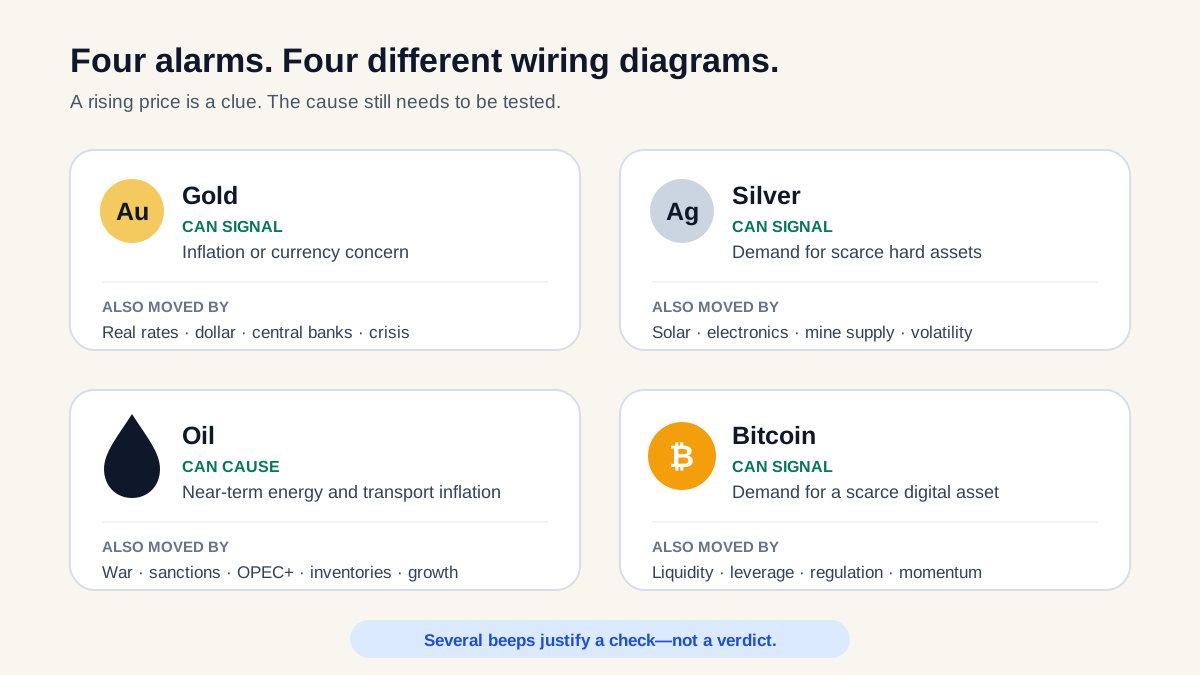
“Those four prices are not a verdict,” he tells her. “They are four smoke alarms. When several beep at once, you check the house. You do not immediately decide which room is burning.”
Maya and Daniel are fictional. The asset prices above are the social post's reported August 21, 2026 snapshot, not independently verified closing prices. The official economic figures below are dated and sourced.
First, meet the four players
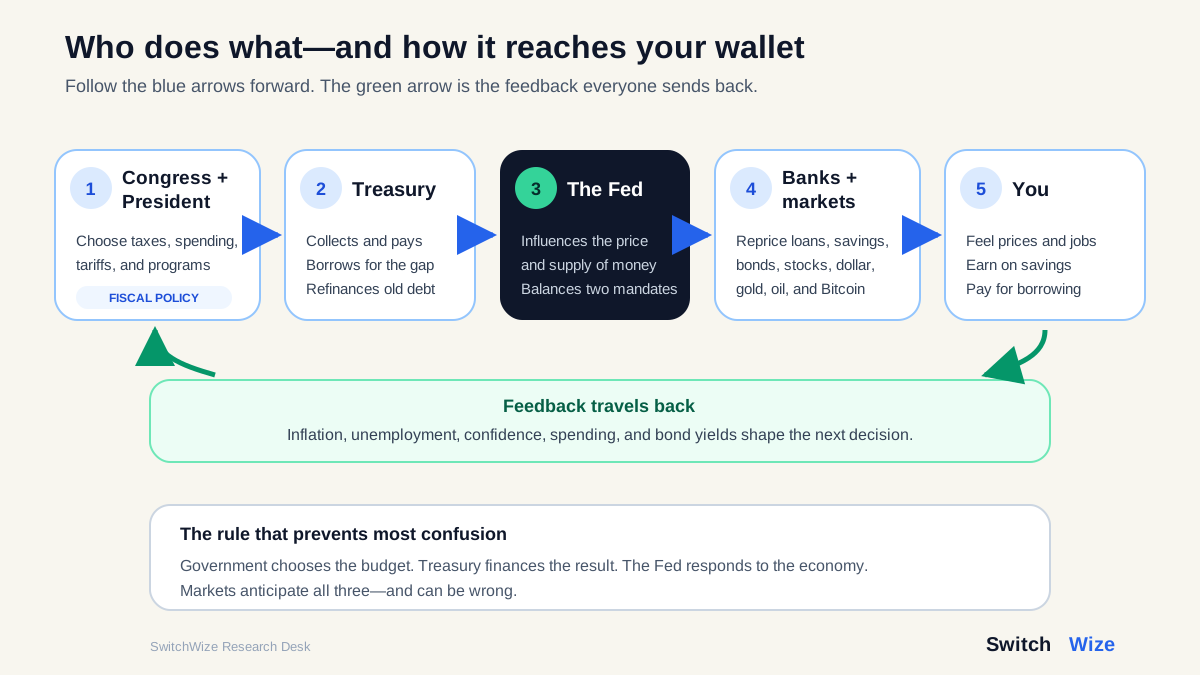
Daniel draws four boxes on the back of Maya's grocery receipt. “Most confusing money stories become easier,” he says, “once you stop treating the government, Treasury, and the Fed as the same person.”
1. Congress and the President decide what the government does
Congress passes tax and spending laws; the President signs or vetoes legislation and the executive branch carries it out. Together, their choices are called fiscal policy.
They can spend on defense, benefits, roads, health care, tax credits, and thousands of other programs. They can raise or lower taxes. They can also change tariffs and regulations, which affect what businesses pay and what consumers buy.
If the government spends more than it collects, the difference is the deficit. Think of a household spending $110 after earning $100. The missing $10 must be borrowed.
2. Treasury is the government's cashier and borrowing desk
The Treasury collects federal revenue, pays the government's approved bills, and borrows to cover deficits and refinance old debt. It borrows mainly by selling Treasury bills, notes, and bonds to investors.
Treasury does not decide how much Congress appropriates, and it does not set the Fed's interest rate. Its job is closer to the family member who pays the bills and arranges the loan after the household has agreed on a budget.
3. The Federal Reserve influences the price and availability of money
The Fed is the United States' central bank. Congress gave it goals—stable prices and maximum employment—but monetary-policy decisions are made independently of the White House and Treasury.
The Fed's main lever is a short-term interest-rate target. Raising it generally makes credit more expensive and saving more rewarding, which can slow demand and inflation. Lowering it generally makes borrowing cheaper, which can support spending, hiring, and growth. These effects travel through the economy with delays and never work like an instant light switch.
4. Banks, businesses, investors, and households transmit the decision
Banks turn policy and market conditions into savings rates, credit-card APRs, business loans, and mortgages. Businesses decide whether to hire, invest, absorb higher costs, or raise prices. Investors continuously reprice bonds, stocks, currencies, commodities, gold, and Bitcoin. Households then change what they borrow, save, and buy.
This last group is not merely waiting for instructions. Its reactions can feed back into the first three boxes. Rising bond yields increase Treasury's future interest expense. Falling confidence can slow the economy. Higher wage and price expectations can make inflation harder for the Fed to control.
How one government decision can travel through the whole system
Suppose the government approves $100 billion of new spending without $100 billion of new taxes.
- The deficit grows. Treasury must eventually borrow more than it otherwise would.
- Treasury sells more securities. Investors must be willing to buy the additional bills, notes, and bonds.
- Bond yields may rise. If buyers require a better return to absorb the supply—or because they expect more inflation—the government pays a higher borrowing rate. But yields can fall instead if investors rush into Treasuries for safety, so this is a pressure, not a mechanical promise.
- Private borrowing can become more expensive. Treasury yields help anchor mortgage, corporate, and other longer-term rates.
- Demand may increase. Government contractors, beneficiaries, or taxpayers have more money to spend, depending on the policy.
- The result depends on available supply. If unemployed workers and idle factories can produce more, output may grow without much inflation. If the economy is already stretched, more dollars may chase the same goods and push prices higher.
- The Fed reacts to the outcome, not the political label. If inflation pressure grows, it may hold rates higher or raise them. If unemployment surges, it may ease. It must weigh both sides of its mandate.
The same chain works differently for a tax increase, spending cut, new tariff, banking crisis, productivity boom, or oil shock. The starting action matters, but so do the economy's condition and everyone's response.
Six common shocks, translated into everyday language
- First place it lands
- Deficit and Treasury borrowing
- Possible next effects
- More demand; possible upward pressure on yields and inflation
- What a household may notice
- Jobs or benefits may rise, but prices and borrowing costs may also rise
- First place it lands
- Import costs
- Possible next effects
- Some firms raise prices, change suppliers, or accept lower profit
- What a household may notice
- Higher prices for affected goods; mixed effects on domestic jobs
- First place it lands
- Short-term cost of money
- Possible next effects
- Credit slows; saving becomes more attractive; demand cools
- What a household may notice
- Higher card and HELOC APRs; possibly higher savings yields
- First place it lands
- Short-term cost of money
- Possible next effects
- Credit and investment may increase; the dollar may weaken
- What a household may notice
- Cheaper variable borrowing, lower savings yields, possible asset-price support
- First place it lands
- Energy and shipping costs
- Possible next effects
- Headline inflation rises while growth may weaken
- What a household may notice
- More expensive gasoline, flights, deliveries, and food
- First place it lands
- Amount the economy can produce
- Possible next effects
- Wages and output can grow with less inflation pressure
- What a household may notice
- Better real incomes if pay grows faster than prices
Notice the words may, can, and possible. Economics is a chain of incentives and reactions, not plumbing in which one valve always produces one exact pressure.
Alarm one: gold is the old emergency blanket
For thousands of years, people have treated gold as something that cannot be printed by a government. When confidence in paper money falls, or investors fear war, banking stress, debt, or inflation, some money moves into gold.
But gold rising does not tell Maya which fear is responsible. Gold can climb because investors expect inflation. It can also climb because interest rates after inflation—called real rates—are falling, because the dollar is weakening, because central banks are buying, or simply because people want a safe haven during a crisis.
Gold is therefore a confidence thermometer, not an inflation laboratory test.
Alarm two: silver lives two lives
Silver is partly gold's cousin and partly a factory input. Investors may buy it as a scarce monetary metal, but manufacturers also use it in electronics, solar equipment, vehicles, and other industrial products.
That means a silver rally can say, “People want hard assets.” It can also say, “Factories expect to need more silver,” or “Supply is tight.” Its smaller market can make price swings sharper than gold's.
Calling every silver rise an inflation vote is like seeing flour sell out and concluding everyone fears famine. Maybe they do. Maybe a bakery convention just came to town.
Alarm three: oil can create the inflation it appears to predict
Oil is different because it sits inside the cost of moving people, packages, food, and raw materials. When oil jumps, gasoline and transportation costs can rise, and businesses may pass some of those costs to customers. In that sense, oil is not merely predicting inflation; it can help produce a near-term burst of it.
But oil is also extraordinarily sensitive to wars, sanctions, production decisions, pipelines, inventories, and global growth. In July 2026, the Bureau of Labor Statistics reported that consumer prices were up 3.4% from a year earlier, while energy prices were up 14.7%. That supports the idea that energy was an important inflation pressure. It does not prove every oil move will spread into lasting, economy-wide inflation.
Alarm four: Bitcoin is the newest—and noisiest—one
Bitcoin's supply rules are central to its appeal. Some buyers see a scarce digital asset outside the banking system and call it “digital gold.” If fear of currency debasement brings in buyers, Bitcoin can rise alongside gold.
Yet Bitcoin also trades like a speculative risk asset. Liquidity, leverage, regulation, exchange flows, technology news, and plain momentum can move it violently. The post says Bitcoin had spiked above $79,000 before moving lower. One spike cannot tell Maya whether buyers feared inflation, chased momentum, covered losing bets, or reacted to crypto-specific news.
The SEC's investor bulletin calls Bitcoin and Ether highly speculative and tells investors to consider their volatility. That remains true even when the inflation story sounds persuasive.
What “the Fed lost credibility” actually means
The Federal Reserve says it wants inflation to average 2% over the longer run, measured using the Personal Consumption Expenditures price index. Credibility means households, businesses, and markets generally believe the Fed will eventually do what is necessary to keep inflation near that goal.
Daniel gives Maya a simple example. If a restaurant believes all its suppliers and workers will demand 5% more every year, it may raise menu prices early. If workers expect prices to rise 5%, they may demand larger raises. Expectations can begin reinforcing the result everyone fears.
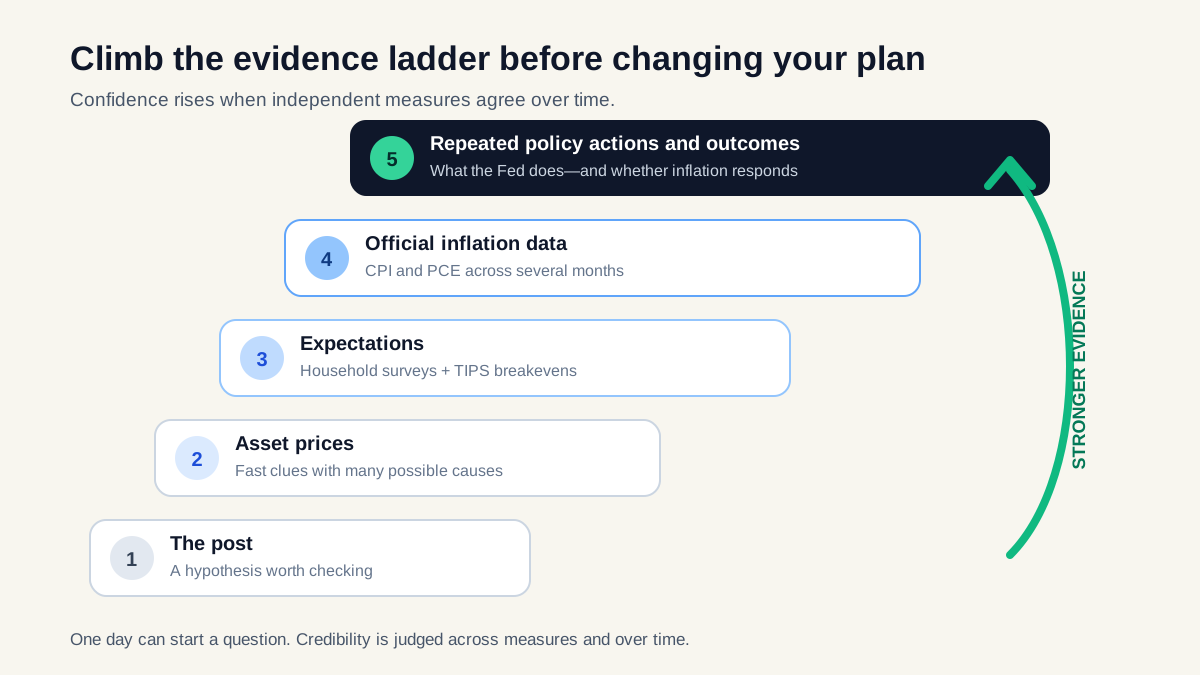
That is why credibility matters. But it is not measured by whether gold had a record day.
As of August 21, 2026, the evidence is mixed, not conclusive:
- Latest dated reading
- 3.4% in July
- Plain-English meaning
- Prices were rising faster than the Fed's goal
- Latest dated reading
- 3.50%–3.75% after July 29
- Plain-English meaning
- The Fed held borrowing conditions restrictive rather than cutting
- Latest dated reading
- 2.23% on July 9
- Plain-English meaning
- Bond pricing implied inflation compensation a little above 2% on average, not runaway inflation
- Latest dated reading
- 3.6% one year; 3.0% five years in July
- Plain-English meaning
- Consumers expected too much inflation, especially near term, but not an endless acceleration
The Fed's July Monetary Policy Report said inflation was elevated, but most measures of longer-term expectations remained broadly consistent with its 2% objective. The New York Fed's July survey found five-year household expectations at 3.0%. The bond market's 10-year breakeven rate was 2.23% on July 9, though the Fed cautions that breakevens also contain risk and liquidity premiums.
In other words: the smoke deserves attention, but the best available dashboard did not say the building was already lost.
What Treasury borrowing has to do with the story
The U.S. Treasury pays the government's bills by collecting taxes and borrowing. The Federal Reserve manages monetary policy. They are separate institutions with different jobs; Treasury does not issue an order telling the Fed what interest rate to choose.
The concern behind the post is more subtle. Treasury estimated it would borrow $739 billion from private markets in the July–September quarter and $628 billion in October–December. Large and persistent borrowing can push interest costs higher and create pressure for lower rates. Economists call the extreme version fiscal dominance: monetary policy becomes constrained by the government's financing needs.
That is a real risk to study. But the Treasury borrowing estimate did not announce that the Fed would tolerate inflation. And on July 29, the Fed held rates at 3.50%–3.75%; three voters actually preferred a quarter-point increase. “Treasury made the Fed choose inflation” is therefore an argument about future pressure, not a documented decision.
Maya's $100 grocery basket
Daniel brings the story back to the checkout line.
If Maya's usual basket cost $100 a year ago and rose exactly with July's 3.4% annual CPI rate, it would cost $103.40 today. If prices then rose 3.4% every year for five years—an assumption, not a forecast—the same basket would cost about $118.20. Inflation compounds just like interest, only against the buyer.
Now suppose Maya leaves $10,000 in an account earning 0.5% while inflation runs at 3.4% for one year. Her statement grows to $10,050, but maintaining the same purchasing power would require roughly $10,340. Her balance rose while her buying power fell by about $290.
This is the part of the story that matters whether Peter Schiff's forecast is right or wrong. Maya does not need to predict gold to check her savings rate, protect emergency cash, or avoid expensive variable debt.
What an “inflation hedge” really is
A hedge is not an asset that always goes up. It is something expected to offset a particular risk under particular conditions.
- What it can protect
- Principal adjusts with CPI; held to maturity, it provides a stated real yield
- What can go wrong
- Market price can fall before maturity as real rates move
- What it can protect
- Keeps emergency cash liquid and can reduce inflation drag
- What can go wrong
- The bank can lower the rate; yield may lag inflation
- What it can protect
- Businesses can grow earnings and prices over long periods
- What can go wrong
- Stocks can fall sharply during inflation shocks or recessions
- What it can protect
- Can help during currency fear, falling real rates, or crisis demand
- What can go wrong
- Produces no income and can lag inflation for long stretches
- What it can protect
- Scarcity thesis may attract buyers during currency concern
- What can go wrong
- Extreme volatility; speculative demand can overwhelm the thesis
The word preferred in “preferred hedge” is doing important work. Different investors fear different things. Someone protecting next month's rent needs insured, liquid cash—not a volatile metal or cryptocurrency. Someone protecting purchasing power over decades usually needs diversification, not one heroic bet.
The five-question check before acting on a scary post
- Is this a dated fact or a prediction? “CPI was 3.4%” is a reported fact. “The Fed will choose inflation” is a forecast.
- Are the signals independent? Gold and silver often share buyers. Oil can move both metals through inflation fear. Four prices may contain one story repeated four times.
- What else could move each price? War can lift oil and gold while hurting growth. Speculation can lift Bitcoin without changing grocery prices.
- Does the bond market agree? Inflation-linked Treasury pricing is imperfect, but it is more directly tied to expected inflation than a Bitcoin spike.
- What problem are you solving? Emergency liquidity, five-year purchasing power, and 30-year growth require different tools.
Maya closes the post without dismissing it. Gold, silver, oil, and Bitcoin rising together may be meaningful. The honest conclusion is smaller than the viral one: markets were charging more for several forms of scarcity and protection while inflation remained above target. That is a reason to watch the official dashboard and strengthen a financial plan. It is not proof that one institution has surrendered, or permission to chase the asset that just made the loudest noise.
What to Do Now
Sources
- Bureau of Labor Statistics, July 2026 CPI — 3.4% all-items inflation and 14.7% energy inflation over 12 months.
- Federal Reserve, July 29, 2026 FOMC statement — 3.50%–3.75% target range and the vote.
- Federal Reserve, July 2026 Monetary Policy Report — 2% longer-run objective and inflation-expectations assessment.
- New York Fed, July 2026 Survey of Consumer Expectations — one-, three-, and five-year household inflation expectations.
- FRED, 10-Year Breakeven Inflation Rate — 2.23% on July 9, 2026; an inflation-compensation measure, not a pure forecast.
- U.S. Treasury, August 2026 borrowing estimates and quarterly refunding statement — borrowing needs and financing plans.
- SEC Investor.gov, Bitcoin and Ether ETP bulletin — volatility, speculation, fees, and custody risks.
This article is educational, not individualized investment advice. Market prices change continuously. The composite examples and forward inflation calculations are illustrative assumptions, not forecasts or promised returns.
Common questions
Do rising gold, silver, oil, and Bitcoin prices prove inflation will stay high?
No. They can be consistent with inflation concern, but each asset has other drivers. A stronger test combines consumer-price data, long-term inflation expectations, Fed decisions, wages, and supply conditions rather than relying on four prices alone.
Has the Federal Reserve abandoned its 2% inflation target?
The evidence available on August 21, 2026 does not establish that. The Fed reaffirmed its 2% longer-run PCE goal, held the federal funds target at 3.50% to 3.75% in July, and said it would deliver price stability. Whether policy will ultimately succeed is uncertain, but failure cannot be declared from asset prices alone.
Can the Treasury order the Fed to keep rates low?
No. Treasury manages federal borrowing and the Fed sets monetary policy under a separate legal mandate. Heavy government borrowing can create economic and political pressure, but saying Treasury made the Fed choose inflation is an interpretation, not an official instruction or established fact.
Should I buy an inflation hedge when these assets jump?
A price jump is not a personal allocation plan. Start with emergency cash, expensive debt, diversification, and your time horizon. TIPS are directly linked to CPI; gold and Bitcoin are volatile market assets whose prices can fall even while inflation remains elevated.
Connect the lesson
Turn the article into a next step.
SwitchWize takeaway
Find your number, not the market's.
Run a Money Map to see how your cash, debt, and rates stack up against the best available options.
Start Money Map →The quoted asset prices are the social post's August 21, 2026 snapshot and are presented as reported claims, not as independently verified closing prices. Official inflation, policy, borrowing, and expectation data were checked against BLS, Federal Reserve, Treasury, New York Fed, and FRED releases available August 21, 2026.