The quiet leak most households never measure
Most people think building wealth requires big moves — a hot stock pick, a windfall inheritance, a perfectly timed real-estate deal. The reality is less dramatic and more repetitive. The single most powerful force in household finance is a small, automatic action that repeats without interruption for years. And the single most destructive force is a small, automatic drain — a forgotten subscription, an uncompetitive savings rate, a minimum-only credit card payment — that also repeats without interruption for years.
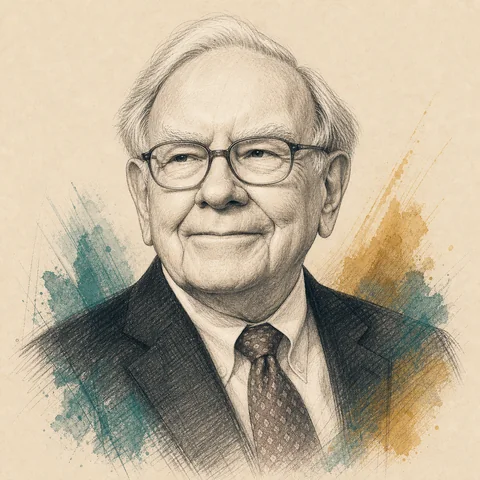
Warren Buffett has returned to one theme more consistently than any other across four decades of Berkshire Hathaway shareholder letters: the power of retained earnings reinvested over time. What Berkshire describes at corporate scale — keeping capital at work, resisting the urge to distribute or tinker, letting returns compound quietly — maps cleanly onto a household behavior that most people never adopt. Not because it is difficult. Because it is boring.
This is the core of the warren buffett compounding money lesson: the advantage belongs to whoever automates the right behavior and then refuses to interrupt it. The rest of this guide translates that principle into a concrete household decision you can act on in twenty minutes.
If your financial setup breaks the moment you stop paying attention for six months, it depends on willpower — which is fragile. Automation is the precondition for compounding.
One well-chosen recurring transfer — to a high-yield savings account, a retirement fund, or an extra debt payment — does more over a decade than a dozen sporadic clever moves.
Can the automated amount increase, even modestly? Adjust, re-automate, and leave it alone for another year. That is the full maintenance cost of a simple strategy.
A forgotten fee, an uncompetitive rate, or a minimum-only payment repeats just as reliably as a good habit — but in reverse. Identify and remove the drag.
Why compounding works against complexity
The behavioral case against complexity is straightforward. A strategy that requires monthly attention, constant rebalancing, or frequent judgment calls depends on you maintaining focus and discipline across every cycle of life disruption, market noise, and short-term temptation. Most people cannot sustain that. A strategy that runs automatically requires only one good decision — the original setup — and then time.
Berkshire's letters make a related point about management: the best corporate operators do not spend their energy on endless tactical adjustments. They find businesses with durable economics and let those businesses run. The household equivalent is automating a recurring transfer once, naming it, and leaving it alone.
This is also why the warren buffett compounding money lesson carries an implicit warning about financial-product complexity. Layers of fees, frequent repositioning, and elaborate tax maneuvers add decision points and cost without reliably adding return. For most households, simplicity is not a compromise — it is the strategy.
For example, consider a household with a checking account at a traditional bank earning 0.38% and $8,000 sitting idle. Moving that balance to a high-yield savings account paying 4.27% and automating a $200 monthly transfer creates a compounding engine that, as of June 2026, earns roughly thirty times more interest per year on the same dollars — with no ongoing effort after the initial setup. This is especially important if you're someone who keeps meaning to "do something" with idle cash but never gets around to it.
The real cost of waiting
Most people underestimate the cost of delay because the loss is invisible. You never see the interest you didn't earn or the debt drag you didn't eliminate. But the math is unforgiving.
For example, consider a person named Dana who carries a $6,200 credit card balance at 24.00% and pays only the minimum each month. The interest that accrues in year one alone exceeds $1,400 — money that compounds against Dana every subsequent month. If Dana instead automates an extra $150 per month toward that balance, the payoff timeline shortens by years and the total interest cost drops by thousands. The one-time inconvenience of setting up the autopay is tiny compared to the recurring cost of not doing it.
If you're deciding between aggressively paying down high-interest debt and building savings first, the general guideline is clear: debt at 24.00% costs more than savings at 4.27% earns. Eliminate the drag before you accelerate the engine. Use the SwitchWize Money Map to see which side of that equation needs attention first.
- What to check
- What rate is your current savings account paying vs. 4.27%?
- Next step
- Compare savings rates
- What to check
- Are you paying only the minimum on any card at 24.00% or higher?
- Next step
- Review card options
- What to check
- List every subscription and monthly fee — do you use each one enough to justify the cost?
- Next step
- Cancel or downgrade unused services
- What to check
- Is at least one savings or debt-paydown transfer happening automatically each pay cycle?
- Next step
- Set up autopay tied to your income date
- What to check
- Do you have a calendar reminder to revisit your automated amounts once per year?
- Next step
- Schedule a 20-minute annual check
How to apply in 20 minutes
- Name the default. Write down the one account, card balance, or habit this article made you question. Be specific: "Chase checking earning nothing" or "Visa card at 24% with $4,100 balance."
- Find the number. Log in and locate the APY, APR, balance, or monthly fee that determines the actual cost. Do not guess — look it up.
- Compare one credible alternative. Do not shop forever. Compare one high-yield savings account at /savings or one balance-transfer card at /cards. Check that the alternative is FDIC-insured and read the terms.
- Automate the better behavior. Set up a recurring transfer — to the new savings account, toward the debt balance, or into a retirement contribution — tied to your pay cycle. The amount matters less than the consistency.
- Set an annual review. Put a calendar reminder for one year from today. When it fires, ask one question: can the automated amount increase by even a small amount? If yes, adjust and re-automate. Then leave it alone.
The cadence that makes it permanent
Automation is the mechanism. Rhythm is what keeps it honest.
Set up a recurring contribution — to a high-yield savings account, an emergency reserve, or an extra debt payment — tied to your income cycle. Each paycheck becomes a trigger. The amount moves before it can be redirected elsewhere. This removes the daily negotiation between present spending and future benefit, which is a negotiation most people lose more often than they admit.
After the automation is in place, the useful review interval is long. Once a year — perhaps tied to a raise, a tax filing, or a seasonal calendar reminder — revisit the amount and ask one question: can it increase by even a small amount? If yes, adjust and re-automate. Then leave it alone again for another year. That is the full maintenance requirement of a simple strategy.
What does not belong in this rhythm is reactive tinkering. Berkshire's letters describe how the returns on retained earnings arrive irregularly. Some years are flat; some are strong; the aggregate over decades is what counts. A household investor who adjusts the strategy every time a quarter disappoints is measuring the wrong interval and undermining the one structural advantage simplicity provides.
The one question worth asking
If there is a single diagnostic question for whether a financial plan is sustainable, it is this: does this plan run if I stop paying attention for six months?
If the answer is no, the plan depends on sustained vigilance — which is fragile. If the answer is yes, the plan has the structural quality that makes compounding possible. Automation is not a convenience. It is the precondition for letting time do its work.
Should you open a high-yield savings account or a 12-month CD for your emergency fund? The answer depends on whether you need the money to stay liquid. A CD at … may offer a slightly higher rate, but early-withdrawal penalties can erase the benefit if you need the cash before maturity. A high-yield savings account at 4.27% keeps your money accessible while still compounding meaningfully. How to decide: if the dollars are your true emergency reserve, prioritize access. If the dollars are "extra" savings earmarked for a goal twelve months away, the CD may fit better.
This is especially important if you're someone who has tried budgeting apps, spreadsheets, or manual transfers and found they fizzle out after a few months. The warren buffett compounding money lesson isn't about discipline — it's about designing a system that doesn't need discipline after the first setup.
Use the Money Map to identify which area of your finances most needs that kind of structural attention — and to make sure any automated habit is pointed at the right gap.
Pick the single highest-impact move — funding a high-yield savings account, adding an extra debt payment, or increasing a retirement contribution — and set it to recur automatically each pay cycle.
Identify the recurring fee, uncompetitive rate, or minimum-only payment that compounds against you. Cancel it, switch it, or pay it down before optimizing anything else.
Set a calendar reminder. When it fires, ask whether your automated amount can increase modestly. Adjust, re-automate, and walk away for another twelve months.
The value of compounding lives in the unbroken repetition. Resist the urge to pause, redirect, or tinker during short-term disruptions. Time is the active ingredient.
When this may not apply
The better move is not always to switch, automate, or optimize. Staying with your current setup can make sense when:
- The dollar gap is genuinely small. If the rate difference between your current account and the best alternative amounts to less than a few dollars per month, the hassle of switching may not be worth it.
- You are mid-crisis. During a job loss, medical emergency, or major life transition, adding a new financial task — even a simple one — can increase stress without meaningful payoff. Simplicity sometimes means doing nothing new until the storm passes.
- The product is tied to a broader relationship. A checking account bundled with a mortgage rate discount or a card that carries a long credit history may have hidden value that a rate comparison alone won't capture.
- You lack a true emergency cushion. Aggressively automating extra debt payments while carrying zero liquid savings can backfire if an unexpected expense forces you onto higher-cost borrowing. Build at least a small buffer before accelerating payoff.
- Switching creates operational risk. Changing autopay accounts, direct deposits, or linked bills has a transition period where missed payments or overdrafts can occur. Plan the switch carefully or keep a buffer in the old account during the transition.
Treat this framework as a review trigger, not an automatic instruction. The goal is a considered decision, not reflexive action.
Frequently asked questions
What is the warren buffett compounding money lesson in simple terms? It is the principle that small, consistent actions — saving, reinvesting, reducing debt — accumulate enormous results over time, not because any single action is large, but because the repetition never stops. Berkshire Hathaway's shareholder letters describe this at corporate scale; the household version is automating one beneficial financial habit and letting years do the work.
How much money do I need to start compounding? There is no minimum. A recurring $25 weekly transfer to a savings account earning 4.27% still compounds. The amount matters less than the consistency and the duration. Start with whatever you can automate without creating a cash-flow problem, and increase the amount at your annual review.
Should I pay off debt or save first? If you carry high-interest debt — particularly credit card debt near 24.00% — the interest cost almost certainly exceeds what you can earn in savings. The general priority is: build a minimal emergency buffer (one month of expenses), then attack high-interest debt, then accelerate savings. Use the Money Map for a personalized sequence.
How often should I check my accounts? For the compounding habit itself, the ideal check-in frequency is once a year. More frequent monitoring tends to produce anxiety and reactive changes that disrupt the compounding mechanism. The exception is fraud monitoring — check transactions regularly, but leave the automated amounts alone.
Is a high-yield savings account safe? Yes, provided the account is held at an FDIC-insured institution. FDIC insurance covers up to $250,000 per depositor, per insured bank, per ownership category. Verify insurance status before opening any new account.
Sources and methodology
This article draws on themes from Berkshire Hathaway's public shareholder letters, particularly the recurring discussion of retained earnings, long-term reinvestment, and the compounding of durable business economics. The household application is a SwitchWize editorial interpretation, not a statement from or endorsement by Warren Buffett or Berkshire Hathaway. This content is educational and does not constitute personalized financial advice. For guidance specific to your situation, consult a licensed financial advisor or tax professional.
All savings and CD rates referenced use live SwitchWize rate tokens updated regularly. Current rates shown are as of June 2026. Verify terms, fees, and FDIC insurance status directly with any institution before opening an account or making changes.
- Berkshire Hathaway shareholder letters archive· Checked 2026-06-13
- FDIC deposit insurance overview· Checked 2026-06-13
- Consumer Financial Protection Bureau — savings resources· Checked 2026-06-13
- SwitchWize methodology· Checked 2026-06-13
- The Capital Letters editorial collection· Checked 2026-06-13
Next scheduled verification: 2026-07-13
Source: S&P Capital IQ Pro; SNL Financial Data. Calculations: FDIC. Reflects the $2,500 product tier for savings and interest checking accounts.
Connect the lesson
Turn the article into a next step.
Switchwize takeaway
Protect the base first.
Review cash, debt, fees, and product fit before chasing the next financial upgrade.
Run a smarter financial checkup →Disclaimer
This article is educational and does not provide personalized investment, tax, legal, or financial advice. Warren Buffett and Berkshire Hathaway are not affiliated with or endorsing SwitchWize. References to shareholder letters are public-record citations used for educational interpretation only.
Up next in Buffett's letters
Warren Buffett Behavior Money Lesson: Honest Reviews
14 min read