The financial mistake you refuse to fix does not stay still; it compounds. A carried credit-card balance, a high-fee product you never revisited, a loan you keep rolling on autopay: none of these is a static problem. Each one is a process that runs a little further against you every month you leave it alone, and the longer it runs the more effort the eventual correction demands.
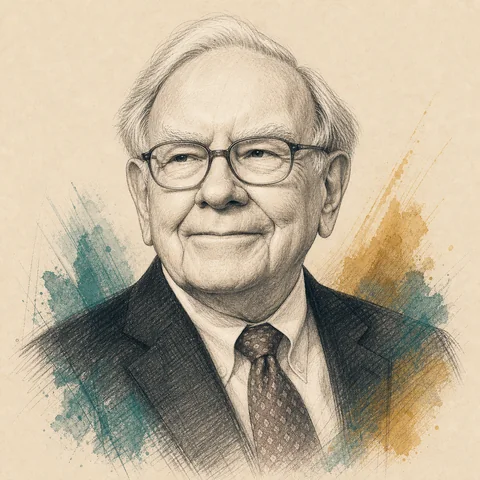
Warren Buffett has returned, across many Berkshire Hathaway shareholder letters, to a single uncomfortable idea: risks that look small today can be large tomorrow if you stay committed to them. Insurance obligations, long-dated derivatives, concentrated positions; each can carry what he calls latent exposure, a real cost that stays invisible until a rare event or a slow trend makes it undeniable. By then, the people who could have corrected course have usually spent years defending the original choice. That insight translates cleanly to household finance. The habit you automate, good or bad, is the thing quietly shaping next year before you notice it. The question worth asking is not whether you made a mistake once, but whether a mistake is still compounding now while you look away from the statement.
The Warren Buffett compounding money lesson, applied to a habit
The Warren Buffett compounding money lesson is usually told as a story about growth: small advantages, repeated over decades, become enormous. The version that matters for most households is the mirror image. A small drag, repeated automatically, becomes an enormous leak. Whether compounding works for you or against you depends entirely on which behaviors you have set to repeat without thinking.
If you're deciding which habit to examine first, look at whatever runs on autopilot. As of June 2026 the average card APR sits near 24.00%, so a balance you keep rolling is the clearest example of a habit compounding against you. The current rate is not the problem by itself; the problem is the automatic monthly renewal of the choice to carry it.
Carrying a high-rate balance is not a fixed cost. It is a recurring one that grows while you delay acting on it.
Defending a decision consumes both money and attention. Avoiding the calculator is itself a cost you pay.
Project both paths twelve months forward. If the cumulative cost of staying exceeds the one-time correction, the math is clear.
Rare events do not create latent exposures, they reveal ones already there. Acting before pressure arrives costs less.
What the decision looks like
- What to check
- Look for automatic savings, automatic debt reduction, recurring fees, and repeated impulse decisions.
- Next step
- Run a Money Map
- What to check
- Estimate the annual interest, fee drag, or risk that repeats while nothing changes.
- Next step
- Compare savings rates
- What to check
- Ask whether the account, card, loan, or habit still fits your actual household needs.
- Next step
- Compare card options
How to apply this in 20 minutes
- Name the default. Write down the habit, account, or balance this article made you question.
- Find the number. Locate the APR, fee, or transfer rule that determines its true monthly cost.
- Compare one credible alternative. Compare one current option with clear terms and a better fit.
- Decide what would make you move. Set a dollar or rate threshold before the next stressful moment arrives.
- Review annually. Automate the behavior you want repeated and remove the drag you do not.
Look for automatic savings, automatic debt reduction, recurring fees, and repeated impulse decisions.
Separate the one-time inconvenience from the recurring cost. A decision that feels small can still repeat against you.
Compare at least one credible alternative before accepting the default product, rate, or recommendation.
Write down the rule you will use next time, then review it annually instead of waiting for a stressful trigger.
Why defenders pay more
Behavioral economists call it loss aversion. Changing course forces you to acknowledge that an earlier choice was wrong, and most people find that acknowledgment more painful than the ongoing cost of staying put. So they stay put, and each month the interest accrues, the opportunity cost widens, and the eventual correction requires more effort than the original fix would have.
For example, consider a saver named Priya who carried a $5,000 card balance she described as under control. At the average APR near 24.00%, that balance cost roughly $1,200 a year in interest. A balance-transfer offer with a one-time 3% fee, about $150, would have cut most of that cost immediately. For eleven months she avoided the calculator because she did not want to see the number, and over that stretch she paid close to $1,100 in interest to avoid a $150 fee and one uncomfortable afternoon. The benefit of acting was concrete and large; the only cost was emotional and one-time. This is especially important if you're someone who scans statements quickly rather than reading them, because the avoidance itself is where the money leaks.
The compounding defense has its own cost
There is a second, subtler cost Buffett's letters hint at: defending a decision takes energy. Every month you choose not to fix the problem, you spend cognitive load rationalizing it. You scan statements quickly, avoid the balance-transfer calculator, and arrive at the eventual correction less prepared to execute it cleanly. The practical implication is not to be harder on yourself; it is to be faster.
The drawback worth naming is that speed can be wrong too. Acting in a panic, refinancing into a worse product, or chasing a teaser rate that resets are all real risks, which is why the framework pairs early action with one credible comparison rather than a frantic one. If you're deciding how to decide, pick one money decision you are currently defending, calculate its true monthly cost, list the one-time cost of fixing it, and project both paths twelve months forward. If the cumulative cost of staying exceeds the one-time correction, the math has already answered the question.
One off-ramp, taken seriously
The embarrassment of changing course is a one-time cost; the interest on the balance you defend is a recurring one. Buffett's observation about catastrophe risk applies here too: rare events such as a job disruption or a medical cost do not create new problems so much as expose latent ones. Addressing exposures while conditions are calm is almost always cheaper than addressing them under pressure. On the savings side, the same early-correction logic applies to cash sitting near 0.38% when reviewed accounts pay close to 4.27%. You can review current card offers or compare savings rates as a small act of attention that most people defer for years.
What the math looks like as of June 2026
As of June 2026, the current rate on a carried credit-card balance still sits far above what the same dollars could earn in a high-yield account, so the cost of a defended mistake compounds in two directions at once: the interest you pay and the return you forgo. The wider that spread, the faster a delayed decision gets expensive. This is especially important if you're someone who treats a fixable balance as background noise because the minimum payment clears each month, since the headline payment hides how much principal stays in place. If you're deciding whether a small recurring leak is worth an afternoon to fix, price it across a full year rather than a single statement, and the answer usually stops being ambiguous.
Set against that backdrop, the case for acting early is not about discipline for its own sake; it is arithmetic. A defended habit keeps two clocks running. The first is the interest clock on whatever balance you carry, which charges you every month the balance survives. The second is the opportunity clock on the cash you send toward that balance, which is cash that could have been compounding in your favor instead. Most people feel only the first clock because it shows up as a line on a statement, while the second is invisible because nothing bills you for a return you never earned. The practical move is to make the invisible clock visible. Write down the annual cost of the habit in dollars, then write down what that same annual amount would have grown to if it had been working for you. Seeing both numbers side by side tends to settle the question faster than any amount of willpower, because it reframes the choice from giving something up to reclaiming something you were already paying for. That reframing is the whole point: the lesson is not to deny yourself, but to stop quietly funding a cost you would never sign up for if it arrived as a bill.
When this may not apply
The better move is not always to switch, refinance, cancel, or optimize. Staying can make sense when the dollar gap is small, the service benefit is real, the product is tied to a broader household need, switching would create operational risk, or you are in the middle of a larger life event where simplicity is valuable. Treat the framework as a review trigger, not an automatic instruction.
Sources and methodology
This article draws on themes that appear across decades of public Berkshire Hathaway shareholder letters, including Buffett's discussions of latent risk, the timing of recognizing losses, and the tendency to defend prior commitments. No direct quotations are reproduced; all framing is SwitchWize editorial interpretation. Interest-cost figures are computed from the Federal Reserve G.19 series and refresh with the daily ingest.
- Berkshire Hathaway shareholder letters archive· Checked 2026-06-11
- Federal Reserve G.19 consumer credit· Checked 2026-06-11
- SwitchWize methodology· Checked 2026-06-11
- The Capital Letters editorial collection· Checked 2026-06-11
Next scheduled verification: 2026-07-11
For a broader scan, use the SwitchWize Money Map. This article is educational and does not constitute personalized financial advice.
Source: S&P Capital IQ Pro; SNL Financial Data. Calculations: FDIC. Reflects the $2,500 product tier for savings and interest checking accounts.
Connect the lesson
Turn the article into a next step.
Switchwize takeaway
Protect the base first.
Review cash, debt, fees, and product fit before chasing the next financial upgrade.
Run a smarter financial checkup →Disclaimer
This article is educational and does not provide personalized investment, tax, legal, or financial advice. Warren Buffett and Berkshire Hathaway are not affiliated with or endorsing SwitchWize. References to shareholder letters are public-record citations used for educational interpretation only.
Up next in Buffett's letters
Warren Buffett Behavior Money Lesson: Honest Reviews
14 min read