- A 0% APR balance transfer can eliminate thousands in interest charges, but only if you pay off the full balance before the promotional period expires.
- Transfer fees of 3–5% are almost always worth paying when you're escaping a card charging the average APR of around 24%, though the math changes at smaller balances.
- If your debt is too large to clear in 15–21 months, a fixed-rate personal loan may cost less overall than a balance transfer that reverts to a high variable rate.
Credit card debt is expensive. With the average card APR sitting at 24.00%, a $10,000 balance costs roughly $2,400 per year in interest alone, money that never touches your principal. A balance transfer moves that debt to a new card offering a 0% introductory APR, typically for 15 to 21 months, so every dollar you pay goes straight toward what you actually owe.
This balance transfer guide walks you through exactly how the process works, what it really costs after fees, when it makes sense versus alternatives like personal loans, and the specific traps that catch people off guard. Whether you're carrying $5,000 or $50,000 in credit card debt, the decision to transfer isn't automatic: it depends on your credit score, the size of your balance, and whether you can commit to a payoff timeline before the promotional window closes.
If you're deciding between paying down debt on your current card, moving it to a 0% offer, or consolidating with a personal loan, this guide gives you the numbers, the framework, and a step-by-step plan. This is especially important if you're someone who has been making minimum payments and watching your balance barely move despite months of effort.
Quick answer
A 0% balance transfer card is usually the cheapest way to clear credit card debt if your balance is under about $15,000, your credit score is 670 or higher, and you can realistically pay it off within the 15-to-21-month promotional window. The 3-5% transfer fee is a one-time cost that's almost always smaller than a single year of interest at the roughly 24.00% average card rate. If your debt is larger, or you need longer than 21 months, a fixed-rate personal loan usually beats a transfer card, since the promotional rate expiring mid-payoff can leave you worse off than when you started. Not sure how this fits alongside your other financial goals? Run the free Money Map scan.
What This Balance Transfer Guide Covers and Why It Matters
A balance transfer is straightforward in concept: you apply for a new credit card that offers a 0% introductory APR, request that your existing high-interest debt be moved to that card, and then pay it down interest-free during the promotional window. The promotional period on the best cards currently runs 15 to 21 months.
The value proposition is simple math. On a $10,000 balance at 24.00% APR, you're paying roughly $200 per month in interest. On a 0% balance transfer card, that interest drops to $0 for the entire promotional period. That's $2,400 to $3,360 in savings depending on whether you get a 15- or 21-month offer, minus the one-time transfer fee.
The transfer fee is the cost of admission. Most cards charge 3% to 5% of the amount transferred. On $10,000, that's $300 to $500. Even at the high end, you're saving $1,900 to $2,860 compared to keeping the debt on a card charging 24.00%.
Consider a person named Dana who carries $8,000 across two credit cards, both at 22% APR. She's been paying $250 per month and barely making progress. After 12 months, she's paid $3,000 but her balance has only dropped to $6,200 because $1,800 went to interest. If Dana transfers to a 21-month 0% card with a 3% fee ($240), she can pay $392 per month and be completely debt-free in 21 months, saving roughly $2,466 compared to staying on her current cards.
For household examples of what carrying a balance costs, see our credit card debt cost report.
How to Execute a Balance Transfer Step by Step
Getting a balance transfer right requires attention to timing and details. Here's the process:
-
Check your credit score. Most 0% APR balance transfer cards require a score of 670 or higher. Scores above 740 typically qualify for the longest promotional periods (18–21 months). You can check your score for free through most banks or credit monitoring services.
-
Compare cards and calculate the true cost. Look at three variables: the length of the 0% period, the transfer fee percentage, and the post-promotional APR. A card with a 21-month 0% period and a 3% fee almost always beats a card with 15 months at 0% and no fee, but run the numbers for your specific balance. Use our credit card payoff calculator to model both scenarios.
-
Apply for the card and initiate the transfer. During the application, you'll provide your old card's account number and the amount you want to transfer. Some cards let you transfer balances from multiple accounts. Most issuers require you to initiate the transfer within 60 days of account opening to get the promotional rate.
-
Continue paying your old card until the transfer clears. Transfers typically take 7 to 14 business days. Don't stop making minimum payments on your old card during this window: a missed payment could trigger a late fee or credit score hit.
-
Divide your balance by the promotional months and set up autopay. If you transferred $10,000 to a 21-month card, your target payment is $476 per month. Set up autopay for at least the minimum payment to protect your promotional rate, then manually pay the higher target amount each month.
-
Lock the card away. Do not use the balance transfer card for new purchases. Many issuers apply your payments to the promotional balance first, meaning new purchases sit and accumulate interest at the regular rate (often 20%+) until the transferred balance is fully paid.
$8,000 balance at 24% APR paying $250/month: 43 months to pay off, $2,706 in total interest. Same balance on a 21-month 0% card paying $381/month: 21 months to pay off, $0 in interest plus a ~$240 transfer fee. Net savings: approximately $2,466.
Balance Transfer vs. Personal Loan: A Decision Framework
Should you use a balance transfer card or a personal loan to consolidate debt? The right choice depends on how much you owe, how fast you can pay it off, and your credit profile.
Choose a balance transfer card if:
- Your total debt is small enough to pay off within 15–21 months
- Your credit score is 670 or above
- You're disciplined enough to avoid new purchases on the card
- You want to pay zero interest, not just lower interest
Choose a personal loan if:
- Your debt is too large to pay off in 21 months
- You want a fixed monthly payment with a guaranteed end date (36–60 months)
- Your credit score is below 670 and you don't qualify for top 0% offers
- You prefer the structure of a loan with no "promotional cliff"
Personal loan rates for borrowers with good credit currently range from about 8% to 12% APR. That's significantly less than 24.00% on a credit card, but far more than the 0% you'd get on a balance transfer card during the promo window. The key difference: a personal loan rate is permanent for the life of the loan, while a balance transfer rate expires.
For a deeper comparison, read our guide on personal loans vs. balance transfers.
- Balance Transfer Card
- 0% for 15–21 months
- Personal Loan
- 8–12% fixed
- Stay on Current Card
- 24.00% variable
- Balance Transfer Card
- 3–5% transfer fee
- Personal Loan
- Origination fee (0–6%)
- Stay on Current Card
- None
- Balance Transfer Card
- Must finish in promo period
- Personal Loan
- 36–60 months fixed
- Stay on Current Card
- Open-ended
- Balance Transfer Card
- 670+ for best offers
- Personal Loan
- 620+ for most lenders
- Stay on Current Card
- N/A
- Balance Transfer Card
- Rate jumps to 20%+
- Personal Loan
- Rate stays the same
- Stay on Current Card
- Interest keeps compounding
Dollar-Impact Ladder: How Much You Save by Balance Size
The savings from a balance transfer scale with the size of your debt. Here's what the numbers look like across common balance tiers, assuming a 21-month 0% promotional period, a 3% transfer fee, and a current rate of 24.00%:
- Annual Interest at Current Rate
- ~$1,200
- Transfer Fee (3%)
- $150
- Net First-Year Savings
- ~$1,050
- Total Savings Over 21 Months
- ~$1,950
- Annual Interest at Current Rate
- ~$2,400
- Transfer Fee (3%)
- $300
- Net First-Year Savings
- ~$2,100
- Total Savings Over 21 Months
- ~$3,900
- Annual Interest at Current Rate
- ~$6,000
- Transfer Fee (3%)
- $750
- Net First-Year Savings
- ~$5,250
- Total Savings Over 21 Months
- ~$9,750
- Annual Interest at Current Rate
- ~$12,000
- Transfer Fee (3%)
- $1,500
- Net First-Year Savings
- ~$10,500
- Total Savings Over 21 Months
- ~$19,500
Note: At the $25,000 and $50,000 levels, very few single cards will approve a credit limit large enough to transfer the full balance. You may need multiple cards or should seriously consider a personal loan instead. As of June 2026, the highest credit limits on balance transfer cards typically top out around $15,000 to $25,000 for well-qualified applicants.
The Marketing Hook vs. Long-Term Reality
Credit card issuers advertise "0% APR for 21 months!" in large, bold type. That's the hook, and it's a real benefit. But the long-term reality requires reading the fine print:
The hook: 0% introductory APR for 15–21 months. The reality: After the promotional period, the APR jumps to a variable rate that's typically 18% to 28%, often close to or above 24.00%. If you haven't paid off the balance by then, you're back where you started, or worse, because you may have also paid a transfer fee on top of the remaining balance.
The hook: "No annual fee." The reality: The transfer fee of 3–5% is effectively a one-time annual fee. On a $10,000 transfer, that $300–$500 fee is real money. Some cards waive the fee for transfers completed within 60 days; others don't. Always calculate the fee into your expected savings.
The hook: "Consolidate all your debt into one easy payment." The reality: Consolidation only helps if you stop adding new debt. According to the Consumer Financial Protection Bureau, a significant portion of consumers who use balance transfers end up carrying balances on both the new and old cards within 12 months. The card doesn't solve a spending problem: it only buys time on an interest problem.
If you want to build a broader plan for managing multiple debts, our debt payoff strategies guide covers the avalanche and snowball methods in detail.
Pros and Cons of a Balance Transfer
Where a Balance Transfer Wins (Pros)
- Zero interest for 15–21 months. Every payment reduces your principal dollar-for-dollar. No other consumer debt product offers a true 0% rate for this long.
- Significant savings. Even after the transfer fee, most cardholders save thousands compared to continuing payments at 24.00%.
- Simplifies payments. Moving multiple card balances to one card means one payment, one due date, and one number to track.
- No collateral required. Unlike a home equity loan or HELOC (currently around 8.20% APR), a balance transfer card is unsecured debt. Your home is never at risk.
- Potential credit score boost. Opening a new card increases your total available credit, which can lower your utilization ratio, one of the biggest factors in your credit score.
Where a Balance Transfer Falls Short (Cons)
- The promotional rate expires. Miss the deadline and the remaining balance gets hit with a variable rate of 20%+ immediately. There's no grace period.
- Transfer fees add up. At 3–5%, the upfront cost is meaningful. On smaller balances (under $2,000), the fee may eat most of the interest savings.
- Credit score requirements are strict. You need good to excellent credit (670+) for the best offers. If your score is lower, you may get a shorter promotional period or higher fee.
- Temptation to spend. A new card with available credit can encourage new purchases, especially if the old cards are now at $0 balances.
- The promotional cliff creates risk. If your income drops, an unexpected expense hits, or you simply miscalculate, the penalty for not finishing is steep: potentially higher interest than what you started with.
The Traps to Avoid
Making new purchases on the transfer card. Many issuers apply payments to the lowest-rate balance first. Your 0% transferred balance gets priority, while new purchases at 22% APR sit untouched and compound. Keep the transfer card in a drawer, literally.
Missing a payment. Most 0% APR offers include a clause that cancels the promotional rate if you miss even one payment. A single missed payment can trigger the penalty APR (often 29.99%). Set up autopay for at least the minimum immediately after the card is activated.
Not calculating your required monthly payment upfront. The 0% period has a hard end date. If you transfer $10,000 to a 21-month card, you need to pay at least $476 per month to clear it. If you can only afford $300 per month, you'll still owe $3,700 when the rate jumps, and that's a problem.
Closing the old card immediately. Keeping the old card open with a $0 balance helps your credit score by increasing total available credit and lowering your overall utilization ratio. Only close it if it carries an annual fee you can't justify. For more on how credit utilization affects your score, the Federal Reserve's consumer credit page provides background data.
Transferring a balance and then adding more debt. This is the most common trap, according to the CFPB. A balance transfer is a debt elimination tool, not a debt management lifestyle. If you transfer $8,000 and then charge $3,000 on your old card, you now owe $11,000+ across two accounts.
When a Personal Loan Beats a Balance Transfer
If your debt exceeds what you can realistically pay off within 21 months, a personal loan deserves serious consideration. Here's a concrete scenario:
For example, consider Marcus, a freelance designer with $30,000 in credit card debt spread across four cards, all at rates between 21% and 26%. His credit score is 710. He could apply for a balance transfer card, but even the best card would only approve a $15,000 limit, leaving half his debt untouched. Instead, Marcus takes a $30,000 personal loan at 9.5% APR for 48 months. His fixed payment is $753 per month, and he'll pay $6,156 in total interest over four years. Compare that to $6,600+ per year in interest on his current cards, and the loan saves him roughly $20,000 over the same period.
Browse current personal loan options on our loans comparison page.
Match Your Debt to the Right Tool
- Right tool
- Choose a balance transfer card
- Reasoning
- Zero interest beats every other option during the promo window
- Right tool
- Choose a personal loan
- Reasoning
- Fixed rate and term avoid the promotional-rate cliff
- Right tool
- Wait and rebuild credit first
- Reasoning
- Qualifying for the longest 0% window saves the most later
- Right tool
- Talk to a nonprofit credit counselor
- Reasoning
- Negotiated plans can beat both card and loan rates
How to Decide Which Debt Payoff Path Is Right for You
Use this quick framework based on your situation:
Debt under $15,000 + credit score 670+: A balance transfer card is almost certainly your best option. The 0% rate saves the most money over the shortest period. Use our credit card payoff calculator to verify you can afford the monthly payments within the promotional window.
Debt between $15,000 and $50,000 + credit score 650+: A personal loan likely makes more sense. The fixed rate and fixed term provide certainty, and you can consolidate everything into one loan rather than juggling multiple cards and credit limits.
Debt over $50,000 or credit score under 620: Consider speaking with a nonprofit credit counselor. The CFPB's list of approved counseling agencies is a good starting point. Debt management plans negotiated through a counselor can sometimes reduce your rate to 6–9% even without good credit.
Any amount where you also have savings earning interest: If you're holding cash in a high-yield savings account earning 4.27% while carrying credit card debt at 24.00%, the math is clear: the debt costs more than the savings earn. Consider using a portion of your savings to accelerate your payoff. See our savings comparison page for context on current rates.
Sources
- Consumer Financial Protection Bureau: Credit Card Resources
- CFPB: How Do I Find a Credit Counselor?
- Federal Reserve: Consumer Credit page
- CFPB Blog: Balance transfer and debt trends
Methodology
SwitchWize evaluates balance transfer cards based on promotional APR length, transfer fee percentage, post-promotional APR, and qualification requirements. We verify rates and terms directly from issuer disclosures and update them monthly. Our rankings reflect total cost of the transfer over the full promotional period, not just the headline rate. For full details on how we score and rank financial products, see our methodology page.
This is educational information, not personalized financial advice.
What to Do Now
Frequently Asked Questions
What credit score do I need for a balance transfer card?
Is there a fee for balance transfers?
What happens when the 0% period ends?
What should I do after reading Balance Transfer Guide: Save Thousands on Credit Card Debt?
The 5-minute money briefing
One email per week. New rates, fed moves, and what to actually do about them.
No spam. Unsubscribe anytime.
Act on this: today's top cards


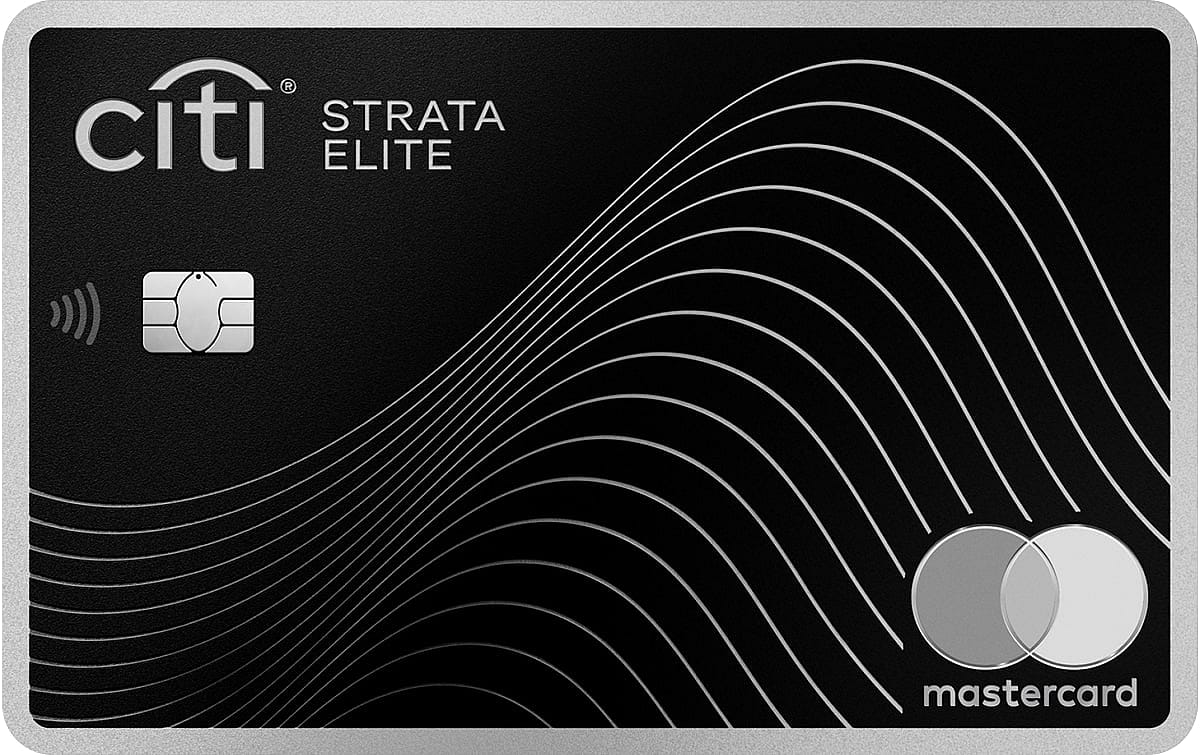
Ranked by SwitchWize's composite score. SwitchWize currently has no compensated product links.
Editorial review
What changed since the last update
Was this guide helpful?
Found an inaccurate, outdated, or missing claim? Report a correction. We verify reports against the relevant source before changing a guide or ranking.
